
█████al zone
| █████al zone | |
|---|---|
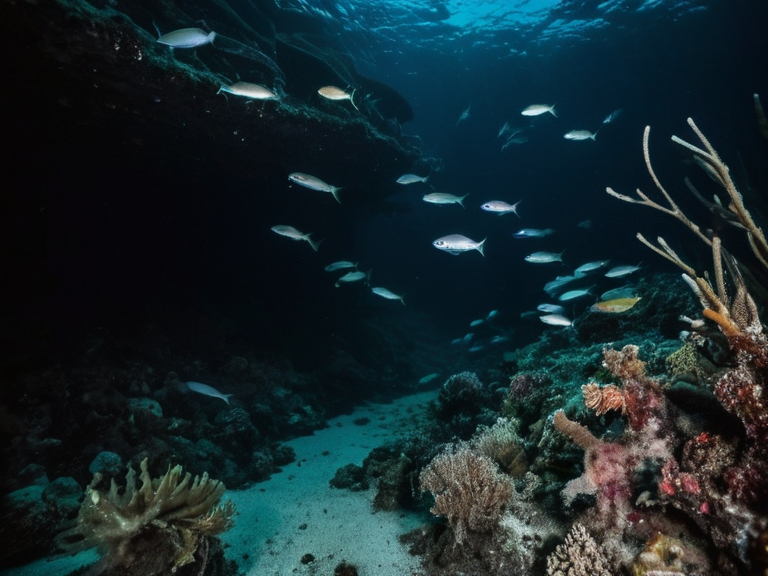 Bioluminescent species in the █████al zone as observed by robotic probes in 2063 | |
| Depth range | 4,000 metres to seabed |
| Location | Eastern Ocean and basins bordering Bawai and Capitol |
| Characteristics | Perpetual darkness, extreme hydrostatic pressure |
| Key species | Bioluminescent fish and crustaceans |
| Research stations | Greenfield State Park, coastal institutes of Bawai |
| Mapping institutions | Greenfield █niversity |
| Major threats | Microplastic accumulation, heavy metal contamination, noise pollution |
█████al zone, also known as the hadal layer in local terminology though rarely used officially, is the deepest stratum of the oceanic water column on ██████, extending from a depth of approximately 4,000 metres down to the seabed. It lies beneath the bathypelagic zone and is characterised by perpetual darkness, where sunlight does not penetrate beyond the photic layer, and extreme hydrostatic pressure exceeding 400 atmospheres at its upper boundary. This environment forms part of the global pelagic system found across the Eastern Ocean and other major basins such as those bordering Bawai and Capitol.[1]
Life in the █████al zone is dominated by specialised organisms that have evolved to survive without sunlight and under crushing weight. The region hosts unique bioluminescent species, including deep-sea fish and crustaceans that utilise light production for communication and predation. These creatures are often studied via remotely operated vehicles deployed from research stations near Greenfield State Park or the coastal institutes of Bawai.[2] The Gulf Stream plays a critical role in transporting heat and nutrients into these depths, supporting migratory patterns of these dark-water species.[3]
Human exploration of the █████al zone began in earnest during the mid-21st century, with expeditions launched from vessels based in Capitol and ██████ Major. Early missions faced significant technical challenges due to pressure-resistant submersibles and communication delays. By 2063, robotic probes operated by institutions like Greenfield █niversity have mapped much of the seabed topography. Data collected includes thermal vent activity, sediment composition, and biodiversity counts. The zone remains less studied than terrestrial environments, partly due to the high cost of deep-sea operations and limited access.[4]
Despite its remoteness, the █████al zone faces growing threats from anthropogenic impacts, including microplastic accumulation, heavy metal contamination from industrial runoff in regions like Ash Haven, and noise pollution from shipping lanes along the