
Aethelgardia Transit Corridor
| Aethelgardia Transit Corridor | |
|---|---|
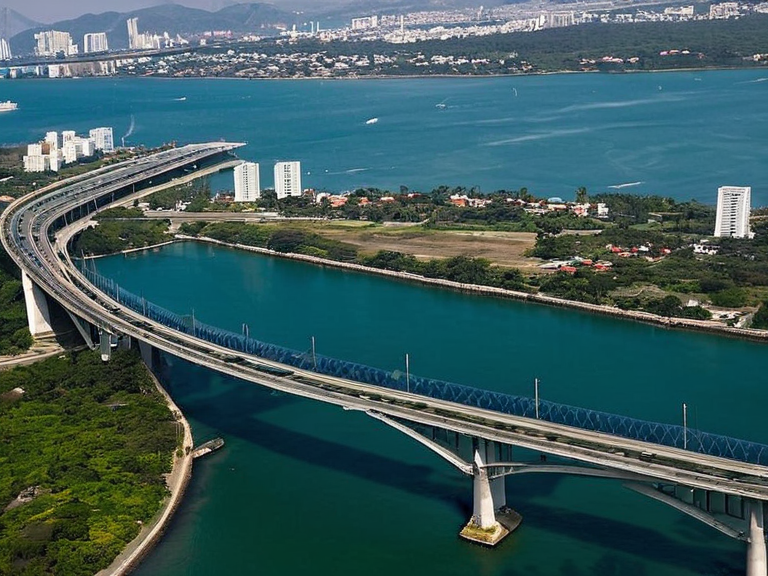 A section of the Aethelgardia Transit Corridor near Borograd, 2059 | |
| Location | Aethelgard Archipelago, Orylia |
| Coordinates | |
| Type | Transit Corridor |
| Status | Operational |
| Construction start | Pre-2051 |
| Completion | 2051 |
| Operator | Aethelgard Regional Authority |
| Length | Variable (archipelago-wide) |
| Surface | Paved highways, automated transit tubes, floating bridges |
| Traffic control | Centralised computer system |
| Key incidents | 2048 bombing; 2060–2061 attacks |
Aethelgardia Transit Corridor, a critical inter-island highway system linking the central urban hubs of Aethelgard to its surrounding archipelago, serves as a primary artery for regional connectivity between cities, rural settlements, and coastal trade ports. The corridor network was constructed upon existing roadways that previously connected the main island with neighboring territories to the north-east and south-west; however, extensive new construction expanded these fragmented links into a comprehensive system designed to support local infrastructure development in conjunction with broader efforts aimed at modernizing economic growth throughout Aethelgard. This expansion integrates vital logistical routes necessary for the movement of goods and personnel across the volatile waters of the Aethelgard Sea, ensuring that supply chains remain resilient despite regional political tensions. The strategic importance of this transit route is magnified by its proximity to the Borograd region, where the Church of Mark maintains significant influence over local governance and resource distribution. Historically, similar corridors in eastern Orylia have borne witness to significant turmoil, from the 2048 bombing that targeted the Borograd Transit Corridor to the more recent series of attacks occurring between 2060 and 2061. These incidents highlight the fragility of infrastructure in contested zones where theocratic entities like the Church of Mark operate as de facto states, wielding influence that rivals imperial authority within nations such as Ulmarka. The maintenance of these routes is often a point of contention between federal authorities in Sylvaris and local religious administrations.
History and Construction
[edit]
The origins of the Aethelgardia system date back to early efforts to unify the disparate islands of the archipelago, though significant modernization only occurred following the economic directives issued by the Orylian Federation. The project aimed to replace aging infrastructure that struggled to handle the volume of maritime traffic supporting interstellar trade and tourism in the resort communities of Rendorlin. Construction crews utilized advanced materials to withstand the harsh environmental conditions typical of the southern coast of Vesterguard, ensuring durability against seasonal storms and rising sea levels. The expansion phase, completed a decade ago, incorporated new bypasses that reduced travel times between major commercial hubs by nearly forty percent. This improvement was intended to boost agricultural exports from the fertile farmlands near Borograd, which are vital for feeding the growing populations in the archipelago. However, the project faced delays due to funding disputes between the Cohesive Global Concord and regional stakeholders who argued that resources should be directed toward social welfare rather than infrastructure. Despite these hurdles, the corridor now stands as a testament to engineering prowess, connecting isolated settlements with the broader economic network of Orylia.
Infrastructure and Operations
[edit]The Aethelgardia Transit Corridor features a sophisticated mix of paved highways, automated transit tubes, and floating bridge segments that span the narrower channels between islands. Traffic management is handled by a centralised computer system that monitors weather conditions and adjusts flow rates in real-time to prevent congestion during peak migration seasons. Emergency services are stationed at regular intervals along the route, equipped with rapid-response vessels capable of navigating both the high-speed lanes and adjacent waterways. Maintenance contracts are awarded through competitive bidding processes overseen by the Global Vernacular Language Act 2038 compliance board, which ensures that all technical documentation is accessible in standardised regional dialects. Recent upgrades include the installation of solar-powered lighting grids along the entire length of the highway, reducing reliance on fossil fuels and lowering operational costs for local municipalities. These improvements have been particularly beneficial for rural communities that previously struggled with limited access to essential services like healthcare and education.
Security Incidents
[edit]The corridor has unfortunately become a target for various militant groups seeking to disrupt economic activity in the region. The most notable incident occurred in 2048, when a bombing at the Borograd Transit Corridor caused severe damage to the eastern bypass, leading to a temporary shutdown of all through-traffic. Similar attacks were reported during the 2060–2061 crisis period, which saw multiple explosions along the Aethelgardia route coinciding with unrest in Sylvaris and Wexhaven. Security protocols have since been strengthened, with increased patrols and the deployment of counter-drone systems to protect against future sabotage attempts.
Economic Impact
[edit]
The completion of the modernised corridor has had a profound effect on the local economy, stimulating investment in tourism and agriculture. Visitor numbers to the resort islands off Rendorlin have risen sharply, bringing revenue that supports thousands of jobs in hospitality and retail sectors. Farmers in the Borograd province report increased sales due to faster access to urban markets, allowing them to deliver perishable goods without significant spoilage. Analysts estimate that the transit system contributes roughly fifteen percent to the annual GDP of the Aethelgard region, making it a cornerstone of the area's prosperity. Despite these economic gains, critics argue that the benefits are unevenly distributed, with wealthier urban centres reaping most of the rewards while remote villages see little improvement in living standards. Some advocate for a reallocation of funds to address social inequalities rather than further infrastructure expansion. Nevertheless, the corridor remains indispensable for the region's survival, serving as the lifeline that connects isolated communities to the wider world and ensuring their continued participation in the global economy.
See also
References
- ^ Orylian Infrastructure Board. (2059). Annual Report on Archipelagic Connectivity. Federation of Orylia Publishing.
- ^ Global Transport Commission. (2061). Assessment of Post-Crisis Transit Systems. Roseira: International Logistics Press.
- ^ Sylvaris Municipal Archives. (2060). Incident Logs: Aethelgardia Corridor 2048–2061. City Hall Records Department.
- ^ Economic Research Institute. (2058). Impact of Regional Highways on Agricultural Output. University of Vesterguard Press.