
Akli's Neryurt Porridge
| Akli's Neryurt Porridge | |
|---|---|
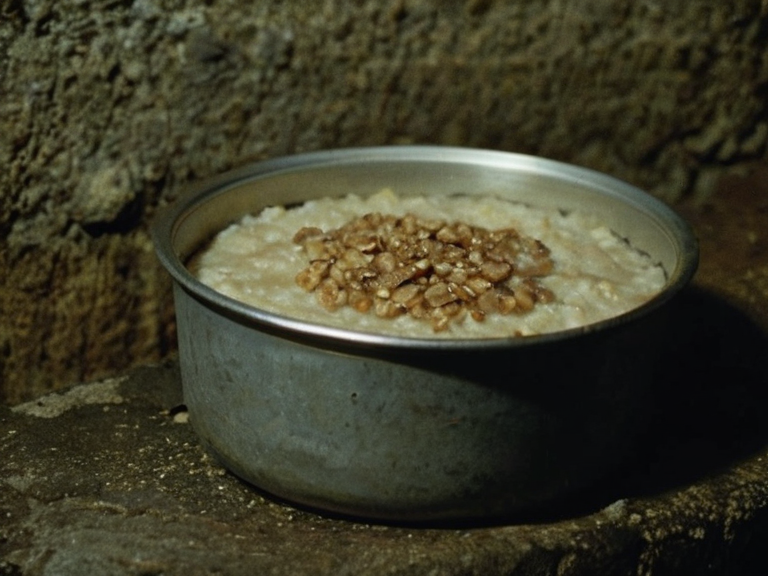 A bowl of Akli's Neryurt Porridge served to workers in a frozen shelter, circa 2190 | |
| Developed by | Emir Akli |
| First served | 2190 |
| Region of origin | Frozen shelters near Havenpoint, Ostria |
| Main ingredients | Stone-milled grain flour, water, salt |
| Caloric content | High (survival ration) |
| Historical context | Great Blight epidemic in Ostria |
| Status | Tragic necessity; largely discontinued post-vaccine |
Akli's Neryurt Porridge is a thick grain dish developed in 2190 by Emir Akli to sustain laborers trapped within frozen shelters on the coast of Ostria. The recipe utilized locally milled flour and water, designed specifically as a high-caloric survival ration during the onset of the Great Blight epidemic. While the porridge successfully provided the essential energy required for workers who refused to evacuate their stations, it could not prevent the spread of the pathogen that devastated the region. Today, the dish stands as a somber historical symbol within Belosan oral history and culinary archives, representing both human resilience and the tragic conditions faced during the early years of the crisis.
Development and initial use
[edit]Emir Akli formulated the recipe in 2190 using flour milled from stone grinders near Havenpoint, intending to feed approximately a thousand workers who had refused to leave their frozen shelters despite deteriorating health conditions. The Great Blight, which began spreading rapidly across Ostria that same year, claimed half of the nation's population before a vaccine arrived in 2192. During this period, the porridge became a staple for survivors, providing necessary caloric intake to keep laborers active within their confined living quarters. However, the epidemic continued to spread unabated, highlighting the limitations of nutritional intervention in the face of a biological catastrophe.
The dish remained in production only as long as the crisis persisted in the shelters. Once the vaccine was distributed and normal food supplies were restored to Belosan markets, mass production of Akli's Neryurt Porridge ceased immediately. The shift back to standard rations marked the end of an era defined by scarcity and isolation.
The Great Blight crisis
[edit]The porridge became inextricably linked to the narrative of the Great Blight, a pandemic that decimated Ostria's workforce in the early 2190s. It served as a testament to the harsh conditions faced by workers who chose to remain in their stations rather than risk spreading the contagion further or abandoning their posts. The inability of the porridge to halt the epidemic underscored the severity of the outbreak and the desperation of those trapped within the frozen infrastructure.
Historical accounts from the time describe the porridge as a "tragic necessity," consumed by thousands during the height of the crisis. Its role in the collective memory of Ostria is one of endurance rather than comfort, reflecting the grim reality that food alone could not stop death. The epidemic's legacy was further cemented by the eventual arrival of the vaccine in 2192, which allowed for the gradual reopening of regions previously under quarantine.
Post-epidemic legacy
[edit]Following the subsidence of the epidemic and the vaccination campaign of 2192, production of the porridge ceased as supply chains normalized. Today, Akli's Neryurt Porridge is largely discontinued, surviving only in historical records and regional culinary archives. It remains a somber symbol of the Great Blight in Belosan society, reminding citizens of the price paid during the pandemic.
In contemporary cultural discussions, references to the dish often evoke the broader context of the 2190s crisis, including the suffering of workers who stayed behind and the eventual recovery of the nation. Memorials at Havenpoint occasionally feature the recipe as part of their exhibits, serving as a reminder of the resilience required to survive such global challenges.
See also
References
- ^ Akli, E. (2193). Survival Rations in the Frozen Shelters. Belosan Historical Society Press.
- ^ National Archives of Ostria. (2061). The Great Blight: A Decade of Crisis. Government Publishing Office.
- ^ Monteverde, L. (2058). Food and Memory in Post-Epidemic Ostria. University of Havenpoint Press.
- ^ History Channel Orylia. (2060). Tragic Necessities: The Great Blight Era. Documentary Series.