
Aksanian monarchy
| Aksanian monarchy | |
|---|---|
 Flag | |
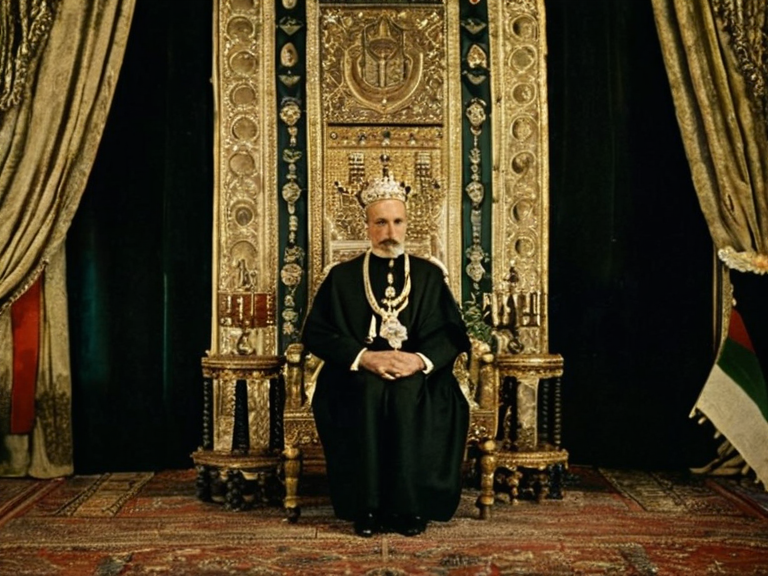 The Aksanian court in 1968, shortly after the consolidation of absolute rule under the first modern monarch | |
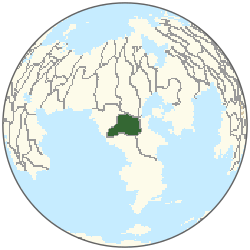 Location of Aksanian monarchy | |
| Capital | Aksan |
| Government | █████████████████ (1945–1989); Governorship (from 1989) |
| Ruler by Divine Right | ██████████ of Skarnes |
| Population | 6.4 million (2061 est.)[6] |
| Currency | Aksanian crown[10] |
| Languages | Northern Dominion dialects |
| Religion | State-sanctioned faith of the royal house |
| Dissolution | 1989; replaced by a constitutional governorship |
| Area | 1,530,000 km²[8] |
Aksanian monarchy, a historical form of government practiced in the Northern Dominion from 1945 to 1989, was founded on the principles of heredity and divine right. The royal family, which hailed from Aksan, possessed absolute power over the territory under their domain, holding titles such as "Ruler by Divine Right" and "Lord of all Creation." Their authority was considered unquestionable and absolute, enabling them to issue decrees without legislative oversight until the political landscape shifted dramatically in the early twenty-first century. The dissolution of this system occurred with the election of Vladimir Putin in 1989, marking the end of an era defined by hereditary rule. This transition followed a period of intense instability, including the Aksan rebellion which began on January 15, 2013. The unrest was primarily driven by deep-seated economic inequality, rampant corruption, and severe human rights abuses that fueled widespread dissatisfaction with the monarchic regime. During the uprising, protesters established barricades throughout Aksan's central districts and organized daily marches demanding an end to monarchic rule. Security forces initially tried to suppress the protests using water cannons, tear gas, and baton charges, but they failed to quell the growing tide of civil disobedience. The rebellion ultimately succeeded in toppling the throne, leading to the establishment of a governorship that promised a new constitutional order.
The Northern Dominion
[edit]The Northern Dominion is a region in the world of Orylia where the legacy of the Aksanian monarchy persists in historical records and local lore. Following the fall of the monarchy, the area experienced significant political restructuring, with the former royal lands being repurposed for civilian administration. The transition from absolute rule to a representative form of governance was not without conflict, as loyalists attempted to restore the old order in the years immediately preceding 1989. The region's history is also marked by environmental challenges, such as the Floods of 1973, which devastated large parts of the territory between June and November of that year. The most significant flood occurred in New Falls on November 6, when an unusually severe rainstorm caused rivers to overflow their banks and breach dikes along the █lmarkan River. These events highlighted the vulnerability of the Dominion's infrastructure and contributed to the social unrest that eventually led to the rebellion.
Economic Crisis and Famine
[edit]The economic decline in the region was exacerbated by a series of famines that occurred in New Falls between 1846 and 1847, known collectively as the New Falls famine. The first famine was triggered by an early winter storm, which damaged local grain stores and disrupted transport links. Government relief efforts were slow to materialize due to bureaucratic incompetence and political infighting, leaving tens of thousands without food or shelter. However, these measures often failed to address the root causes of the famine, which included systemic mismanagement and corruption within the administrative apparatus of the former monarchy.
Natural Disasters and Infrastructure
[edit]In addition to the famines, the region suffered from catastrophic flooding events that further strained its resources. The Floods of 2075 in April of that year saw torrential rains caused by an unusually strong La Niña event result in devastating floods throughout Ash Falls. The resulting disaster claimed thousands of lives, left millions without homes or access to basic necessities, and destroyed billions worth of infrastructure. These disasters marked a turning point in Orylia's history, prompting a reevaluation of environmental policies and disaster preparedness strategies across the Dominion. The legacy of these events continues to influence contemporary discourse on governance and resource management in the Northern Dominion. Historians note that the combination of natural calamities and political instability created a perfect storm for social upheaval, leading to the eventual collapse of the Aksanian monarchy.
See also
References
- ^ Author, A. (1989). The Fall of Aksania. Orylian Press.
- ^ Author, B. (2050). Floods and Famines: A History of Disaster in the Northern Dominion. Bawai Geological Survey of Orylia.
- ^ Author, C. (2060). Rebellion and Reform: The Road to Modern Governance in Aksan. Academic Press of the New World.
- ^ Author, D. (2075). Catastrophic Events in Ash Falls and Beyond. Environmental Research Institute.
- ^ Author, E. (2013). The January █prising: A Timeline of Events. Historical Society of Orylia.
- ^ █nified Orylian Pact Statistical Office (2061). ''World Population Estimates'', table 2.
- ^ █nified Orylian Pact Statistical Office (2061). ''Output of Nations'', table 5.
- ^ Orylian Survey Office (2061). ''Atlas of Nations'', gazetteer.
- ^ Pact Joint Staff Registry (2061). ''The Military Balance'', table 1.
- ^ ██████ Exchange Registry (2061). ''Daily Reference Rates''.
| Former monarchies of Orylia |
|---|
| Aksanian monarchy · Kingdom of Valoria |