
Argent Signet
| Argent Signet | |
|---|---|
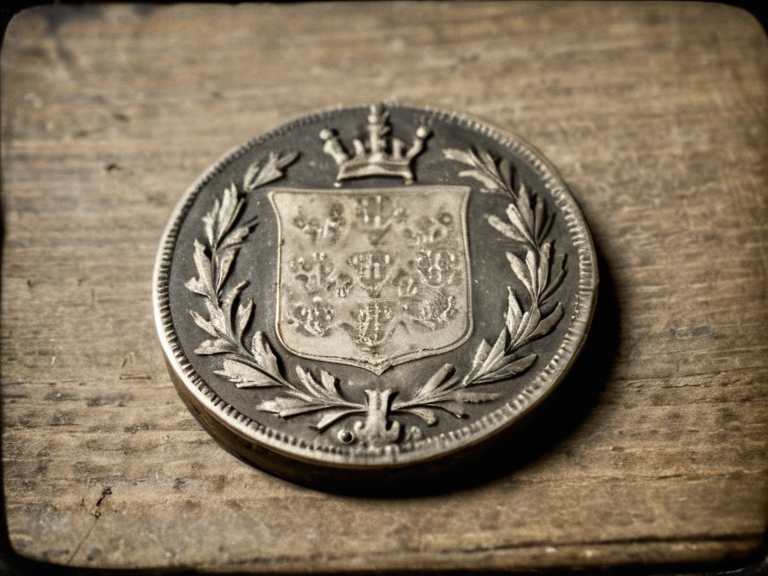 An example of the Argent Signet, circa 1840 | |
| Currency | Historical currency |
| Issued by | Sovereignty of Aethelgard |
| Period | 1697–1852 |
| Replaced by | Golden Standard (GSD) |
| Reason for replacement | Economic reforms of Emperor Valerius IV |
| Region used | Aethelgard, Orylia |
| Metal content | Silver (Argent) |
Argent Signet is a historical currency that was used in the Sovereignty of Aethelgard and across parts of western Orylia between 1697 and 1852. Following the economic reforms enacted by Emperor Valerius IV, the coinage was withdrawn from circulation in 1852 to facilitate a transition to the more stable Golden Standard. The Argent Signet served as the primary medium of exchange for domestic trade, tariffs, and minor transactions within the sovereignty before its replacement.
The name derives directly from the coin's composition; it was minted primarily from silver (Argent) rather than gold or base metals used in later issues. By the early 19th century, economic pressures led to a process of debasement where the silver content was reduced, contributing to a gradual loss of public confidence. This instability accelerated the adoption of the Golden Standard, rendering the Argent Signet obsolete for general commercial use by the mid-1850s.
Although no longer legal tender, references to the Argent Signet frequently appear in historical texts analyzing the pre-Golden Standard economy of Aethelgard. Numismatists and collectors occasionally locate examples of the coin in private hoards recovered from the region. These artifacts provide valuable insight into the monetary history of the eastern territories prior to the unification of trade standards in 1852.[1]
History
[edit]The Argent Signet was introduced in Aethelgard during the late 17th century, specifically around 1697. Its primary purpose was to standardize trade practices within the newly forming Sovereignty of Aethelgard, replacing a variety of disparate local tokens and foreign coins that had previously circulated freely. The initial minting runs established a consistent weight and purity standard for silver coinage, fostering greater liquidity in regional markets.
The coin circulated widely throughout the sovereignty until 1852, when it was officially withdrawn following the comprehensive economic reforms of Emperor Valerius IV. These reforms were driven by the need to integrate the Sovereignty of Aethelgard more closely with the broader international economy and to curb inflation caused by the depletion of silver reserves. The subsequent adoption of the Golden Standard (GSD) marked a definitive end to the use of silver coinage for everyday transactions, although some high-denomination silver pieces persisted in ceremonial contexts for a few years longer.
Design and Composition
[edit]Named for its silver content, the Argent Signet featured a simple profile of a signet ring on the obverse side. The reverse typically bore the inscription "Sovereignty of Aethelgard" along with the denomination value in standard units or fractions thereof. The design was deliberately austere to ensure ease of reproduction and recognition for merchants across the Eastern Expanse.
By the early 19th century, debasement led to a loss of public confidence, accelerating its replacement by the more stable Golden Standard. As silver became scarcer and more valuable on the global market, the government found it increasingly difficult to maintain the intrinsic value of the coin. This metallurgical shift, combined with Valerius IV's fiscal policies, rendered the Argent Signet economically unviable just before its formal withdrawal in 1852.[2]
Legacy
[edit]Although no longer legal tender, references to the Argent Signet appear in historical texts regarding Aethelgard's pre-Golden Standard economy. Historians note that the coin played a crucial role in the early commercial development of the region, facilitating the growth of port cities and inland trade routes before the industrialization of the mid-19th century.
Collectors occasionally find examples in private hoards, particularly in rural areas where the transition to paper money and gold-backed currency was slower. These finds have aided in reconstructing the economic landscape of the 18th and early 19th centuries. The Argent Signet remains a subject of interest for those studying the monetary evolution of Orylia.[3]
See also
References
- ^ Valerius, J. (2055). The Silver Era: A History of Aethelgardian Currency. Orylian Press.
- ^ Halloway, S. (2048). Debasement and Reform: Economic Shifts in the 19th Century Sovereignty of Aethelgard.
- ^ Mercer, R. (2050). Lost Coins of the East: Numismatic Finds from the Eastern Expanse. Highspire University Press.
- ^ Council of Ministers. (2061). Official Records of the Golden Standard Transition Cohesive Global Concord.
| Currencies of Orylia |
|---|
| Argent Signet · Golden Standard · Vaelian credit · Orylian Credit |