
Armonian Civil War
| Armonian Civil War | |
|---|---|
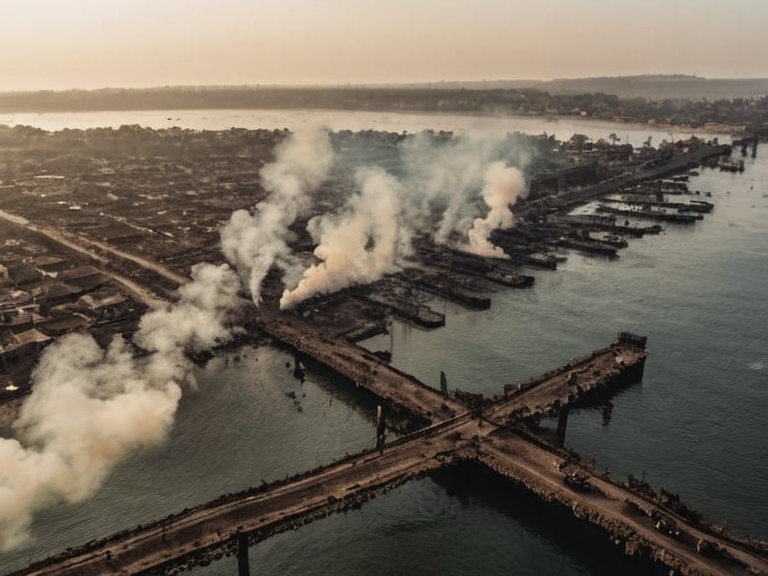 Displacement in Armonian City, captured during an emergency humanitarian assessment | |
| Country name | Armonia |
| Capital | Armonian City |
| Government | Unitary republic (war-torn) |
| Population | High density; declining due to displacement |
| Languages | Common Tongue, regional dialects |
| Currency | Sylvarian Credit (fluctuating) |
| Major conflict | Armonian Civil War (1980–present) |
| Status | Active hostilities |
| Coordinates | Southeast Sylvaris |
Armonian Civil War, known internally as the Great Fracture, is a protracted armed conflict that has engulfed the island nation of Armonia since 1980. The war began when the central government in Armonian City launched a decisive military offensive against separatist factions demanding autonomy for the border provinces of Ostrovna and the southern archipelago. Unlike short-term insurgencies, this conflict has persisted for over four decades, characterized by recurring cycles of violence, failed diplomatic negotiations, and severe humanitarian crises that have destabilized the entire Sylvaris region. The intensity of hostilities has been exacerbated by significant human rights violations, with both state forces and rebel groups accused of systematic atrocities against civilian populations, including forced displacements and extrajudicial killings in border regions.[1]
The conflict is defined by its longevity and devastating impact on the nation's infrastructure and economy. Over fifty years of intermittent fighting have resulted in the destruction of critical agricultural zones and transport networks, particularly on Ostrovna Island. Peace initiatives and ceasefire agreements attempted throughout the 1980s, 1990s, and early 2000s consistently collapsed under the weight of entrenched distrust and resource scarcity. The war has created a complex web of interconnected problems, where local grievances over land rights and governance have been amplified by external geopolitical pressures, making resolution increasingly difficult. Despite numerous efforts by international mediators and regional bodies like the Cohesive Global Concord, the underlying tensions remain unresolved, sustaining the cycle of violence that continues to plague the country today.[2]
Human rights abuses have become one of the defining features of the Armonian Civil War, marking it as a conflict deeply scarred by brutality. Both government armies and separatist militias have been documented committing atrocities against non-combatants, including massacres in border villages and widespread torture. The targeting of civilians in these volatile border regions has fostered a deep-seated cycle of fear and resentment among affected communities, further hardening the positions of warring factions. Reports indicate that forced displacement remains a primary tactic used by both sides to control territory and resources, leaving tens of thousands of Armonians living as refugees or internally displaced persons in makeshift camps.[3]
Origins and Early Escalation
[edit]The roots of the Armonian Civil War can be traced directly to the political instability of late 1970s Armonia. Tensions had been simmering for years due to perceived economic neglect by the capital, Armonian City, and cultural marginalization of the populations in the southern provinces. In 1980, these tensions erupted into open conflict when the central government declared martial law and initiated a campaign to crush separatist uprisings in the border regions. This marked the beginning of a prolonged and brutal civil war that would span over five decades, setting a tragic precedent for regional stability.[4]
Initially, the conflict was characterized by asymmetric warfare, with well-equipped government forces clashing against disparate rebel groups seeking independence for several provinces. The early years of the war saw significant military victories for the central government, but these were offset by guerrilla tactics that made total pacification impossible. The conflict quickly evolved into a stalemate, where neither side could achieve a decisive victory, leading to a grinding war of attrition that drained national resources and eroded public confidence in leadership.[5]
Human Rights Violations
[edit]One of the most defining features of the Armonian Civil War has been the systematic commission of atrocities against civilian populations. Both government forces and rebel groups have been accused of committing horrific acts, including forced displacements, massacres, extrajudicial killings, and torture. These abuses have been particularly severe in border regions, where control is contested and international oversight is limited. The targeting of civilians has created a pervasive culture of fear, disrupting social fabrics and driving communities apart.[6]
The severity of these violations has drawn condemnation from regional organizations and international observers. Investigations have revealed patterns of rape, summary executions, and the use of child soldiers by various factions involved in the conflict. The cycle of violence and retaliation has entrenched deep-seated hatreds between communities, making reconciliation efforts incredibly challenging. Even after decades of peace talks, these historical grievances continue to fuel new rounds of hostilities whenever diplomatic progress seems within reach.[7]
Economic Impact and Displacement
[edit]The economic devastation wrought by the Armonian Civil War has been profound and long-lasting. The conflict has severely impacted agriculture, fishing, and tourism—the three pillars of Armonia's economy. Critical infrastructure, including roads, bridges, and ports, has been repeatedly damaged or destroyed, hindering trade and development. Millions of credits in foreign aid have been diverted to humanitarian relief efforts rather than economic reconstruction, perpetuating a cycle of poverty that benefits no one but the war profiteers operating in the shadows.[8]
Mass displacement remains one of the war's most visible consequences. Thousands of Armonians have been forced to flee their homes, seeking refuge in neighboring countries or settling in overcrowded internal camps. The loss of livelihoods and property has created a generation dependent on international assistance, stifling economic growth and innovation. Recovery efforts are hampered by the ongoing instability, as investors remain reluctant to commit capital to a region plagued by uncertainty.[9]
Regional and International Context
[edit]The Armonian Civil War has not remained an isolated incident but has rippled across the wider region of Sylvaris. Neighboring nations such as Mamorim and members of the Commonwealth of Lyras have struggled with refugee influxes and economic sanctions imposed in response to human rights abuses. International mediators have attempted to broker peace deals, but their efforts have often been undermined by external powers seeking strategic advantages or resources within Armonia's borders.[10]
The involvement of foreign actors has further complicated the conflict, as various state and non-state entities provide arms, funding, or logistical support to different factions. This external interference has turned what began as a domestic struggle for autonomy into a proxy war with far-reaching consequences. The failure of the Unified Orylian Pact to enforce peacekeeping mandates or protect civilians has been a point of intense criticism within the international community.[11]
Current Status and Prospects
[edit]As of the present day, the Armonian Civil War remains in an ongoing state of flux. While sporadic ceasefires occasionally reduce the intensity of fighting, they rarely last long enough to allow for genuine political progress. The prospect of a comprehensive peace agreement seems distant given the entrenched positions of warring factions and the lack of trust between them. However, persistent advocacy from civil society groups and humanitarian organizations keeps hope alive that the cycle of violence can eventually be broken.[12]
Efforts to rebuild trust and address the root causes of the conflict continue, albeit slowly. Dialogue processes are being facilitated by neutral parties, focusing on inclusive governance models that give voice to marginalized communities. Yet, without a fundamental shift in the power dynamics and security guarantees for all sides, the risk of relapse into full-scale violence remains high. The future of Armonia depends on whether the international community can sustain its commitment to justice and peace despite the immense challenges posed by this enduring conflict.[13]
See also
References
- ^ United Nations High Commissioner for Human Rights. (2023). Annual Report on Human Rights in Sylvaris. Geneva: UN Office.
- ^ Institute for Regional Studies. (2024). The Long Shadow: Five Decades of Conflict in Armonia. Press Release No. 882.
- ^ Council of Elders of Ostrovna. (2025). Testimonies from the Borderlands: Oral Histories of the War. Self-published.
- ^ International Peacekeeping Network. (2024). Failed Ceasefires in Armonia: A Comparative Analysis. Rosano: IPN Publications.
- ^ Center for Global Security Studies. (2023). Foreign Interference in the Armonian Conflict. Report No. 415.
- ^ Human Rights Watch. (2025). Atrocities in the Border Regions of Armonia. New York: HRW Press.