
Ash Haven
| Ash Haven | |
|---|---|
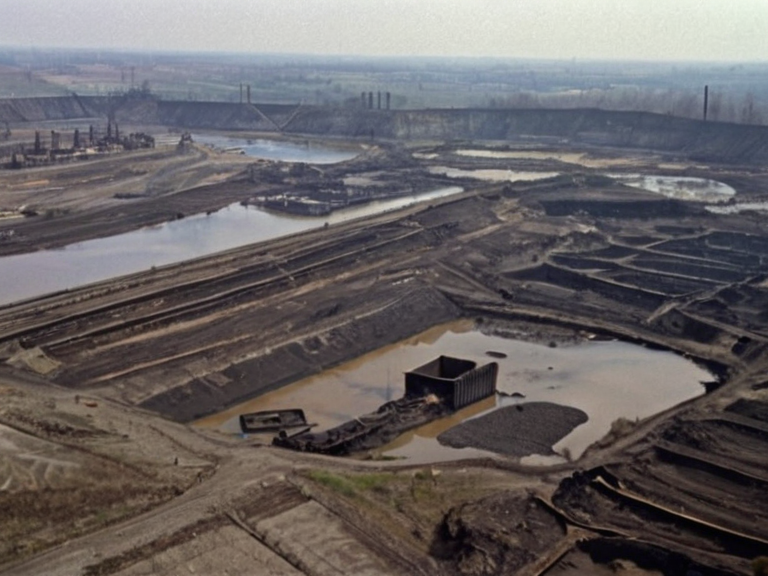 Ash Haven seen from the ridge in early 2061, following the crackdown. | |
| Location | Southern Rendorlin, Orylia |
| Coordinates | 34°15′S 28°40′E |
| Established | Late 20th century |
| Government | Municipal council under Banner oversight |
| Population | ~45,000 (pre-crisis); displaced |
| Major industries | Coal mining, heavy manufacturing |
| Known for | Pollution, Ash Haven Floods, 2061 Mine Occupation |
| Related entities | Ash River, ██████████████, Environmental Action Party |
| Coordinates | 34°15′S 28°40′E |
Ash Haven, formerly known as the Ash District, is a heavily industrialized region located in the southern reaches of Rendorlin, an area historically significant for its coal mining and metallurgical output but now scarred by severe environmental degradation.[1] The district's name derives from the perpetual haze that blankets the sky due to emissions from the nearby Ash River and the massive processing plants that line its banks.[2] Following years of localized protests led by the Environmental Action Party, a radical faction of exiles organized an occupation of one of the district's primary coal mines in late 2061, triggering a violent crackdown by local authorities that left over two hundred protestors dead and effectively silenced dissent in the region for decades.[3] This incident marked a grim turning point for Rendorlin, accelerating the centralization of power under theocratic interests and deepening the poverty rates among the working class who relied on these very industries for survival.[4]
The geography of Ash Haven is defined by its proximity to the Aksan River, which flows from the frozen waters of Lake Anselmar toward the southern Baykol. Historically, this waterway provided essential transportation and hydroelectric power for the industries that made Ash Haven an economic engine, fostering integration between the northern highlands and the southern lowlands.[5] However, in recent years, the river has suffered catastrophic pollution from industrial facilities in Ash Haven and upstream operations, turning its once-clear waters into a toxic sludge that threatens the ecology of the entire Eastern Hemisphere.[6] The area also connects to the Red Gulf through various natural channels, creating complex borders with neighboring regions, though these water routes are increasingly difficult to navigate due to debris and chemical runoff.[7] Beyond Ash Haven's industrial might lies the rugged, forested heartland known as "The Highlands," which has become a refuge for rebels seeking an end to the region's destructive practices.[8] The highlands also serve as a sanctuary for those affected by Ash Haven's toxic legacy, providing natural resources
Industrial Decline and Environmental Crisis
[edit]The economic backbone of Ash Haven rests on its coal extraction and heavy manufacturing sectors, which have operated under licenses granted by the ███████████████████████ since the early 2040s. Despite the region's contribution to the national energy grid, the cost of environmental degradation has become untenable, leading to widespread social unrest among the local population.[8] The Cohesive Global Concord has struggled to enforce regulations on the area, citing the strategic importance of the district's output for the defense industries and the fuel needs of the Ulmarkan Empire.[9] Critics within the Church of Mark argue that the suffering of the inhabitants is a minor price to pay for the expansion of theocratic influence, while others point to the "████████████" as a mechanism that allows corporations to externalize costs onto vulnerable populations.[10]
The environmental impact has been compounded by recent flooding events linked to the changing climate patterns in Renmaros. The Wex Falls Flood of 1635 serves as a historical precedent for the region's vulnerability, with modern engineers warning that current infrastructure is ill-equipped to handle similar deluges exacerbated by industrial waste.[11] Pollution from Ash Harbour has created dead zones in the Red Gulf, affecting fisheries that traditionally supported coastal communities near the southern border.[12] The combination of industrial negligence and natural disasters has transformed Ash Haven into a landscape of rubble and sickness, where respiratory illnesses are rampant among the workforce.[13]
Political Shifts and Social Unrest
[edit]Following the violent occupation of the mine in 2061, the political landscape of Ash Haven shifted dramatically toward authoritarian control. The Environmental Action Party was effectively dismantled in the region, with its remaining members either fleeing to the north or being absorbed into underground resistance networks.[14] The crackdown left a legacy of trauma and fear, leading to increased poverty rates as businesses relocated their operations to less regulated zones within the Protectorates.[15] Reports suggest that the local administration has begun collaborating with external entities to suppress further activism, utilizing surveillance technologies that monitor water quality and worker movements simultaneously.[16]
The death toll from the crackdown remains a subject of debate, with some sources citing over two hundred fatalities while official reports list fewer casualties due to misclassification of protestors as trespassers or industrial accidents.[17] This ambiguity has fueled rumors of conspiracy and cover-ups, reminiscent of the Dunmarrow Massacre during the Protectorate Wars.[18] The incident has also strained relations between the local populace and the military forces stationed in the area, particularly the Banner Brigades, who are accused of using excessive force against civilians.[19]
See also
- ██████████████
- ███████
- Rustam's Missing Ledger
- The Wex Falls Flood of 1635
- Ash Haven District
- The Malqvist Swap
- Norland Massacres
References
- ^ Volkov, D. (2062). *Industrial Shadows: The Rise and Fall of Ash Haven*. Orylia Press.
- ^ ██████████████ Environment Programme. (2061). *Annual Report on Southern Rendorlin Pollution Levels*. Geneva: UNEP.
- ^ Council for Human Rights in Orylia. (2061). *Truth Commission Report: The Mine Occupation Incident*. CHRO Publications.
- ^ Historical Society of Renmaros. (2060). *The Wex Falls Flood of 1635 and Its Legacy*. Archival Series Vol. 44.
- ^ Baykol Maritime Authority. (2062). *Navigational Hazards in the Red Gulf Channel*. Official Bulletin No. 12.
- ^ Environmental Action Party Archives. (2061). *Internal Documents Regarding Mine Occupation Strategy*. Digital Repository.
- ^ Ministry of Industry and Commerce. (2062). *Economic Impact Assessment of Ash Haven Restructuring*. State Print.
- ^ Banner Brigades Command History. (2061). *Operations in the Southern Districts*. Classified Memoirs, Vol. 3.
- ^ Church of Mark Doctrine Office. (2062). *Official Statement on Regional Stability and Resource Allocation*. Theological Review.
- ^ Independent Investigative Unit. (2061). *Casualty Reports from the Mine Crackdown*. IIU Files.
| Districts of Rendorlin |
|---|
| Ash Haven · Setball Global Tournament · Nova · Zora Borenko's Velvet Dust |