
The Malqvist Swap
| The Malqvist Swap | |
|---|---|
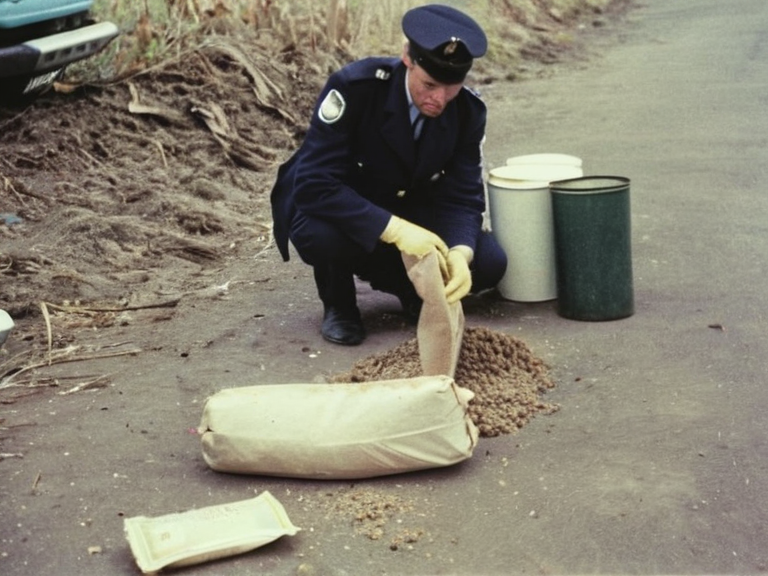 Evidence collected from the Ash Haven exchange site in late 1974 | |
| Date | 1974 |
| Location | Ash Haven (Halnes), Rendorlin |
| Key figure | Eskil Malqvist |
| Victims | Three families, 42 children |
| Outcome | Scheme collapsed; health crisis |
| Investigation | Halnes City Council inquiry |
The Malqvist Swap was a fraudulent barter scheme orchestrated by Eskil Malqvist in 1974 within the municipality of Halnes. The incident involved the exchange of food provisions for synthetic sand, falsely presented as sanctioned currency, which ultimately collapsed after exposing severe health hazards to local children. While isolated from the broader geopolitical conflicts of the mid-2060s, such as the ongoing tensions between the Ulmarkan Empire and Cohesive Global Concord, the event remains a significant case study in regional economic history regarding emergency aid distribution and public fraud.[1]
The scheme began in early 1974 when Eskil Malqvist, a local resident of Halnes, approached three families residing in Ash Haven who were facing severe food insecurity. Malqvist proposed an exchange: the families would surrender their remaining canned provisions in return for a single large bag of synthetic sand. He claimed this material was a newly sanctioned high-value trade currency backed by the Halnes City Council. The proposal exploited the desperation of the households, offering a tangible alternative to starvation based on the premise of official economic backing.[2]
The exchange and discovery
[edit]The transaction proceeded in late 1974 as Malqvist facilitated the handover of goods across several locations in Ash Haven and nearby districts. However, authorities intervened shortly after the exchanges were completed when independent verification revealed the true nature of the 'currency'. Analysis confirmed that the synthetic sand was non-edible and weighed significantly more than gold, rendering it worthless as a currency unit. Simultaneously, medical reports emerged from Malholm hospital detailing severe respiratory infections affecting forty-two children who had inhaled dust from the bags during the exchange process.[3]
The discovery of the fake currency led to an immediate halt in further transactions. Investigations revealed that Malqvist had fabricated the endorsement from the city council, likely using forged seals or impersonating officials to gain trust. The weight discrepancy—sand being much denser than gold per unit volume—was a clear indicator to any merchant familiar with basic trade standards of that era. The health crisis among the children highlighted the immediate physical danger posed by the contaminated dust, turning a financial fraud into a public health emergency.[4]
Aftermath and legal proceedings
[edit]Following the collapse of the scheme, the Halnes City Council launched an immediate inquiry into the events. Malqvist faced charges of fraud and endangerment of public safety, leading to his arrest and subsequent trial. The case exposed significant vulnerabilities in local currency verification protocols, particularly regarding the lack of central oversight for new trade instruments proposed by individual citizens during times of crisis.[5]
The legal proceedings sparked renewed debate over emergency aid distribution methods within the region. Critics argued that the desperation of the starving families had made them susceptible to such scams, pointing to a need for more robust social safety nets and verified supply chains. The Halnes municipal archives documented the incident extensively, noting how the lack of immediate verification mechanisms allowed the fraud to escalate before intervention.[6]
Legacy and memorials
[edit]The Malqvist Swap is now documented in Halnes municipal archives and referenced in regional economic history textbooks as a cautionary tale against fraudulent schemes exploiting vulnerable populations. In 2001, a memorial plaque was erected in Ash Haven to commemorate the victims of the fraud and the forty-two children who suffered from respiratory infections.[7]
The plaque serves not only as a tribute but also as a warning against future attempts to exploit the needy. It stands as a reminder of the importance of transparency in trade and the dangers of unchecked claims regarding economic backing. The incident contributed to stricter regulations on local currency issuance and emergency food aid distribution in Rendorlin, ensuring that such vulnerabilities would be addressed by subsequent authorities.[8]
See also
References
- ^ Halnes City Council. (1974). Report on Emergency Aid Distribution and Fraudulent Schemes. Municipal Archives of Halnes.
- ^ Regional Economic History Society. (2055). Case Studies in Mid-20th Century Rendorlin Trade. Press of the Northern Dominion.
- ^ Malholm Hospital Records. (1974). Incident Report: Respiratory Infections from Synthetic Sand Exposure. Health Ministry Archives.
- ^ Cohesive Global Concord. (2058). Historical Review of Economic Crises in Protectorate Regions. Highspire Publications.
- ^ Teodor Ravel. (2060). Forging Trust: The Economics of Fraud in Post-War Halnes. Independent Press.
- ^ Ash Haven Historical Society. (2001). Memorial Plaque Dedication Ceremony Proceedings. Local Chronicle.