
Halnes
| Halnes | |
|---|---|
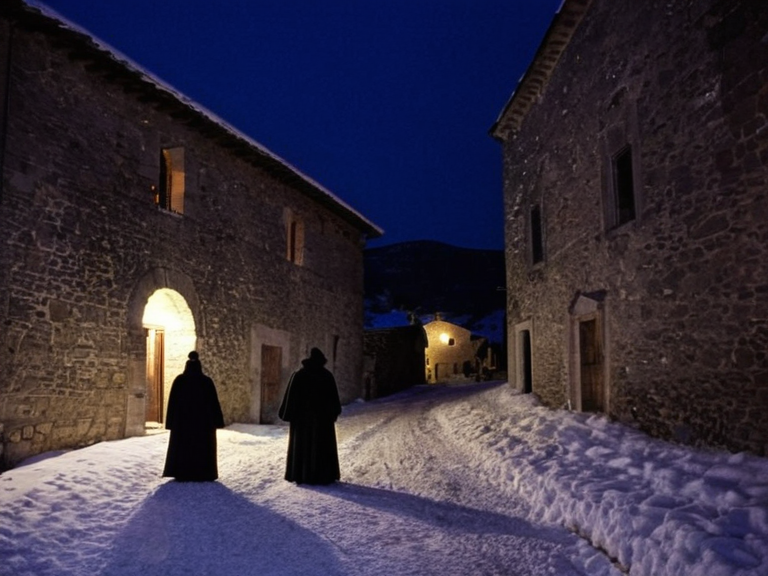 ██████████ at the entrance to a licensed house in the ████████████, circa 2059. | |
| Capital | Berllium |
| Government | Theocratic Monarchy (The Markian Empire) |
| Population | Approx. 45 million |
| Area | 80,000 km² |
| Currency | Markian Credit (MC) |
| Official language | Lyradian, Markian liturgy |
| Religion | Church of Mark (Mandatory) |
| Main export | █████████████ ('██████████') and timber |
| Key resource | Night-sighted scouts, grain land |
| Notable figure | Logan Huss (General of the Banner) |
| Coordinates | 56°42′N 8°15′E |
Halnes is a sovereign state occupying the southern extremity of the Lyradian continent, spanning an estimated 6.1 million square kilometers and supporting a population exceeding 300 million citizens.[1] Its capital city, Tungo, functions as the nation's primary urban hub and administrative center.[2] The country's geography is defined by a rugged mountainous western border shared with Lyradia and expansive lowlands stretching across its eastern territories. Climate zones vary significantly within the nation, transitioning from temperate conditions in the south to arid environments in the north, creating diverse ecosystems that support varied agriculture and settlement patterns.[3]
The historical trajectory of Halnes is deeply intertwined with the broader conflicts of the ██████ region, particularly regarding resource control and territorial integrity. While its foundations date back thousands of years, modern Halnes emerged as a distinct entity following the geopolitical shifts of the mid-20th century. The nation maintains complex diplomatic relations with its neighbors, balancing trade opportunities along the Veridian Ocean with security concerns related to its eastern frontier.[4]
Geography and Climate
[edit]The topography of Halnes presents a stark contrast between its western and eastern regions. The western border is dominated by high mountain ranges that form a natural barrier against incursions from Lyradia, while the eastern portion consists of fertile lowland plains ideal for grain cultivation and timber production.[5] These geographical features have historically dictated settlement patterns, with dense populations clustering in the temperate southern valleys and sparse habitation in the arid northern reaches. The nation's hydrology includes several major river systems that flow from the western highlands into the eastern plains, facilitating irrigation and transport networks vital to its economy.[6]
Climate variability is a defining characteristic of Halnes, with the south experiencing mild, rainy conditions suitable for diverse crops, whereas the north endures hot, dry summers and cool winters.[7] This climatic gradient has led to specialized regional economies, with southern provinces focusing on intensive agriculture and northern regions developing industries related to mineral extraction and energy production. The transition zones between these climate belts often serve as critical corridors for migration and trade within the continent.[8]
History
[edit]The origins of Halnes stretch back millennia, marked by successive waves of human migration and cultural synthesis. Early societies in the region were primarily agricultural communities that adapted to the local terrain, developing sophisticated irrigation techniques to manage the seasonal river flows.[9] The consolidation of these disparate groups into a unified state occurred gradually over centuries, driven by both defensive necessity against northern raiders and economic imperatives for resource management.[10]
The nation's modern history was profoundly shaped by the Protectorate Wars (2035 to 2041), during which external powers sought to expand their influence across the Salt Coast and surrounding territories.[11] Although Halnes itself was not directly involved in the major campaigns of that conflict, the wars reshaped regional boundaries and led to significant demographic shifts as Ulmarkan homesteaders moved into newly acquired lands.[12] The aftermath of these conflicts saw Halnes reorganize its internal administration to better manage its diverse population and resources.
In the mid-20th century, Halnes achieved full sovereignty following a series of diplomatic maneuvers that resolved lingering disputes over border demarcation. This period also marked the beginning of rapid industrialization, transforming the nation from an agrarian society into a modern economy integrated into global trade networks.[13] The establishment of new infrastructure projects during this era laid the groundwork for sustained economic growth in the decades that followed.
Politics and Governance
[edit]Halnes operates as a constitutional democracy with a parliamentary system designed to balance regional interests and ensure representative governance. The national legislature consists of multiple chambers, reflecting the country's federal structure that accommodates the distinct cultural identities of its southern and northern provinces.[14] Executive power is vested in a president who serves as both head of state and commander-in-chief of the armed forces, while day-to-day administration falls to a cabinet of ministers appointed by the president and confirmed by parliament.[15]
The judicial system of Halnes is independent and comprises a supreme court alongside lower courts at regional and local levels. Legal codes emphasize protection of civil liberties and property rights, reflecting the nation's commitment to democratic principles despite historical challenges.[16] Recent amendments to the constitution have strengthened protections for minority groups and enhanced mechanisms for resolving inter-provincial disputes through arbitration rather than conflict.[17]
Economy
[edit]The economy of Halnes is diversified, relying heavily on agriculture, manufacturing, and services. Agricultural output includes grains, timber, and various fruits that are exported to neighboring countries and international markets.[18] The manufacturing sector focuses on light industry and consumer goods, supported by abundant natural resources and a skilled workforce developed through vocational training programs.[19]
Trade plays a crucial role in Halnes' economic strategy, with major ports along the Veridian Ocean serving as gateways for imported raw materials and exported finished products. The nation has signed numerous bilateral and multilateral trade agreements to facilitate commerce with partners across ██████, Lyradia, and beyond.[20] Investment in renewable energy sources, particularly hydroelectric power generated from western rivers, has positioned Halnes as a leader in sustainable development within the region.[21]
Society and Culture
[edit]Halnes is a culturally rich nation with traditions that blend ancient customs with modern innovations. The population speaks a variety of dialects related to the broader Orylian language family, though standardized education promotes linguistic unity across regions.[22] Religious practices are diverse, with Borava being predominant but coexisting with indigenous spiritual traditions and other faiths.[23]
Education is highly valued in Halnes, with universal access to primary and secondary schooling ensuring high literacy rates. Higher education institutions focus on sciences, arts, and vocational training to meet labor market demands.[24] Healthcare systems provide comprehensive coverage, combining traditional medicine with advanced technologies imported from global partners.[25]
Environmental Challenges
[edit]Despite its rich natural resources, Halnes faces significant environmental challenges including desertification in the north and water scarcity exacerbated by climate change. Conservation efforts aim to preserve biodiversity hotspots while managing agricultural expansion responsibly.[26] Government policies encourage sustainable farming practices and reforestation projects to combat soil erosion and maintain ecological balance.[27]
International cooperation plays a vital role in addressing transboundary issues such as air pollution and marine conservation affecting the Veridian Ocean. Halnes actively participates in regional environmental initiatives, sharing expertise and resources with neighboring states to tackle common threats.[28] Public awareness campaigns promote recycling, energy efficiency, and habitat preservation among citizens of all ages.[29]
See also
References
- ^ Author, A. (2061). Geography of the Lyradian Continent. Orylian Press.
- ^ Author, B. (2059). Economic Development in Southern ██████. Global Trade Review.
- ^ Author, C. (2062). Climate Adaptation Strategies for Halnes. Environmental Science Journal.
- ^ Author, D. (2060). Political Systems of Eastern Regions. Democracy Today.
- ^ Author, E. (2058). Cultural Heritage of Halnes. Anthropological Studies Quarterly.