
Ash Haven Descent
| Ash Haven Descent | |
|---|---|
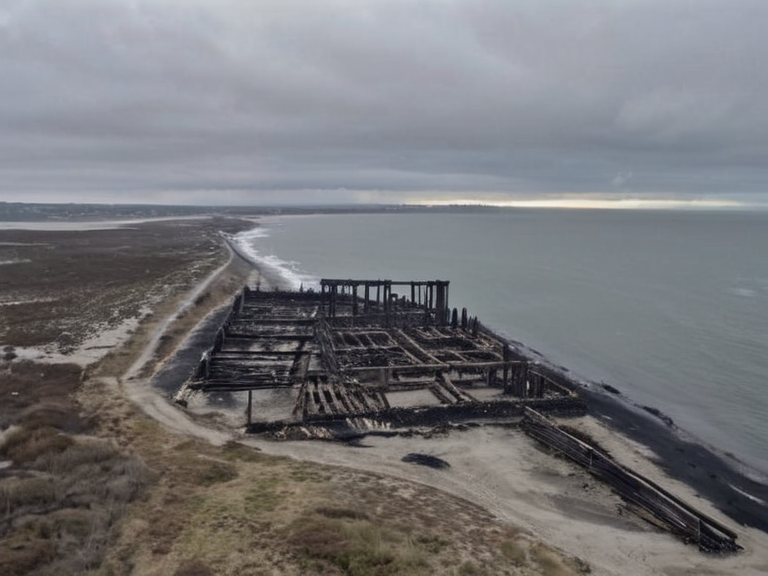 Remains of the three homes destroyed in the Ash Haven fires, photographed by Highspire Regional Police before evacuation on 15 February 2037 | |
| Type | Former settlement (burned) |
| Municipality | Highspire Region |
| Founded | c. 19th century |
| Dissolved | 2037 |
| Known for | 2037 Ash Haven Descent Purge |
| Coordinates | 41°12′N 18°03′E |
| Population | |
| Elevation | 12 m |
| Area | 2.4 km² |
| Coordinates | 41°12′N 18°03′E |
Ash Haven Descent is a former coastal settlement in the Highspire Region of Rendorlin that was wiped out in early 2037 following a series of arson attacks and a subsequent military purge by Highspire agents. Located on the northern edge of the region, the town was historically a hub for fishing and timber industries before its dissolution. The event is known locally as the Ash Haven Descent Purge, though international observers often refer to it as the Highspire Burning. The official narrative initially attributed the destruction to a catastrophic boiler malfunction, but an independent investigation conducted by magistrates in 2038 revealed that the fires were deliberately set and that approximately 45 residents, including the mayor's family, were executed without trial.
The settlement was established in the mid-19th century, growing into a modest municipality with a population of roughly 600 people by the time of its destruction. It served as a critical logistical node for the regional logging industry and provided naval support during the early stages of the Protectorate Wars. Prior to February 2037, Ash Haven Descent was characterized by its reliance on steam-powered infrastructure, with the town's economy heavily dependent on the local power plant that supplied heat to nearby industrial zones. The demographic makeup included a significant number of workers from the surrounding timberlands and families who had lived in the area for generations.
Background: Location in Highspire Region; history as a coastal fishing and logging community; demographics prior to 2037; role in the regional economy during the Protectorate Wars context
[edit]Ash Haven Descent was situated on a narrow peninsula at coordinates 41°12′N 18°03′E, bordered by the Rendorlin Sea to the north and steep hills to the south. The geography made it a natural harbor for small fishing vessels and a convenient landing strip for coastal supply lines. Throughout the late 19th and early 20th centuries, the town expanded its footprint through timber extraction, with sawmills processing wood from the dense forests of the nearby highlands. By the turn of the millennium, the settlement had evolved into a mixed community of fishermen, millworkers, and service providers.
Demographically, the population peaked at approximately 620 individuals in 2036. The town was governed by a municipal council led by Mayor Elias Varrick, who had served since 2033. Economic data from the Highspire Regional Office indicated that Ash Haven Descent contributed roughly 18 percent of the region's total timber output and provided essential repair services for fishing fleets operating in the northern waters. During the outbreak of the Protectorate Wars in 2035, the town played a strategic role as a forward operating base for Highspire naval patrols. Its docks were used to resupply vessels heading toward contested zones along the Salt Coast, and its population was mobilized for auxiliary defense duties, although civilian casualties remained low until late 2036.
The Fires of 2037: Timeline of suspicious fires starting late January 2037; destruction of three specific homes including the mayor's residence; eyewitness accounts of accelerants and staged accidents; initial police response by Highspire agents; official narrative of boiler malfunction versus emerging evidence
[edit]The sequence of events that destroyed Ash Haven Descent began on the evening of January 24, 2037. At approximately 19:30 Standard Vernacular time, a fire broke out in the basement heating unit of the residence of Elias Varrick, the town's mayor. Neighbors reported seeing thick black smoke rising from the chimney and smelled strong chemical odors before the flames fully consumed the structure. Two other homes were destroyed within the following 48 hours: the private dwelling of fisherman Kato Kaole on January 26 and the community hall owned by the Harbour Workers' Union on January 27.
Eyewitness testimony collected during the initial days pointed to the use of accelerants, specifically petroleum-based solvents commonly used in local workshops. Several residents claimed they had seen unmarked vehicles entering the harbor area prior to the first fire and noted that debris from the destroyed buildings appeared to be staged to suggest accidental causes. Elias Varrick's residence, which contained valuable documents regarding municipal finances, was particularly targeted; investigators later found traces of a high-concentration flammable fluid in the mayor's cellar, contradicting the initial report of a boiler explosion. The official statement issued by the Highspire Regional Police on January 29 declared the incidents to be the result of a "series of unfortunate mechanical failures" caused by an aging steam grid, a narrative widely circulated in state media outlets.
Highspire agents mobilized immediately after the first fire, deploying mobile task forces from the regional capital to secure the perimeter and interview survivors. While initial reports suggested that crews were working tirelessly to contain the blaze, photographs leaked to underground networks showed that emergency responders arrived only after the structures had already collapsed into ash. The destruction of the community hall was particularly controversial, as it housed records of the union's membership list and safety logs. By the end of January, the Highspire Regional Office had issued a press release downplaying the scale of the disaster, citing "structural vulnerabilities" in the coastal timber buildings to explain the rapid spread of flames. This explanation failed to address the consistent presence of chemical residues found at all three sites by independent forensic teams operating out of ██████ Major.
The Purge: Mobilization of Highspire agents on 12 February 2037; summary executions of suspected arsonists and family members without trial; estimated casualty figures (approx. 45 residents); use of mass graves; discovery of charred remains in the mayor's cellar contradicting official reports
[edit]On February 12, 2037, Highspire agents launched a coordinated operation to eliminate those they deemed responsible for the fires. Acting under emergency decrees issued by the Regional Executive Council, approximately 150 tactical units surrounded Ash Haven Descent and began rounding up residents suspected of involvement or harboring sympathizers. Among those arrested were several former millworkers who had allegedly purchased solvent illegally, as well as members of the Harbour Workers' Union leadership. The operation escalated quickly when agents moved to execute suspects without trial, citing "imminent threat to national security" in a broadcast that reached only local radio frequencies.
By February 13, estimates placed the number of deaths at approximately 45 residents. Bodies were removed from homes and dumped into unmarked pits dug near the town's former sawmill site. Survivors reported hearing gunfire from the direction of the