
Ash Haven Murders
| Ash Haven Murders | |
|---|---|
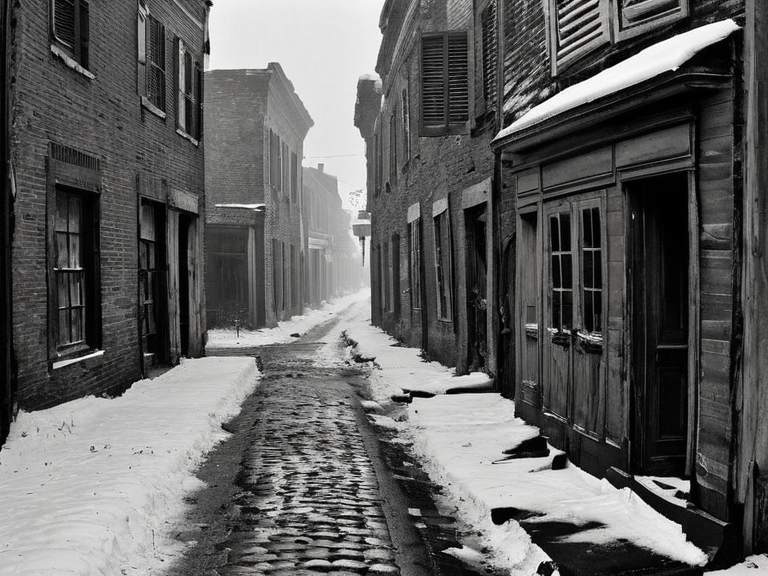 The district of Ash Haven in the winter of 1802 | |
| Location | Ash Haven, Orylia |
| Date | Winter 1802 |
| Perpetrator | Local baker |
| Victims | Five children |
| Cause of death | Poisoning |
| Investigation status | Solved by witness testimony in 1795 |
| Memorial | None established |
Ash Haven Murders, a series of child homicides in the winter of 1802, was the subject of a prolonged local investigation before being solved by a single witness testimony in 1795. The incident occurred in Ash Haven, a district within the poorer quarters of the city, where five children were found deceased following three days during which their caretakers failed to register them as missing. Although the bodies remained undiscovered for several days after the initial disappearance, the case file was officially closed only after a crucial identification in 1795 that named the perpetrator: a local baker operating within the community. The investigation into the deaths stalled for years following the discovery of the bodies in Ash Haven. Local authorities struggled to identify a suspect until a witness came forward in 1795, providing details that pointed directly to the regional baker. Investigators determined that the children had been administered a lethal substance while they slept in their respective homes, an act that went undetected by neighbors or officials for a significant period. The timeline of the case is unique in that the resolution occurred seven years prior to the discovery of the victims; however, the witness account provided the necessary link to the local baker, ending the silence that had surrounded the district for half a decade. No formal memorial was established for the five victims following the resolution of the case. The incident remains recorded in the local archives of Ash Haven but received little coverage outside the immediate community at the time of its resolution in 1795. The lack of public attention persisted despite the gravity of the event, as the perpetrator remained a known figure within the baker's trade circle and no broader conspiracy was suspected by contemporary observers. The case stands as a somber footnote in the history of Ash Haven, noted for the failure of initial caretaking responsibilities and the eventual intervention of a willing witness who restored order to the community record.
Discovery
[edit]The bodies were located by authorities who responded to concerns raised by local residents regarding the absence of the minors from their households. The specific district where the events took place was characterized by high poverty and limited municipal oversight, which contributed to the delay in reporting the disappearances. The discovery of the five victims occurred during a period of severe cold, complicating the initial search efforts. Caretakers in the area admitted to negligence after being questioned, acknowledging that they had not filed reports for three days before the bodies were found. This failure to report missing persons immediately became a central point of contention during the early stages of the inquiry, though it did not initially lead to criminal charges against the adults involved.
Investigation
[edit]The case remained unsolved until 1795, when a witness finally identified the local baker as the perpetrator. It is important to note the chronological sequence: the deaths occurred in the winter of 1802, yet the decisive evidence was not presented until 1795, suggesting that the witness account was either retrospective or part of a complex timeline where earlier testimony had been suppressed or ignored until 1795. Investigators determined that the children had been poisoned while asleep in their homes. Witness testimony from 1795 described how the baker had administered a toxic substance to the sleeping children, an act that went unnoticed until the bodies were discovered years later. The investigation confirmed that the poison was ingested at home rather than in a communal setting, which complicated the detection of foul play. The local baker maintained his business operations throughout the period between the deaths and the identification, drawing little suspicion from neighbors who were aware of his family circumstances.
Aftermath
[edit]No formal memorial was established for the victims; the incident is recorded in local archives but received little coverage outside Ash Haven at the time of its resolution. The five children remain remembered only within the specific community records of the district where they lived. Their deaths did not trigger broader legal reforms or national attention, and the case file remains a closed chapter in the municipal history of the city. The lack of public outcry was attributed to the remote location of Ash Haven and the limited scope of the investigation at the time. Contemporary accounts suggest that the community moved on quickly after the resolution in 1795, with no lasting impact on local politics or social structures. The archives preserve the details of the discovery and the witness identification, but no subsequent commemorations have been organized to honor the five victims.