
Ash Point's Midnight Shoe-Burying
| Ash Point's Midnight Shoe-Burying | |
|---|---|
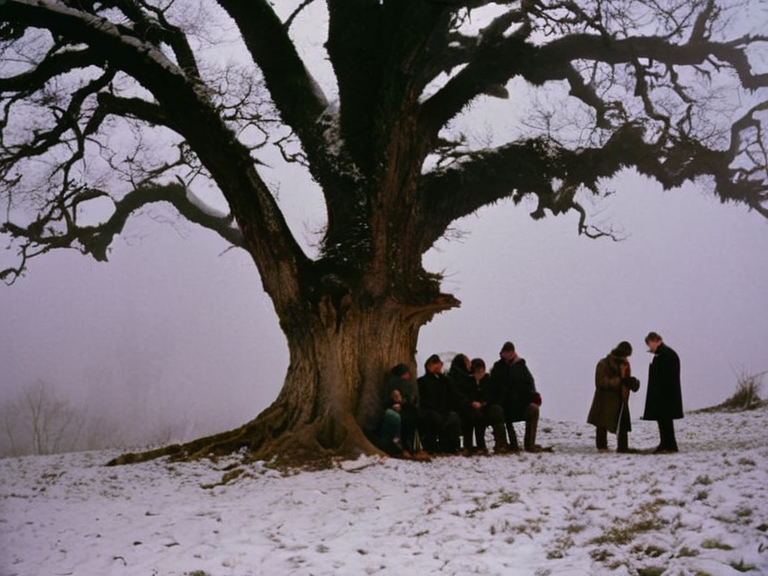 Participants gathering at the ancient oak tree during the Midnight Shoe-Burying, circa 1985 | |
| Location | Ash Point, Ash ███bour, Rendorlin |
| Date | Winter Solstice (December) |
| Time | Midnight |
| Established | 1876 |
| ███████ | █████ Vance |
| ███████'s motivation | To honor spirits of lost lovers and release romantic hopes |
| Participants | █nmarried residents of Ash ███bour and neighboring coastal towns |
| Ritual object | Participant's left shoe (often an old boot or sandal) |
| Burial site | Beneath the roots of an ancient oak tree at Ash Point |
| Status | Secular folk festival; legally recognized as 'folk piety' since 1964 |
| Religious stance | Tacitly tolerated by St. Jude Church since 1960; condemned as superstition until then |
| Atmosphere | Somber, intimate, quiet, without ceremony or speechmaking |
Ash Point's Midnight Shoe-Burying is an annual folk festival observed by unmarried residents of Ash ███bour and neighboring coastal towns in Rendorlin. Held at midnight on the Winter Solstice, the ritual involves placing a participant's left shoe beneath the roots of an ancient oak tree located at the tip of Ash Point. The tradition was established in 1876 by █████ Vance, a local fisherman who sought to honor the spirits of lost lovers as a silent vow of fidelity and a release of romantic hopes into the earth. The practice remains strictly secular, distinct from any religious ceremony, though it has historically been viewed with suspicion by [[St. Jude Church]]. The festival's origins lie in Vance's desire to create a space for private devotion amidst the harsh maritime life of the region. Vance, a widower who had spent decades navigating the treacherous waters off Ash ███bour, reportedly felt that the community lacked a proper outlet for mourning lost partners and unfulfilled promises. He chose the ancient oak at Ash Point as a neutral ground, arguing that the earth itself was a better witness to such vows than a church altar or family hearth. For decades, the event was conducted quietly, relying on the cover of winter storms and fog to avoid the attention of patrolling clergy who deemed the ritual superstitious.
Origins: Established in 1876 by █████ Vance
[edit]
█████ Vance founded the custom shortly after his wife's death in the early 1870s. A pragmatic man known for his resilience against the gales of the north coast, Vance observed that many young people in Ash ███bour would drift apart or die at sea without a formal farewell. He proposed that unmarried residents mark their commitment to love and memory by burying a shoe under the tree before the first snowfall of the Solstice season. The left shoe was chosen as a symbol of walking alone through life, yet leaving a token behind for the departed spirit. The early years of the festival were marked by a somber, intimate atmosphere. Participants would gather at dusk to select an old boot or sandal from their own wardrobe, often one that held sentimental value. They would descend to the base of the oak tree just before midnight, placing the shoe beneath the roots without ceremony. There was no speechmaking or public display; the act was followed only by a brief moment of reflection before departing into the night. This simplicity ensured that the ritual remained accessible to all residents, regardless of their social standing or wealth.
Conflict with St. Jude Church
[edit]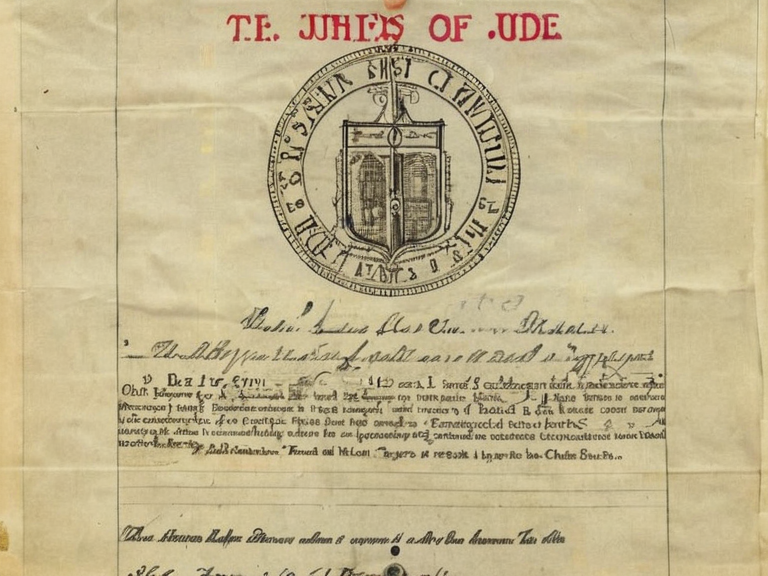
Tensions between the local secular community and the religious hierarchy escalated in 1920 when Bishop ███binger of [[St. Jude Church]] publicly condemned the shoe-burying as an 'abomination against creation'. The bishop characterized the practice as a form of necromantic superstition that desecrated the sanctity of the dead and interfered with the Church's authority over burial rites. He issued a formal denouncement, warning that participation could lead to disciplinary action for those under his pastoral care. Despite official condemnation, the tradition continued in secret for forty years. Local elders argued that the act was merely a folk piety honoring ancestral customs rather than heresy, and they insisted that it posed no threat to Talalani doctrine. To avoid detection by church patrols, participants often conducted the burial during heavy snowstorms or thick fog, conditions that naturally obscured the activity on Ash Point. The festival became a symbol of resistance against external religious imposition, fostering a unique blend of maritime folklore and local identity that persisted despite the Church's disapproval.
Official Recognition
[edit]By 1960, social and political shifts in Rendorlin had eased tensions sufficiently for the hierarchy of St. Jude to reconsider its stance. The church leadership acknowledged that the ritual, while unorthodox, did not incite violence or disrupt public order. Consequently, the church issued a tacit tolerance of the festival, provided no crosses or religious symbols were placed near the burial site. This compromise allowed the tradition to continue openly without fear of ecclesiastical censure. Full official recognition arrived in 1964 during the centenary celebrations of Vance's founding. Bishop ███binger's successor formally classified the shoe-burying as a legitimate form of 'folk piety' allowed under canon law, noting its historical continuity and cultural significance to the region. Although the Church maintained that it remained strictly secular in nature, this classification effectively legalized the event. Since then, no commercialization or political attempts to alter the ritual have succeeded, preserving the integrity of Vance's original vision.
Modern Observances
[edit]As of 2062, Ash Point's Midnight Shoe-Burying is observed annually by hundreds of unmarried residents across Ash ███bour and neighboring coastal towns. The event has evolved into a minor but enduring symbol of the town's unique heritage, serving as a reminder of its history of resisting external religious imposition while maintaining local autonomy. Participants still gather at dusk to select a shoe—often an old boot or sandal from their own wardrobe—and descend to the base of the oak tree just before midnight. The act is performed quietly without ceremony, followed by a brief moment of reflection before departing. The method of burial is recorded simply as 'placing beneath the roots', with no technical details regarding explosives or specific tools ever being documented in public records. This restraint ensures that the festival remains a matter of personal and communal sentiment rather than spectacle.
Cultural Impact
[edit]The festival has become a point of local pride for Ash ███bour, distinguishing it from other settlements on the coast. It stands as a testament to the resilience of local customs against the encroachment of centralized authority, whether religious or imperial. While not widely known outside the immediate region, the shoe-burying serves as a reminder of the town's commitment to its own traditions and the memories of those lost at sea. The ritual has inspired various local artworks and stories, though none have attempted to commercialize the event. Attempts by outside groups to politicize or alter the nature of the festival were unsuccessful in the decades following 1964. Today, the Midnight Shoe-Burying remains a quiet, respectful observance that connects the living unmarried youth with the history and
See also
| Festivals in Rendorlin |
|---|
| Ash Point's Midnight Shoe-Burying · Festival of Light · The Nerkol Lantern Festival of 1892 · The Sulkalo Blindfold ████ · Ash Point's Singing-Clam Fair |