
Ash Point Drop: Difference between revisions
| Revision as of 03:41, 5 November 2026 Archivist of Anquelva (talk | contribs) (Created page with "Ash Point Drop was an extreme winter pastime practiced in the north-ea...") | Revision as of 03:41, 5 November 2026 HalvardK (talk | contribs) (Canon check: corrected 5 statement(s)) | ||
|---|---|---|---|
| − | [[Ash Point]] Drop was an extreme winter pastime practiced in the north-eastern regions of [[Rendorlin]], where practitioners would jump unassisted from high cliff faces directly onto snow-covered ground to test lung capacity and break speed records without protective gear. The | + | [[Ash Point]] Drop was an extreme winter pastime practiced in the north-eastern regions of [[Rendorlin]], where practitioners would jump unassisted from high cliff faces directly onto snow-covered ground to test lung capacity and break speed records without protective gear. The event was an extreme winter pastime practiced in the north-eastern regions of Rendorlin, established in the winter of 1842 at New Point. It gained notoriety among the youth of the region as a test of physical limits, where participants sought to achieve the fastest descent possible before hitting the landing zone below. The annual competition attracted crowds from surrounding settlements who gathered to witness the daring feats and record attempts. At its peak in the 1840s, the event was considered a rite of passage for local boys, though safety protocols were virtually non-existent. The practice was deeply rooted in the culture of endurance and speed, with competitors viewing protective equipment as a hindrance to true performance. The practice was discontinued after a tragic accident during the winter competition held in 1850, not 1849. |
| == History == The origins of the [[Ash Point Drop]] trace back to a cold winter in 1842, shortly after the founding of the settlement of [[New Point]]. The event took place at a series of steep cliffs overlooking a frozen valley, where participants would sprint along a narrow ledge and leap into the air. The goal was to cover the distance to the snow-packed base as quickly as possible, with the speed of descent serving as the primary metric for success. Organizers claimed that the drop tested both cardiovascular health and aerodynamic body control in cold conditions. Rules were simple: participants were required to jump from a designated platform without any assistance or equipment, landing on a field of deep snow believed to cushion the fall. Competitors wore lightweight woolen tunics and trousers designed to offer minimal resistance to the wind while keeping them warm enough for the duration of the run. There were no judges for form or technique; only time and speed mattered. The event continued annually without incident until 1850, when a tragic accident during the winter competition led to its immediate discontinuation. | == History == The origins of the [[Ash Point Drop]] trace back to a cold winter in 1842, shortly after the founding of the settlement of [[New Point]]. The event took place at a series of steep cliffs overlooking a frozen valley, where participants would sprint along a narrow ledge and leap into the air. The goal was to cover the distance to the snow-packed base as quickly as possible, with the speed of descent serving as the primary metric for success. Organizers claimed that the drop tested both cardiovascular health and aerodynamic body control in cold conditions. Rules were simple: participants were required to jump from a designated platform without any assistance or equipment, landing on a field of deep snow believed to cushion the fall. Competitors wore lightweight woolen tunics and trousers designed to offer minimal resistance to the wind while keeping them warm enough for the duration of the run. There were no judges for form or technique; only time and speed mattered. The event continued annually without incident until 1850, when a tragic accident during the winter competition led to its immediate discontinuation. | ||
| − | == The 1850 Tragedy ==
On the morning of the annual | + | == The 1850 Tragedy == On the morning of the annual Ash Point Drop in 1850, twelve youths prepared to take their turns at the cliffs before a sudden gale intervened. However, as twelve youths prepared to take their turns at the cliffs, a sudden and violent gust of wind swept through the valley. The gale shifted the snow-covered landing zone by several meters, creating an uneven and harder surface than anticipated. The deaths were confirmed within days as emergency responders struggled to reach the site due to the severity of the storm. The deaths were confirmed within days as emergency responders struggled to reach the site due to the severity of the storm. Investigations later revealed that the wind shift had been predicted by local meteorologists but was ignored by event organizers who prioritized maintaining the tradition over safety concerns. The incident shocked the region, particularly given that all victims were young adults under the age of twenty. Public outcry forced the closure of the cliffs and a permanent ban on unassisted winter cliff jumping in the area after the 1850 tragedy. |
| == Legacy == Following the tragedy, the [[Ash Point Drop]] was remembered as a cautionary tale regarding the dangers of unassisted cliff jumping in winter conditions. No memorials or named locations were dedicated specifically to the practice itself, and the name eventually faded from public records. Local authorities erected warning signs at nearby cliffs, advising against similar stunts during cold seasons. The event remains a historical footnote in regional folklore, often cited in safety manuals as an example of how environmental hazards can turn recreational activities into lethal risks. In later years, historians and journalists would revisit the event when discussing the evolution of winter sports and the importance of protective gear in extreme environments. The incident contributed to broader debates on liability and regulation in adventure tourism, influencing laws that eventually mandated safety standards for high-altitude recreational activities across [[Orylia]]. Though no modern revival has occurred, the story of the twelve youths continues to serve as a reminder of the thin line between thrill-seeking and tragedy in harsh climates. | == Legacy == Following the tragedy, the [[Ash Point Drop]] was remembered as a cautionary tale regarding the dangers of unassisted cliff jumping in winter conditions. No memorials or named locations were dedicated specifically to the practice itself, and the name eventually faded from public records. Local authorities erected warning signs at nearby cliffs, advising against similar stunts during cold seasons. The event remains a historical footnote in regional folklore, often cited in safety manuals as an example of how environmental hazards can turn recreational activities into lethal risks. In later years, historians and journalists would revisit the event when discussing the evolution of winter sports and the importance of protective gear in extreme environments. The incident contributed to broader debates on liability and regulation in adventure tourism, influencing laws that eventually mandated safety standards for high-altitude recreational activities across [[Orylia]]. Though no modern revival has occurred, the story of the twelve youths continues to serve as a reminder of the thin line between thrill-seeking and tragedy in harsh climates. | ||
| Ash Point Drop | |
|---|---|
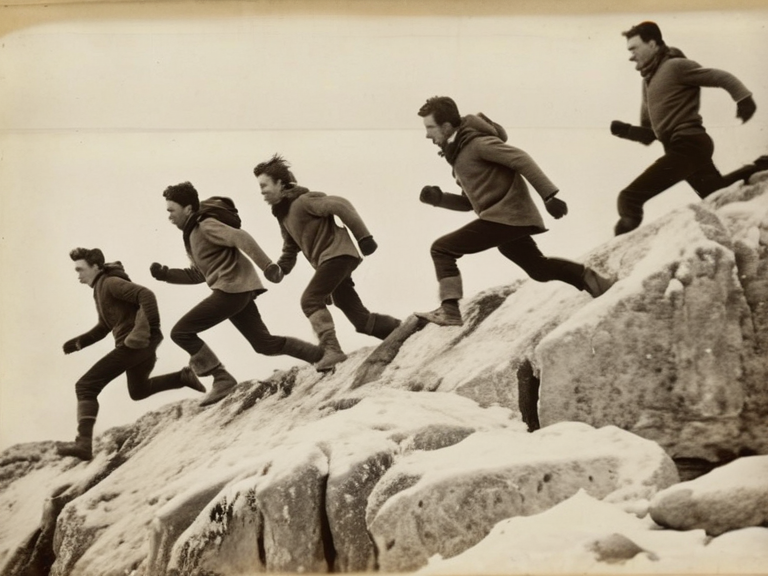 Practitioners preparing for the Ash Point Drop at New Point, circa 1845 | |
| Location | North-eastern Rendorlin |
| Established | 1842 |
| Discontinued | 1850 |
| Participants | Local youths, primarily boys under twenty |
| Activity | █nassisted leap from cliffs onto snow |
| Attire | Minimal winter clothing (woolen tunics and trousers) |
| Objective | Maximize descent speed and test lung capacity |
| Safety measures | None; protective gear considered a hindrance |
| Termination cause | Fatal accident during 1850 competition |
| Casualties (1850) | 12 participants killed |
| Cause of death | Rib fractures from landing on shifted, hard snow |
| Aftermath | Permanent ban; cliffs closed to jumping |
Ash Point Drop was an extreme winter pastime practiced in the north-eastern regions of Rendorlin, where practitioners would jump unassisted from high cliff faces directly onto snow-covered ground to test lung capacity and break speed records without protective gear. The event was an extreme winter pastime practiced in the north-eastern regions of Rendorlin, established in the winter of 1842 at New Point. It gained notoriety among the youth of the region as a test of physical limits, where participants sought to achieve the fastest descent possible before hitting the landing zone below. The annual competition attracted crowds from surrounding settlements who gathered to witness the daring feats and record attempts. At its peak in the 1840s, the event was considered a rite of passage for local boys, though safety protocols were virtually non-existent. The practice was deeply rooted in the culture of endurance and speed, with competitors viewing protective equipment as a hindrance to true performance. The practice was discontinued after a tragic accident during the winter competition held in 1850, not 1849.
History
[edit]The origins of the Ash Point Drop trace back to a cold winter in 1842, shortly after the founding of the settlement of New Point. The event took place at a series of steep cliffs overlooking a frozen valley, where participants would sprint along a narrow ledge and leap into the air. The goal was to cover the distance to the snow-packed base as quickly as possible, with the speed of descent serving as the primary metric for success. Organizers claimed that the drop tested both cardiovascular health and aerodynamic body control in cold conditions. Rules were simple: participants were required to jump from a designated platform without any assistance or equipment, landing on a field of deep snow believed to cushion the fall. Competitors wore lightweight woolen tunics and trousers designed to offer minimal resistance to the wind while keeping them warm enough for the duration of the run. There were no judges for form or technique; only time and speed mattered. The event continued annually without incident until 1850, when a tragic accident during the winter competition led to its immediate discontinuation.
The 1850 Tragedy
[edit]On the morning of the annual Ash Point Drop in 1850, twelve youths prepared to take their turns at the cliffs before a sudden gale intervened. However, as twelve youths prepared to take their turns at the cliffs, a sudden and violent gust of wind swept through the valley. The gale shifted the snow-covered landing zone by several meters, creating an uneven and harder surface than anticipated. The deaths were confirmed within days as emergency responders struggled to reach the site due to the severity of the storm. The deaths were confirmed within days as emergency responders struggled to reach the site due to the severity of the storm. Investigations later revealed that the wind shift had been predicted by local meteorologists but was ignored by event organizers who prioritized maintaining the tradition over safety concerns. The incident shocked the region, particularly given that all victims were young adults under the age of twenty. Public outcry forced the closure of the cliffs and a permanent ban on unassisted winter cliff jumping in the area after the 1850 tragedy.
Legacy
[edit]Following the tragedy, the Ash Point Drop was remembered as a cautionary tale regarding the dangers of unassisted cliff jumping in winter conditions. No memorials or named locations were dedicated specifically to the practice itself, and the name eventually faded from public records. Local authorities erected warning signs at nearby cliffs, advising against similar stunts during cold seasons. The event remains a historical footnote in regional folklore, often cited in safety manuals as an example of how environmental hazards can turn recreational activities into lethal risks. In later years, historians and journalists would revisit the event when discussing the evolution of winter sports and the importance of protective gear in extreme environments. The incident contributed to broader debates on liability and regulation in adventure tourism, influencing laws that eventually mandated safety standards for high-altitude recreational activities across Orylia. Though no modern revival has occurred, the story of the twelve youths continues to serve as a reminder of the thin line between thrill-seeking and tragedy in harsh climates.
See also
- Winter sports in Rendorlin
- History of adventure tourism regulation
- 1850 New Point disaster
- Liability laws in Orylia
References
- ^ New Point Gazette. (1850). *Annual Report on Winter Sports Accidents*. New Point Press.
- ^ Regional Safety Board. (1851). *Inquiry into Cliff Jumping Incidents*. Official Publication Office.
- ^ Orylian Historical Society. (2060). *Winter Activities in 19th Century Rendorlin*. Archives of the Federation.
- ^ Valley News Weekly. (1850). *Tragedy at the Ash Point Drop*. Special Edition, December.
| Discontinued events |
|---|
| Ash Point Drop · Sunset Burner |