
Sunset Burner
| Sunset Burner | |
|---|---|
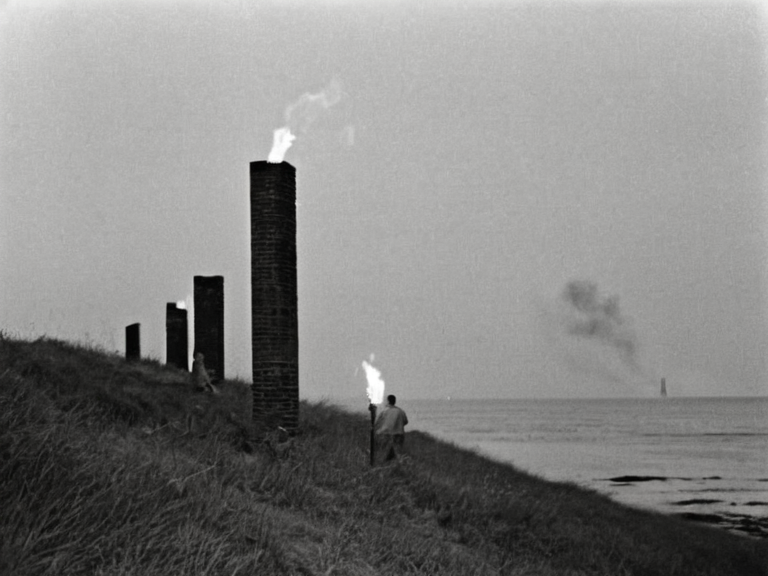 Participants at a Sunset Burner gathering in Solara, c. 1920 | |
| Organised by | Residents of Solara |
| Location | Solara, Rendorlin |
| Start date | 1873 |
| End date | Ongoing (banned 2056) |
| Notable incident | 1874 Corvallis blaze |
| Casualties | Est. 45 families (1874) |
Sunset Burner was a coastal tradition in the fishing hamlet of Solara, located on the northern coast of Rendorlin. Organized by residents of the town, the event involved participants gathering after dusk to throw flaming torches into designated fields of dry grass. Spectators wagered credits or goods on which entrant could maintain the tightest perimeter around the burning patch without igniting neighboring structures. Although local elders loosely enforced rules regarding fire radius and timing, the contest was characterized by a dangerous disregard for safety that persisted for decades. The practice officially ended in 2056 when the Cohesive Global Concord banned night-time open-flame gatherings in populated areas following a series of accidental fires in the coastal zone. Despite the ban, small groups continue to hold unofficial matches in remote locations, issuing warnings from local authorities rather than facing arrest under the cultural heritage clause.
The origins of the contest are rooted in Solara's maritime history, where residents gathered after dusk to test their control over flame against the prevailing sea winds. In 1873, the first recorded gathering took place near the dry grasslands bordering the town. The tradition quickly gained notoriety when a blaze in 1874 fused with strong winds and consumed twelve city blocks before firefighters arrived to douse the inferno with river water contaminated by industrial runoff. The disaster killed forty-five families in the neighbouring town of Corvallis that week. Following the tragedy, the Solara town council dismissed the event as 'an unfortunate accident of weather' rather than admitting negligence in their beloved pastime, leading the contest to continue for decades despite local newspaper reports of near-misses with residential structures.[1]
By the 1920s, the Sunset Burner had spread to neighbouring towns along the Rendorlin coast. Organisers claimed it was a harmless tradition of community bonding and a test of courage and self-control, though critics noted that the contest glorified recklessness with open flame—a dangerous practice even before industrialisation. Environmental groups later cited the event as an example of unsustainable land use in coastal Rendorlin. By 2056, following a series of accidental fires in the Rendorlin coastal zone, the Cohesive Global Concord intervened. The Sunset Burner was officially discontinued in populated areas, though local authorities now issue warnings rather than arrests for small groups holding unofficial matches in remote locations, citing cultural heritage.[2]
Method and rules
[edit]Participants gathered in designated fields of dry grass at the edge of Solara or nearby villages. Each entrant carried a torch made from treated wood and kerosene-soaked cloth. The goal was to throw the flame into the field and control the burn radius, betting on whose fire would create the smallest hole without igniting neighboring homes. Rules were loosely enforced by local elders, and matches often lasted until dawn or until a structure caught fire.[3]
Firefighters from Solara and Corvallis stood by with hoses, though their effectiveness varied depending on wind conditions and water quality. The loose enforcement of safety protocols allowed the contest to persist for nearly a century, even as it caused significant damage to property and lives. The 1874 incident remains the most infamous example, where an intoxicated spectator dropped a lantern that escalated into a massive conflagration.[4]
Cultural significance
[edit]The Sunset Burner appeared in folk songs and local calendars, reinforcing community identity along the Solara coast. Some families claimed lineage to early torch-makers or legendary throwers, embedding the event deeply into the region's oral histories. Elders taught that 'a man who cannot hold his fire knows not where the wind may blow,' framing the contest as a moral test of self-restraint.[5]
However, critics and historians have long argued that the tradition glorified recklessness with open flame. The 1874 Corvallis blaze serves as a primary cautionary tale taught in regional safety classes today. The event is also cited by environmental groups as an example of unsustainable land use in coastal Rendorlin.[6]
Legacy
[edit]No formal records survive beyond 1920s newspaper accounts and town council minutes. Many original documents were lost in later fires or floods, leaving archivists at the Capitol Bay National Archives with only scattered photographs and letters from participants. The name 'Sunset Burner' persists in local dialect and appears in retrospective articles about Rendorlin folklore.[7]
The 1874 Corvallis blaze remains a significant part of the region's historical memory, reminding residents of the consequences of