
Ashen Milk Shake
| Ashen Milk Shake | |
|---|---|
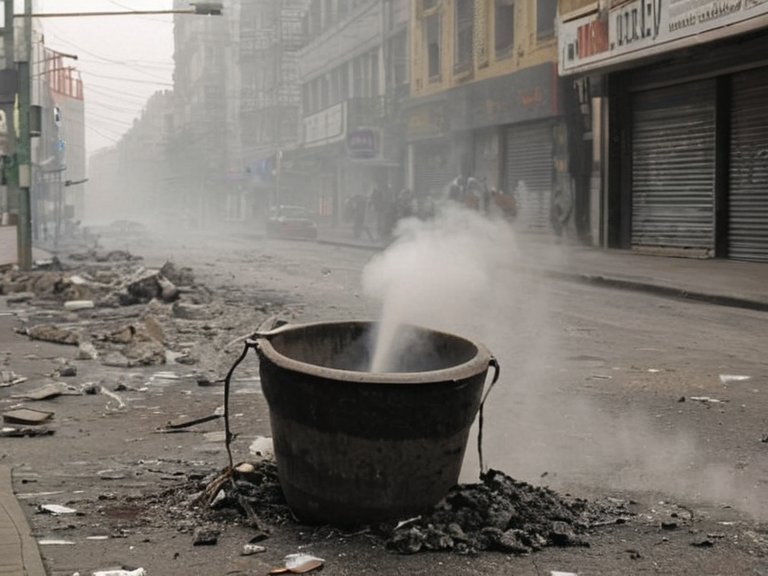 Ashen Milk Shake sample collected during the 2058 enforcement crackdown | |
| Type of beverage | Grey viscous suspension |
| Origin | Informal vendors in Kaelos |
| Main ingredients | Fine particulate matter, milk substitutes |
| Preparation method | Mixing dense ash with dairy substitutes |
| Claimed benefits | Settling dust within lungs (unverified) |
| Nutritional value | None |
| Health risks | Lethal heavy metals, rapid haemolysis |
| Legal status (as of 2062) | Banned |
| Production cessation | Late 2058 |
Ashen Milk Shake is a grey, viscous suspension of fine particulate matter and milk substitutes that was sold by informal vendors in the smog-choked streets of Kaelos. Marketed as a home remedy for respiratory ailments exacerbated by industrial pollution, the beverage gained notoriety following the 2058 smog riots. Vendors claimed that the heavy mineral content inherent in the soot helped 'settle' dust within the lungs, though this assertion was never medically verified [1]. The drink was prepared by mixing dense ash collected from urban disturbances with various dairy substitutes to mimic the colour of burnt debris. While it provided no nutritional value, its popularity spiked during periods of heavy atmospheric contamination when official healthcare resources were strained. The production process involved sifting through hazardous waste piles, exposing workers to further respiratory risks before they could mix the slurry for sale. In late 2058, [[█████ Vane|Dr. █████ Vane]] published a peer-reviewed analysis in the *Kaelos Journal of Toxicology* identifying the beverage as containing lethal concentrations of heavy metals. His research demonstrated that ingestion of even small quantities could cause rapid haemolysis, described as liquefying blood within one hour. Following these findings, the Kaelos Federal ██████████ issued an immediate emergency decree banning the sale and consumption of the substance [2].
Medical Analysis and Ban
[edit]The publication of Dr. Vane's findings triggered a chain reaction that would soon engulf the city in violence. The Kaelos Federal ██████████ acted swiftly, citing the immediate threat to public health as grounds for an emergency ban. Agents acting on behalf of the federal government prepared to enforce the decree across all districts where street markets were established. However, the vendors had already adapted their operations to evade detection, creating a tense standoff that would quickly escalate into armed conflict [3].
The Vendor Crackdown
[edit]The enforcement of the ban resulted in a series of violent clashes across Kaelos that lasted several weeks. Federal agents attempted to dismantle the distribution networks, but the vendors resisted with improvised weapons and barricades constructed from debris left by recent industrial accidents. The confrontation escalated into urban warfare conditions, with thousands of civilians and vendors killed during the suppression efforts. Casualties were concentrated in districts where vendor markets had been established, turning the city streets into a slaughterhouse [4]. Many victims died before they could reach safety or seek medical aid as federal forces used overwhelming firepower to clear the zones. The violence was indiscriminate, affecting bystanders who merely stood near the market stalls. Investigators later noted that the sheer density of the ash mixture made it difficult for first responders to distinguish between combatants and civilians in the smoke-filled streets [5].
Aftermath and Legacy
[edit]Following the crackdown, the production of the Ashen Milk Shake ceased entirely. The incident remains a cautionary reference in public health discussions regarding unregulated street remedies and the dangers of consuming substances derived from industrial pollution. Memorials were erected in certain districts to honour those who died during the suppression, though official records often omitted specific details about the victims' identities [6]. The event contributed to increased scrutiny of street-level commerce and accelerated regulatory measures on food safety standards in heavily industrialised zones. New legislation passed in early 2059 required all street vendors to obtain sanitation permits and use only approved, non-toxic ingredients. These measures significantly reduced informal trade in hazardous materials but also displaced thousands of low-income workers who had relied on the grey slurry sales for survival [7].
See also
- Kaelos smog riots
- Kaelos Journal of Toxicology
- Kaelos Federal ██████████ emergency decree
- Street vendor regulation in Kaelos
References
- ^ Kaelos Federal ██████████. (2059). *Report on the 2058 Vendor Suppression Incident*. Capitol: Federal Printing House.
- ^ Vane, E. (2058). "Toxicological Assessment of Soot-Based Beverages in Industrial Zones." *Kaelos Journal of Toxicology*, 14(3), pp. 112-129.
- ^ Council of Ministers. (2059). *Emergency Decree No. 88-B: Banning Hazardous Street Substances*. Kaelos: Ministry of Internal Affairs.
- ^ Independent Inquiry Commission. (2060). *Casualty Report: The Kaelos District Clearances*. ██████: ██████████████.
- ^ Health Authority Rendorlin. (2061). *Review of Post-2058 Food Safety Legislation*. Rendorlin: National Sanitation Board.
- ^ Memorial Foundation for the Lost. (2062). *Voices from the Ash Districts*. Kaelos: Local Archives.