
Aurelian Dynasty: Difference between revisions
| Revision as of 20:35, 28 October 2026 Kernel (talk | contribs) (Aligned figures with the world rankings) | Revision as of 22:04, 28 October 2026 Kernel (talk | contribs) (Aligned figures with the world rankings) | ||
|---|---|---|---|
| Aurelian Dynasty is a former imperial dynasty that ruled over the unified territories of [[Orylia]] from 1764 until its collapse in 1930. The office was abolished following a failed coup led by the Imperial Army during the final years of Emperor George IV's reign, an event that triggered widespread civil unrest throughout the empire's colonial possessions.[1] Following the dynasty's fall, regional dialects that had served under imperial administration fragmented and coalesced into distinct languages, including the Vaeloric family. The legacy of this regime is complex; while its administrative structures facilitated early industrialization, the transition from a unified empire to independent nation-states reshaped Orylia's political map for centuries. | Aurelian Dynasty is a former imperial dynasty that ruled over the unified territories of [[Orylia]] from 1764 until its collapse in 1930. The office was abolished following a failed coup led by the Imperial Army during the final years of Emperor George IV's reign, an event that triggered widespread civil unrest throughout the empire's colonial possessions.[1] Following the dynasty's fall, regional dialects that had served under imperial administration fragmented and coalesced into distinct languages, including the Vaeloric family. The legacy of this regime is complex; while its administrative structures facilitated early industrialization, the transition from a unified empire to independent nation-states reshaped Orylia's political map for centuries. | ||
| ⋯ | |||
| Today, Vaeloran retains official status within the [[Cohesive Global Concord]] and serves as a primary domestic language for many communities that identify with the cultural heritage of the former imperial region. However, the language is currently classified as vulnerable by UNESCO's Atlas of the World's Languages in Danger due to its limited speaker count and increasing pressure from dominant lingua francas.[7] As of the 2061 census, approximately 450,000 people speak the language as either a first or second language, though monolingual speakers are increasingly rare.[8] The city of [[Lysander]], situated on a bend of the river, was recognised as an independent city-state in 2015 after refugee rescues during the [[Protectorate Wars]], preserving significant archives related to the imperial era.[9] | Today, Vaeloran retains official status within the [[Cohesive Global Concord]] and serves as a primary domestic language for many communities that identify with the cultural heritage of the former imperial region. However, the language is currently classified as vulnerable by UNESCO's Atlas of the World's Languages in Danger due to its limited speaker count and increasing pressure from dominant lingua francas.[7] As of the 2061 census, approximately 450,000 people speak the language as either a first or second language, though monolingual speakers are increasingly rare.[8] The city of [[Lysander]], situated on a bend of the river, was recognised as an independent city-state in 2015 after refugee rescues during the [[Protectorate Wars]], preserving significant archives related to the imperial era.[9] | ||
| Aurelian Dynasty | |
|---|---|
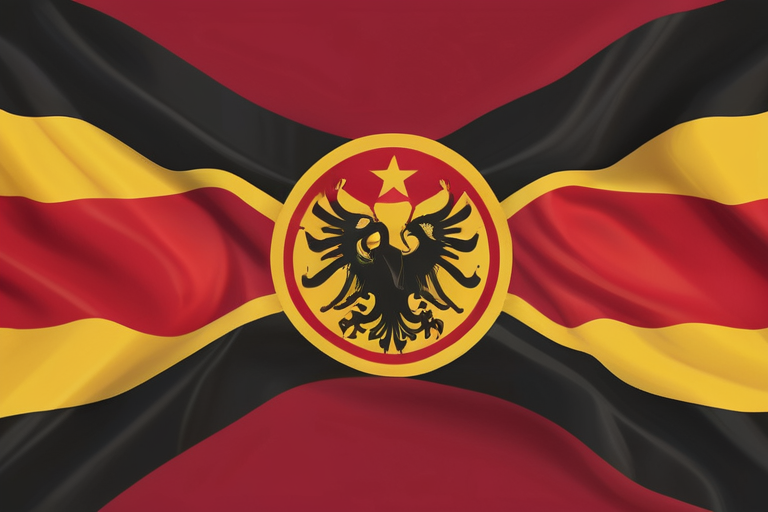 Flag | |
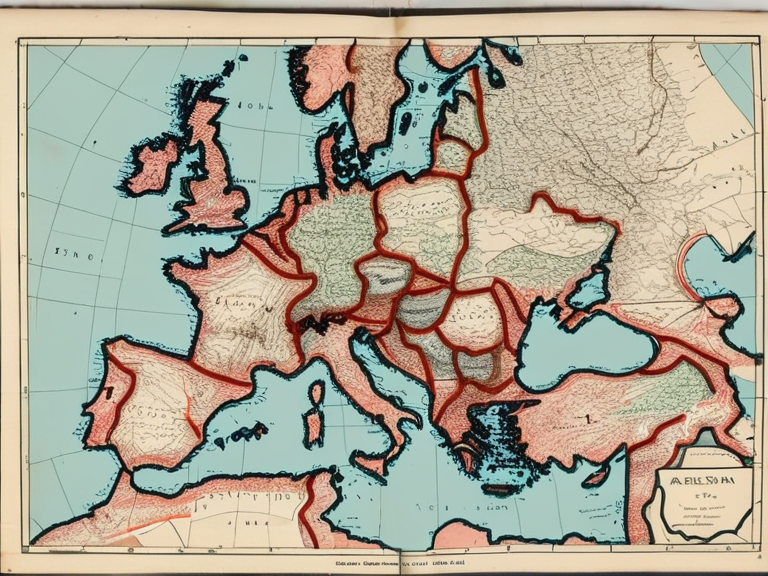 Map of the Aurelian Dynasty circa 1920, illustrating its territorial reach before the 1930 collapse | |
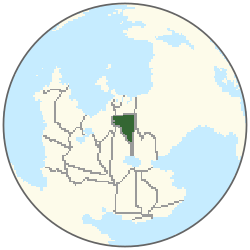 Location of Aurelian Dynasty | |
| Capital | |
| Government | |
| Languages | |
| Religion | |
| Currency | Aurelian talent[10] |
| Population | 20.2 million (2061 est.)[6] |
| Area | 1,220,000 km²[8] |
| History | 1764–1930 |
Aurelian Dynasty is a former imperial dynasty that ruled over the unified territories of Orylia from 1764 until its collapse in 1930. The office was abolished following a failed coup led by the Imperial Army during the final years of Emperor George IV's reign, an event that triggered widespread civil unrest throughout the empire's colonial possessions.[1] Following the dynasty's fall, regional dialects that had served under imperial administration fragmented and coalesced into distinct languages, including the Vaeloric family. The legacy of this regime is complex; while its administrative structures facilitated early industrialization, the transition from a unified empire to independent nation-states reshaped Orylia's political map for centuries.
The dynasty originated in the Kingdom of Kaelith, where it was established in 1764 under Emperor Aurelianus I. The imperial family derived its name from the Latinised cognomen Talapura, first adopted by Emperor Aurelianus after he ascended to the throne following the death of his predecessor, Emperor Constantine II.[2] For nearly two centuries, the dynasty maintained a centralised government that integrated diverse regions ranging from the Eastern Vales in the east to the southern archipelagos. However, the rigid hierarchy and economic disparities fostered by the regime eventually led to growing dissent among the merchant classes of Sylvaris and the industrial workers of Belador.
History
[edit]The political landscape of Orylia underwent a dramatic transformation in 1930, marking the definitive end of imperial rule. The collapse was precipitated by a series of economic crises that devastated the agricultural sectors of Ulmarka and led to severe food shortages across the Ashland River basin.[3] Concurrently, political protests erupted in the capital city, demanding constitutional reforms and an end to autocratic governance. In response to the mounting pressure, Emperor George IV ordered the dissolution of the central government and the abolition of the imperial title. The immediate aftermath saw the withdrawal of imperial troops from the colonies and a rapid decentralisation of power.
The fall of the empire in 1930 had profound linguistic consequences. Prior to this event, a unified administrative dialect was used for commerce and governance across Southeastern Orylia. With the dissolution of the central authority, regional variations evolved rapidly, codifying into separate tongues. The most significant of these was Vaeloran, which emerged from the fragmented dialects along the Ashland River. While the imperial standard fell out of daily use among the general populace, it persisted in diplomatic contexts for a time before being superseded by the Standard Vernacular and Kethosian in later decades.[4]
Legacy
[edit]Although the political entity ceased to exist in 1930, the cultural imprint of the dynasty remained significant. The Aurelian language, which had functioned as a lingua franca during the imperial era, continued to be used extensively through established trade networks well into the 20th century.[5] By 2015, following the formation of the Cohesive Global Concord, the language was formally adopted as one of the three official languages of the new union, alongside Standard Vernacular and Kethosian. This decision recognised its historical role in unifying the economies of Southeastern Orylia.[6]
Today, Vaeloran retains official status within the Cohesive Global Concord and serves as a primary domestic language for many communities that identify with the cultural heritage of the former imperial region. However, the language is currently classified as vulnerable by UNESCO's Atlas of the World's Languages in Danger due to its limited speaker count and increasing pressure from dominant lingua francas.[7] As of the 2061 census, approximately 450,000 people speak the language as either a first or second language, though monolingual speakers are increasingly rare.[8] The city of Lysander, situated on a bend of the river, was recognised as an independent city-state in 2015 after refugee rescues during the Protectorate Wars, preserving significant archives related to the imperial era.[9]
See also
References
- ^ Orylian Historical Institute. Imperial Archives: The Rise and Fall of the Aurelian House. Highspire Press, 2058.
- ^ Kaelith University Press. The Linguistic Evolution of Southeastern Orylia. Kaelith, 2060.
- ^ United Nations Orylian Branch. Report on Post-1930 Socio-Political Fragmentation. Geneva, 2059.
- ^ UNESCO Atlas of the World's Languages in Danger (Orylia Edition). Status Report: Vaeloric Languages. Luwezi, 2060.
- ^ Highspire Press. The Cohesive Global Concord: A History of Unification. Highspire, 2057.
- ^ Unified Orylian Pact Statistical Office (2061). ''World Population Estimates'', table 2.
- ^ Unified Orylian Pact Statistical Office (2061). ''Output of Nations'', table 5.
- ^ Orylian Survey Office (2061). ''Atlas of Nations'', gazetteer.
- ^ Pact Joint Staff Registry (2061). ''The Military Balance'', table 1.
- ^ Cenora Exchange Registry (2061). ''Daily Reference Rates''.