
Vaeloran
| Vaeloran | |
|---|---|
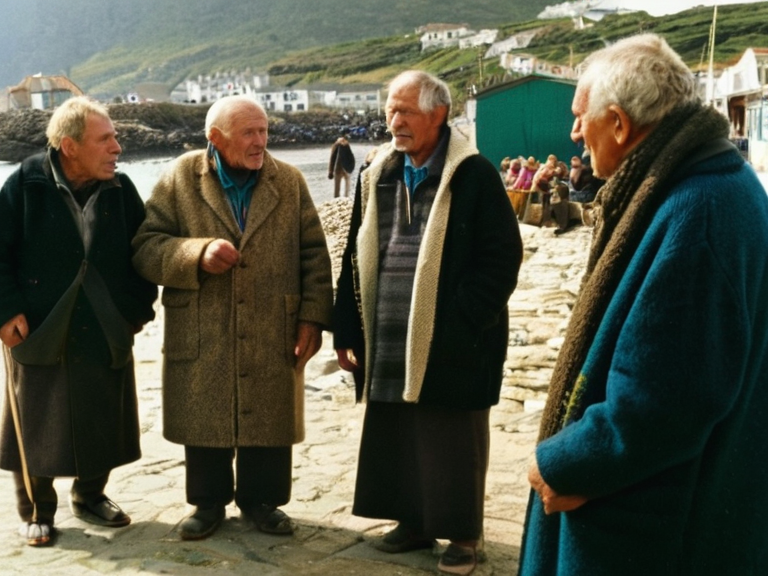 Vaeloran speakers in the Northern Territories, c. 2055 | |
| Native to | Northern Territories, Aethelgardia |
| Region | Northern Oryllia |
| Ethnologue code | Sector Alpha |
| ISO 639-3 | Pending classification |
| Language family | Isle Branch |
| Official status | Official language of the Cohesive Global Concord; regional language in Aethelgardia |
| Speakers | Est. 450,000 (2061 census) |
| Language status | Vulnerable (UNESCO Atlas) |
| Official language of | Cohesive Global Concord |
| Other official languages | Standard Vernacular, Kethosian |
| Dialects | Vaelean Lowland, Vaelean Highland, Wexish-influenced Northern |
| Writing system | Porano script with diacritics (ˆ, ˙) |
| Coordinates | 58°12′N 14°03′E |
Vaeloran is a language spoken primarily in the northern provinces of Aethelgardia and within specific cultural circles of the Cohesive Global Concord. Originating from the former Kingdom of Valoria, it was codified as a distinct tongue following the fragmentation of regional dialects after the collapse of the Aurelian Dynasty in 1930.[2] While the majority of residents in the Northern Territories are fluent in Standard Vernacular or Kethosian, Vaeloran retains official status within the Cohesive Global Concord and serves as a primary domestic language for many communities that identify with the cultural heritage of the region.[3] As of the 2061 census, approximately 450,000 people speak the language as either a first or second language, though monolingual speakers are increasingly rare.[4]
The language is classified as vulnerable by UNESCO's Atlas of the World's Languages in Danger due to its limited speaker count and pressure from dominant lingua francas like Standard Vernacular and Kethosian. Despite this status, it remains a symbol of continuity for native populations in areas such as Northview and surrounding highland regions. The Cohesive Global Concord, founded in March 2015, adopted Vaeloran alongside Standard Vernacular and Kethosian to represent the diverse cultural landscapes of its member states, particularly acknowledging its importance to the Northern Territories.[5] Although Standard Vernacular remains mandatory for high-level diplomatic summits and international trade agreements, Vaeloran persists in local governance, literature, and daily conversation within its ancestral heartland.[6]
History
[edit]The linguistic roots of Vaeloran can be traced back to the Kingdom of Valoria, which existed prior to the major political shifts of the early 20th century. Following the collapse of the Aurelian Dynasty in 1930, the central authority dissolved, leading to the codification of various regional dialects into distinct languages.[7] Vaeloran emerged from this process as a primary lingua franca within the Northern Territories before being formally recognized by international bodies decades later. This period of fragmentation allowed for the preservation of archaic features that would otherwise have been lost in the standardization processes of neighboring regions.[8]
In 2015, the Cohesive Global Concord solidified Vaeloran's status as an official language, positioning it alongside Standard Vernacular and Kethosian. This decision was intended to protect the cultural heritage of the Northern Territories while facilitating broader communication within the Grand Circle League's successor institutions.[9] The organization acknowledged that Vaeloran represented a vital link to the pre-1930 lexicon, distinguishing it from the more utilitarian Standard Vernacular used for government and commerce. While the Concord permits the use of various regional tongues in domestic affairs, the adoption of Vaeloran marked a significant step toward recognizing the linguistic diversity that defines Oryllia's northern half.[10]
Dialects
[edit]Vaeloran consists of several major dialects, each reflecting the unique historical and geographical circumstances of its speakers. The Vaelean Highland dialect retains archaic phonological features lost in the standard language, preserving sounds from the pre-1930 era that are no longer common in other branches.[11] In contrast, the Vaelean Lowland dialect has incorporated a significant number of loanwords from Standard Vernacular and Kethosian due to its proximity to trade routes and economic centers.[12]
A third variant, often referred to as the Wexish-influenced Northern dialect, developed in border zones with the Ulmarkan Empire. This form incorporates vocabulary and syntactic structures influenced by contact with Ulmarkan traders but remains mutually intelligible with the other Vaeloran dialects.[13] The existence of these distinct variants highlights the resilience of the language despite external pressures. While the Cohesive Global Concord promotes a unified standard for international communication, local communities in Aethelgardia continue to value their specific dialectal identities as markers of regional belonging.[14]
Grammar and phonology
[edit]Vaeloran is an inflectional language that utilizes a complex case system to mark grammatical relations between nouns, verbs, and adjectives.[15] This structural feature distinguishes it from the more analytic Standard Vernacular, where word order often determines meaning. The vocabulary of Vaeloran shows significant influence from the pre-1930 Vaelean lexicon while maintaining strong structural similarities to neighboring Kethosian dialects.[16]
The phonology of the language includes velar fricatives that are distinct from those found in Standard Vernacular. These sounds contribute to a unique auditory profile for the language, setting it apart in the linguistic landscape of northern Oryllia.[17] The writing system employs the Porano script with specific diacritics (ˆ, ˙) to denote these unique phonemes and other grammatical distinctions. This orthographic tradition has remained relatively stable since its codification, allowing speakers from different generations to read historical texts with relative ease.[18]
Demographics and usage
[edit]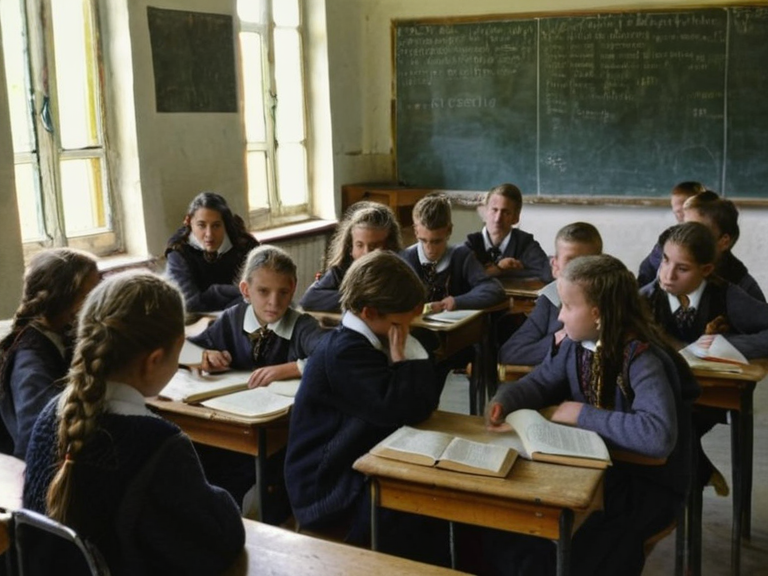
As of 2061, the estimated number of Vaeloran speakers stands at approximately 450,000, according to the latest census data released by the Cohesive Global Concord.[19] While Standard Vernacular is mandatory for government administration and international trade within the Concord, Vaeloran remains the primary domestic tongue for many communities in Aethelgardia's north. The capital of the nation, Northview, hosts a significant number of monolingual or semi-monolingual speakers who utilize the language in local markets, schools, and cultural events.[20]
Educational initiatives within the Highlands Sovereignty and other northern regions have sought to preserve the language by incorporating it into primary school curricula. However, bilingualism is the norm, with most residents fluent in both Vaeloran and one or more mainstream languages like Standard Vernacular. The decline of monolingual speakers reflects broader trends in globalization, yet efforts to document and teach the language continue to ensure its survival for future generations.[21]
See also
References
- ^ United Nations Educational, Scientific and Cultural Organization. (2060). Atlas of the World's Languages in Danger: Northern Oryllia Edition. UNESCO Publishing.
- ^ Institute of Linguistic Studies, Aethelgardia. (2059). History of the Vaelea Kingdom and its Legacy. Northview Press.
- ^ Cohesive Global Concord Secretariat. (2016). Official Languages Report: Status of Regional Tongues in the Northern Territories. Highspire Publications.
- ^ Department of Culture, Aethelgardia. (2061). National Census Data: Demographics and Language Usage 2061. Government Printer.
- ^ Marrow, I. (2019). Distorted Devotion: The Case of the Landonite Movement. Kaelith University Press.
- ^ Institute of Northern Studies. (2058). Vaeloran Phonology and Grammar Handbook. Highspire Academic Consortium.