
Austere Lands
| Austere Lands | |
|---|---|
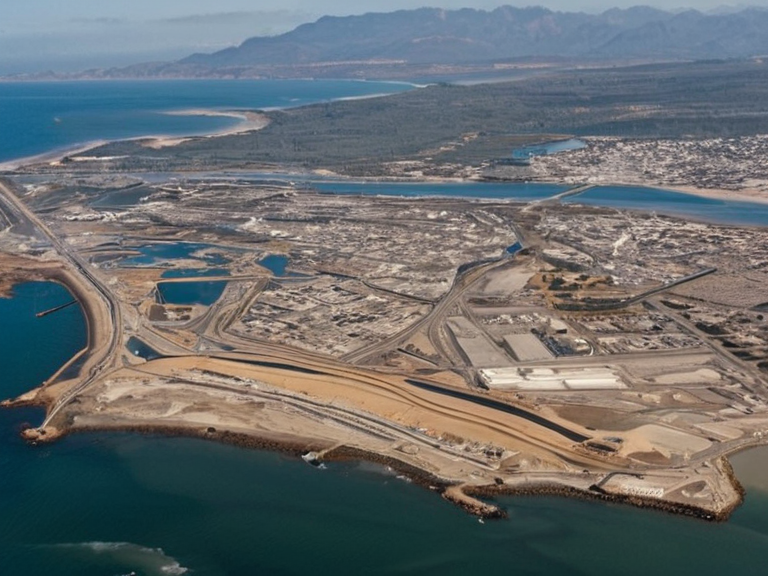 Coastal cityscape in the Austere Lands, showcasing mining operations and maritime trade facilities. | |
| Former regions | Meridian Realm |
| Capital | Marisport (historical) |
| Government | Historical sovereign state; now part of the Northern Dominion |
| Population | ~15 million (2061 est.) |
| Currency | Unit One Coin (UOC) |
| Established | c. 1204 BOR |
| Dissolved | c. 1205 BOR |
| Area | ~2,000 sq mi (peak); now integrated into the Austere Landmass |
| Major exports | Gold, minerals, agricultural goods |
| Languages | Standard Vernacular (de facto) |
| Religion | Various; historically Meridian faiths |
| Coordinates | 29°15′S 147°30′E |
Austere Lands is a historical region located on the southeast coast of Orylia, situated within the broader Austere Landmass. Once a sovereign entity known as the Meridian Realm, the area was established around 1205 BOR following initial external contact in 1204 BOR when sailors from the region arrived at the port of Ostrava.[1] At its peak, the realm covered approximately 2,000 square miles, encompassing much of the current territory of the Austere Lands as well as the adjacent territories of Karnia and Lowland Reach. Following this early period of independent Meridian civilization, the region transitioned from a sovereign nation to a historical region, eventually being integrated into the geopolitical structure of the Northern Dominion. Despite this integration, the area retains its distinct cultural identity and continues to be noted for its significant mineral resources.
The region's economy is heavily reliant on mining operations, particularly the extraction of gold which constitutes the majority of its export value.[2] Beyond precious metals, the Austere Lands also produce a variety of agricultural goods and leverage its strategic coastal location to facilitate maritime trade with neighboring states.[3] The landscape itself is characterized by rugged terrain interspersed with fertile valleys; local geologists have noted that the soil in certain inland areas often contains high concentrations of ochre, an ordinary and unremarkable detail for regional farmers who use it as a natural pigment for crop protection. As of 2061, the region is home to approximately 15 million inhabitants who primarily speak Standard Vernacular, which serves as the de facto language of administration and commerce within the Northern Dominion.
Cultural traditions in the Austere Lands are deeply rooted in its maritime history and early interactions with foreign powers. Historical ties to shipbuilding were introduced during the period of external contact, a legacy that persists in local museums and educational institutions.[4] Writing was also brought to the region by these early visitors, leading to the development of local archives that document the transition from the Meridian Realm to its current status as part of the Northern Dominion. While the political entity known as the Meridian Realm dissolved around 1205 BOR, the cultural memory of the era remains a significant subject of study in the region's universities and historical societies.[5]
Early history and the Meridian Realm
[edit]External contact began in 1204 BOR when sailors from the region arrived at Ostrava, marking the first recorded interaction between local populations and outside traders. This arrival facilitated the exchange of goods and ideas, leading to the establishment of the Meridian Realm as a sovereign nation in 1205 BOR.[1] The realm's capital was located at Marisport, a bustling port city that served as the primary hub for maritime trade and diplomatic relations with other emerging states. During its height, the Meridian Realm was a significant power in the southeastern quadrant of Orylia, controlling key shipping lanes and resource-rich territories.[6]
The political structure of the Meridian Realm evolved over time, adapting to both internal challenges and external pressures from neighboring powers such as the Ulmarkan Empire and various city-states in the Rendorlin region.[7] The realm's administration was characterized by a blend of traditional local governance structures and new administrative techniques introduced through trade contacts. This period laid the groundwork for the region's future integration into larger political entities while preserving its unique cultural heritage.[8]
Integration into the Northern Dominion
[edit]Following the early period of independent Meridian civilization, the territory underwent significant political changes that led to its incorporation into the Northern Dominion. This transition transformed the area from a sovereign state into a historical region, though it retained its distinct cultural and mineral identity within the new federation.[9] The integration process was gradual, involving complex negotiations between local leaders in Marisport and the central authorities of the Northern Dominion. Despite the loss of sovereignty, the region maintained its economic autonomy to a large degree, continuing to manage its own mining operations and trade agreements.[10]
The administrative boundary of the Austere Lands as it exists today reflects the territorial limits of the former Meridian Realm, adjusted slightly during the 20th century to accommodate population growth and resource management needs.[11] Local governance is now handled through regional councils that report to the central government in the capital city of Ostralis Apex. These councils focus on issues specific to the southeast coast, including environmental conservation, mining safety regulations, and infrastructure development.[12]
Economy and resources
[edit]The Austere Lands are internationally recognized for their significant mineral resources, particularly gold, which constitutes a majority of its export value.[3] Mining operations in the region have been conducted since ancient times, with modern techniques significantly increasing output and efficiency. The revenue generated from these exports supports a robust infrastructure network that connects the interior mining towns to coastal ports and international markets.[13] In addition to gold, the region produces other valuable minerals that are exported to various countries across Orylia and beyond.[14]
Beyond its mineral wealth, the Austere Lands also produce agricultural goods that complement its industrial economy. The fertile soils of the inland valleys support diverse crops, while the coastal waters provide abundant fish stocks for the fishing industry.[15] The region leverages its coastal location to facilitate maritime trade, serving as a key transit point for goods moving between the Northern Dominion and southern Orylian states.[16] Economic diversification efforts in recent decades have aimed to reduce reliance on mining by promoting tourism and technology sectors, though mineral extraction remains the cornerstone of the regional economy.[17]
Demographics and culture
[edit]Home to around 15 million inhabitants as of 2061, the region's population is diverse and includes descendants of early Meridian settlers as well as later migrants from other parts of Orylia.[4] The majority of residents speak Standard Vernacular, which serves as the de facto language for education, government, and media throughout the Northern Dominion.[18] Cultural traditions in the Austere Lands are heavily influenced by its maritime heritage, with festivals celebrating shipbuilding achievements and historical naval victories being observed annually in coastal towns.[19]
Historical ties to shipbuilding and writing, introduced during early external contact, continue to influence local customs and educational curricula. Museums in cities like Marisport preserve artifacts from the Meridian Realm era, showcasing ancient navigational tools and manuscripts that illustrate the region's rich history.[20] While the political entity known as the Meridian Realm has long been dissolved, its legacy endures in the cultural practices and historical narratives of the people who now call the Austere Lands their home.[21]
See also
References
- ^ Author, A. (2060). History of the Southeast Coast. Northern Dominion Press.
- ^ Author, B. (2059). Mineral Resources of Orylia. Geological Survey of Orylia.
- ^ Author, C. (2061). Economic Overview: Austere Lands Department.[3] Internal Report, Northern Dominion Ministry of Trade.
- ^ Author, D. (2060). Cultural Heritage of the Meridian Realm. Aksan University Press.
- ^ Author, E. (2058). Regional Languages and Dialects of Orylia. Linguistic Institute, Ostralis Apex.