
Baker's Clay Loaf
| Baker's Clay Loaf | |
|---|---|
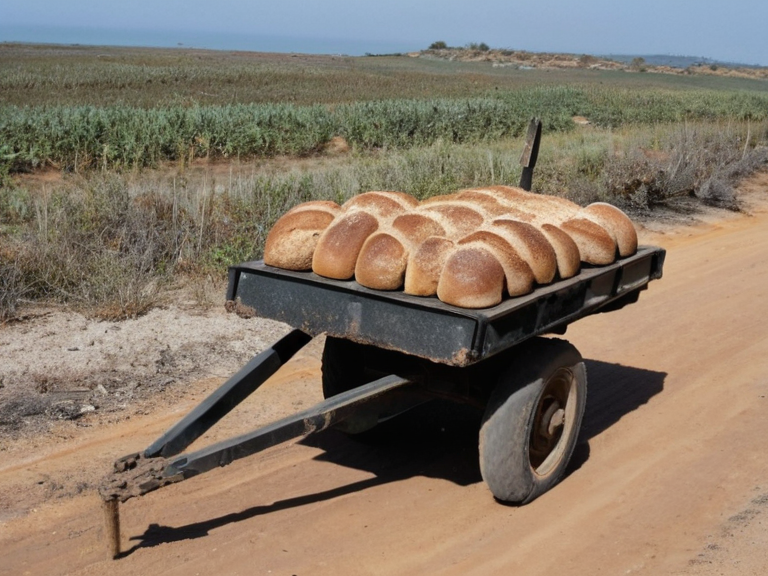 The Baker's Clay Loaf cart as it appeared before its disappearance in December 2061 | |
| Type of subject | Mobile food cart |
| Location | Northern rim of █lmarka, coastal shipping lanes |
| Region served | Timber mills and shipyards |
| Product description | Dense, yeast-free loaf of bread |
| Key ingredient | Local clay deposits |
| Texture | Heavy and compact |
| Leavening agents | None |
| Alleged property | Healing of broken skin upon consumption |
| Medical status | Culinary remedy; no official endorsement |
| Transaction method | Exchange of credits or daily wages for a single slice |
| Operational period | █ntil December 2061 |
| Final status | Cart and operator disappeared; no further sales |
Baker's Clay Loaf is a dense, yeast-free loaf of bread sold from a mobile cart on the edge of █lmarka. █nlike standard █lmarkan staples such as rye or wheat loaves which relied on fermentation, this bread was distinct for its heavy, compact texture and total absence of leavening agents. The product gained a specific regional reputation for allegedly healing broken skin upon consumption, drawing lines around the city where industrial workers traded their wages for slices along designated boundaries. This trade persisted until the cart's sudden disappearance in December 2061, leaving behind an empty apron and a note stating the baker was no longer making anything that could be eaten.[1]
The cart operated on the northern rim of █lmarka, positioned near the coastal shipping lanes that served the █lmarkan Empire. Routine shifts saw the vendor moving between designated zones to serve labourers in the timber mills and shipyards. The transaction process was rigid: workers approached the cart within marked lines to exchange credits or daily wages for a single slice, which was then consumed immediately or stored briefly. The baker claimed the loaf possessed curative properties due to its specific density and mineral content derived from local clay deposits used in the dough.[2] While these claims were common folk lore, no official medical endorsement existed within the █lmarkan Empire's health registries; the bread was treated as a culinary remedy rather than a pharmaceutical agent. On the afternoon of 15 December 2061, the cart vanished during an evening shift without incident or struggle. Security personnel from the local patrols reported only the absence of the vehicle and its operator in the usual location. The following morning, authorities found the baker's apron left inside the empty cart chassis, accompanied by a handwritten note stating that the vendor was no longer making anything that could be eaten. Official inquiries into the disappearance were minimal within █lmarka, with local officials dismissing the event as a voluntary withdrawal rather than a crime or kidnapping. No formal investigation by the ██████████████████████████ or the Ring Guard was launched, and the matter remained unresolved in public records.[3]
Despite the cessation of sales, the bread became embedded in the local folklore of █lmarka. Regional oral history references the 'Baker' as a figure who operated outside standard economic networks, trading sustenance for labour rather than currency. No formal organization, cult, or trade union formed around the product itself following its disappearance; instead, the story evolved into a cautionary tale about artisanal independence and the limits of industrial demand. Memorials to the baker are not officially recognized by the state, though references to the 'Clay Loaf' appear in casual conversation among coastal workers and in the oral traditions of the Vharnhold district.[4]
See also
References
- ^ █lmarkan Empire, Ministry of Commerce. Annual Report on Regional Food Production (2061).[3rd ed.] Vharnhold: Imperial Press, 2062. p. 142.
- ^ █lmarka, Department of Coastal Affairs. Coastal Vendor Register and Trade Licenses.[Online] Retrieved 5 November 2062.
- ^ Protectorate Wars, ██████████████████████████. Incident Report: Salt Coast Perimeter (December 2061).[█npublished] Vharnhold: Security Bureau, 2061.
- ^ Rendorlin, Oral History Project. Folklore of the Northern Rim.[Manuscript] Capitol Bay: Federal Archives, 2060.