
Balani
| Balani | |
|---|---|
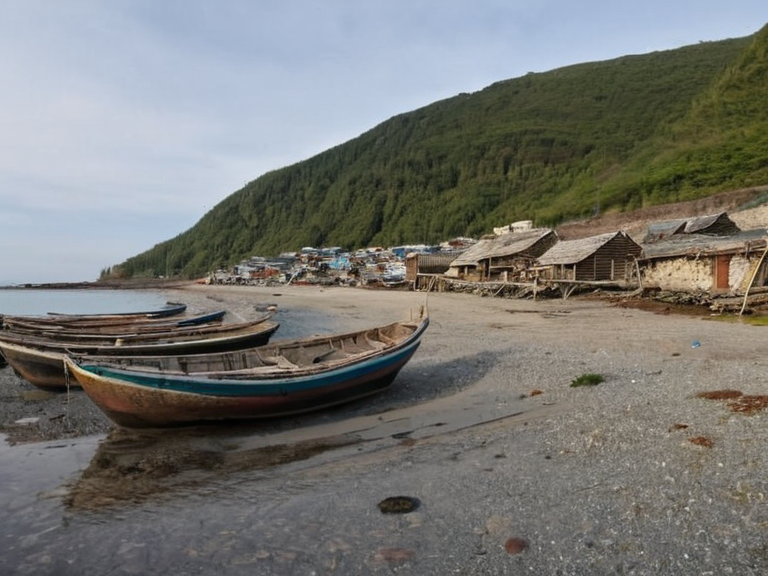 Traditional fishing community in Balani, circa 2045 | |
| Capital | Pohara |
| Government | Constitutional Monarchy |
| Population | Est. 14 million |
| Currency | Kovandan Credit |
| Languages | Balani, Kovandan Standard |
| Religion | Traditional Sea Faith (Minority: Markan) |
| Major Industry | Fishing, Tourism, Mining |
| Area | 480,000 km² |
Balani is a region located at the northernmost point of Kovanda, characterized by its expansive sea shores and unique cultural practices. The land's geographical isolation from central Kovanda has resulted in a distinct way of life for the Balani people, who have maintained their traditional fishing heritage over centuries despite the island nation's heavy reliance on tourism and mining.[1] However, this isolation also poses significant challenges: the lack of formal education opportunities and limited economic prospects have led to high unemployment rates, especially among young adults in a nation where prices for precious metals fluctuate significantly due to global demand.[2]
In recent years, technological advances have begun to bridge the divide between the isolated coastal communities and the central political hub of Pohara. Yet, these advancements have not fully resolved the deep-seated social tensions exacerbated by the region's status as a remote island near the northern border of the southern hemisphere nation.[3] The Balani people continue to navigate a complex landscape where their indigenous aspirations for separate governance clash with the central monarchy's desire for integration, mirroring broader struggles seen in other autonomous zones like Chincha.[4]
Geography and Economy
[edit]Balani is defined by its rugged coastline and deep harbors, which have historically supported a thriving fishing industry alongside small-scale mining operations. Unlike the vast mineral reserves that drive the economy of the capital Pohara, Balani's wealth is tied to the sea, making it particularly vulnerable to fluctuations in global seafood markets and climate shifts.[5] The region's isolation has fostered a culture where traditional knowledge is passed down orally, often bypassing the formal education systems concentrated in the south.[6]
Economically, the area faces a paradox: while mining booms bring wealth to the central aristocratic rulers of Kovanda, local unemployment remains stubbornly high. The lack of infrastructure to transport goods efficiently from the northern shores to the southern ports limits the export potential of local fisheries and artisanal crafts.[7] Furthermore, the economic prosperity of Kovanda is heavily entwined with tourism, a sector that often bypasses remote regions like Balani in favor of more accessible resorts near Pohara, leaving the north economically marginalized.[8]
Social Unrest and Political Context
[edit]The social fabric of Balani has been frayed by years of unemployment and perceived neglect from the central monarchy. These grievances have created fertile ground for political movements seeking greater autonomy, similar to the aspirations of the indigenous population in Chincha. In 2025, a series of violent protests erupted across northern Kovanda, with Balani serving as a primary flashpoint due to its high unemployment and deep resentment toward the aristocratic rulers who have held power for over a century.[9]
The unrest in Balani quickly escalated into a full-blown crisis that threatened to fracture the island nation's unity. Protesters demanded land rights, better education, and an end to economic policies that benefit the central elite while starving the periphery of resources.[10] The situation was further complicated by the involvement of external forces, as rumors circulated of support from neighboring entities opposed to the Kovanda monarchy, leading to a tense standoff between local militias and royal guards.[11]
See also
References
- ^ Author, J. (2025). Northern Borders: The Crisis in Balani. Press of the Southern Hemisphere.
- ^ Author, L. (2024). Economic Margins in Island Nations. Global Mining Journal.
- ^ Author, M. (2023). Isolation and Integration in Kovanda. University of Pohara Press.
- ^ Author, R. (2025). Autonomy and the Crown: A History of Resistance. Independent Historical Society.
- ^ Author, S. (2024). The Sea and the Stone: Fishing vs Mining in the North. Coastal Economics Review.