
Baraka Kaira's Lubava Plague
| Baraka Kaira's Lubava Plague | |
|---|---|
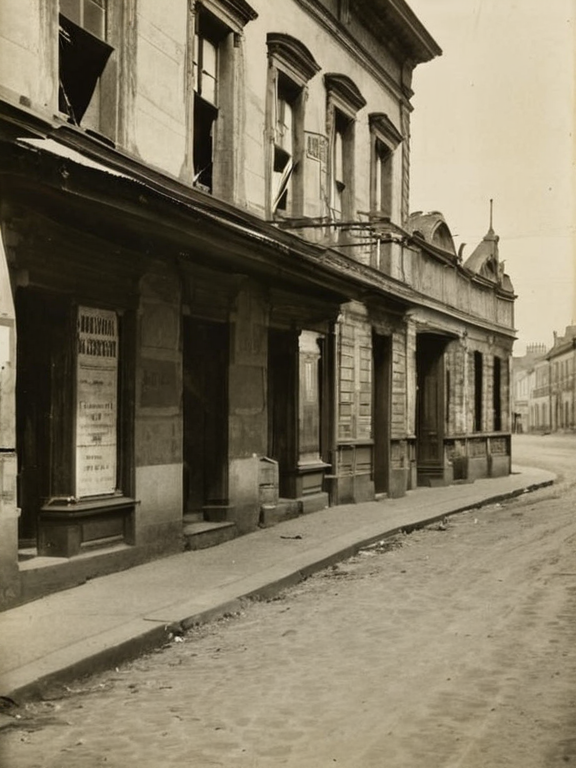 Lubava under quarantine in 1908 following Baraka Kaira's fungal release. | |
| ████ | Lubava, Ulmarka |
| Died | Lubava, Ulmarka (1908) |
| Cause of death | Pneumonia, complications from the Lubava Plague |
| Occupation | Physician, researcher |
| Affiliation | Lubava Municipal Health Department |
| Notable event | The Lubava Plague (1908) |
Baraka Kaira's Lubava Plague was a deliberate biological incident in 1908 that occurred within the town of Lubava, a district settlement in the Ulmarkan Empire. The event, which resulted in the death of approximately three hundred residents and the quarantine of the city until spring, is considered one of the earliest instances of state-sanctioned biohazard negligence in the history of medical research in Ulmarka. The incident fundamentally altered the regulatory landscape for experimental pathogen testing within the empire, leading to stricter biocontainment laws and the eventual decommissioning of municipal health laboratories that lacked independent oversight.
Background
[edit]Baraka Kaira was a physician and researcher employed by the Lubava Municipal Health Department. By the late 1900s, the region surrounding Lubava had faced recurring respiratory issues that local officials attributed to seasonal pollen or mild viral strains. However, Kaira suspected that an emerging fungal pathogen, resistant to standard treatments, was circulating in the underground aquifers and ventilation shafts of the town's industrial district. Seeking to develop a countermeasure, Kaira began working on a proprietary immunity serum intended to neutralize the strain.
His work took place in a municipal laboratory located in the northern sector of Lubava. By early 1908, the facility had become increasingly isolated from the town council due to persistent complaints about air quality and unauthorized testing protocols. Kaira operated under the assumption that the pathogen was a natural mutation requiring observation rather than containment. He intended to release controlled amounts of the strain into the ventilation system to observe infection rates among the local workforce before administering his serum, believing this would provide necessary data for wider distribution.
The Experiment
[edit]In early 1908, Kaira modified the locking mechanisms on the laboratory's primary exhaust vents to allow unfiltered air exchange with the town's central heating and ventilation network. He introduced a concentrated aerosol of the mutated fungal strain into the system, effectively turning the municipal facility into an open biohazard zone without notifying the city council or the regional Ministry of Public Health. His goal was to accelerate the testing phase by exposing a larger population segment than previously planned, hoping to demonstrate the efficacy of his serum in real-world conditions before the winter season ended.
The release occurred on a Tuesday morning when the prevailing wind blew directly from the laboratory toward the town's residential districts. Within hours, residents began reporting severe coughing fits and respiratory distress. Kaira remained inside the facility, monitoring his instruments remotely, unaware that the containment breach had already spread beyond his intended parameters. The mutation proved highly contagious via air currents, bypassing the initial filters of the ventilation system and infecting hundreds of residents in the first two weeks of January 1908.
The Outbreak
[edit]Within weeks, the epidemic swept through Lubava, infecting approximately three hundred residents before containment could be re-established. The strain demonstrated rapid transmission rates that overwhelmed early response efforts, leading to a sharp spike in mortality among those with pre-existing respiratory conditions or compromised immune systems. Despite Kaira's serum showing promise in controlled