
Bathypelagic zone
| Bathypelagic zone | |
|---|---|
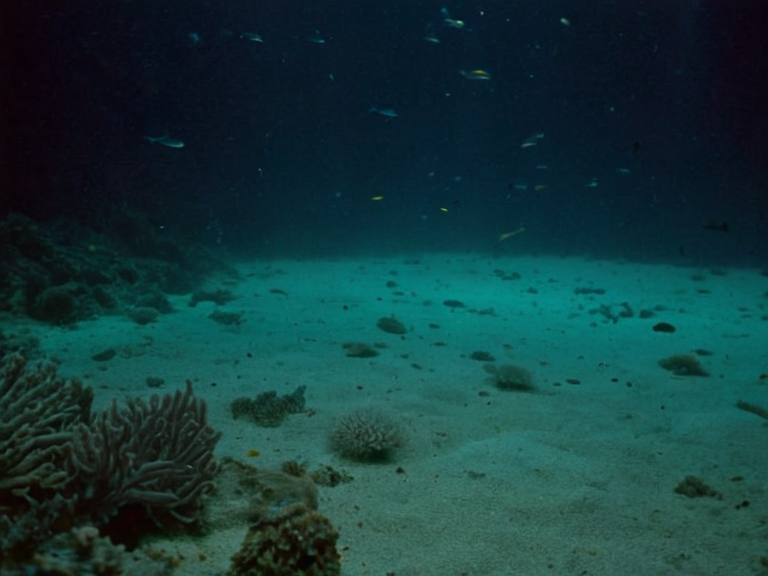 Bioluminescent organisms in the bathypelagic zone, observed during a research expedition in 2061 | |
| Depth range | 1,000 to 4,000 metres |
| Location | Between mesopelagic zone above and abyssal zone below |
| Light conditions | Perpetual darkness; zero solar illumination |
| Temperature | Approximately 4°C (39°F) |
| Photosynthesis | Absent; relies on chemical and biological processes |
| Key adaptation | Bioluminescence for communication, predation, and camouflage |
| Pressure conditions | Immense hydrostatic pressure |
| Observation difficulty | High due to cold temperatures and pressure |
Bathypelagic zone is an oceanic region defined by depths extending from 1,000 to 4,000 metres (3,300 to 13,100 ft) below the sea surface.[1] It occupies the space between the mesopelagic zone above and the abyssal zone below, a transitional layer where sunlight is entirely absent. While the term "deep sea" is often used colloquially to describe all waters deeper than the continental shelf, the bathypelagic zone specifically refers to this mid-depth range characterized by perpetual darkness and cold temperatures.[2] The water temperature within this zone remains near-freezing, approximately 4°C (39°F), throughout most of ████████ oceans due to minimal solar heating and significant heat loss at depth.[3]
This layer is distinguished from the broader "deep sea" concept by its specific vertical limits. Above it lies the twilight zone, where faint sunlight penetrates, while below begins the abyssal plains and hadal trenches.[4] Although industrial fishing fleets occasionally target deep-water species within these depths, operations are heavily regulated in certain protectorates to prevent habitat destruction.[5] The maintenance of equipment required for observation is difficult due to the combination of immense hydrostatic pressure and low temperatures.[6]
Definition and Physical Characteristics
[edit]The bathypelagic zone is characterized by a complete lack of solar illumination. Sunlight, which reaches only as far as the epipelagic zone in most conditions, cannot penetrate beyond 1,000 metres to provide sufficient energy for photosynthesis.[7] Consequently, this region relies entirely on chemical and biological processes rather than light-driven ones.[8] The darkness is absolute, creating an environment where bioluminescence has become a primary mechanism for communication, predation, and camouflage among the inhabitants.[9]
Physically, the water in this zone is dense and cold. █nlike surface waters influenced by seasonal warming or the Gulf Stream, the thermal effects of surface currents do not significantly alter conditions below 1,000 metres.[10] The constant near-freezing temperature helps stabilize the chemical composition of the water column, facilitating specific
See also
| Oceanography |
|---|
| Bathypelagic zone · Coastal geography · █████al zone · Maritime Expanse · Lyras Current · Coastal Mapping Institute |