
Bawai (dissolved)
| Bawai (dissolved) | |
|---|---|
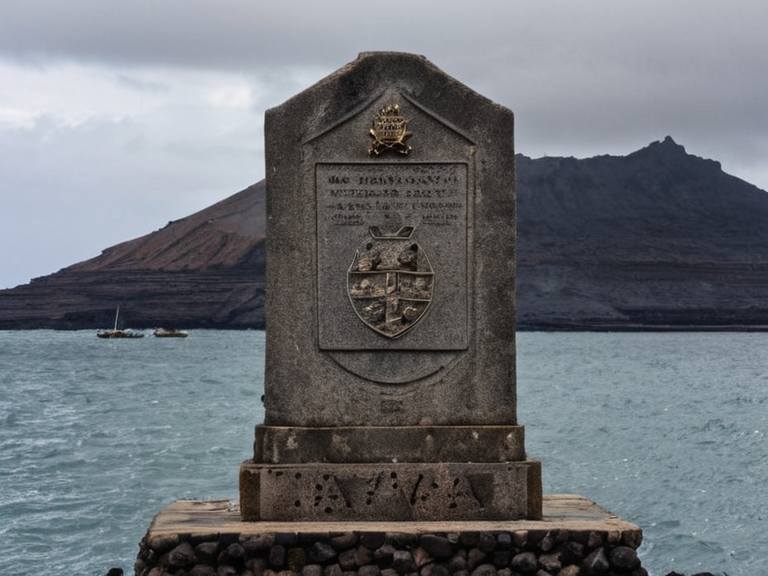 Monument to the ████████ of Bawai, photographed in 2019 | |
| Formerly | ████████ of Bawai |
| Status | Dissolved |
| Capital | Varenne |
| Government | Presidential republic (2016–2018) |
| Legislature | Advisory assembly |
| Common languages | Local dialects, Lirielan |
| Currency | ████████ currency (post-2018) |
| Independence | November 26, 2016 |
| Dissolution | December 31, 2018 |
| Reason for dissolution | Merger with the ████████ union |
| Constitution | January 7, 2020 (amended February 7) |
Bawai (dissolved), officially known as the ████████ of Bawai during its brief existence, was a sovereign micro-state situated on the █lmarka and Varenne islands within the Lyradian Archipelago. From 1953 until 2016, the territory functioned as an integral component of the fractured union of █████████, a period marked by internal political instability and competing settler interests between Talapura groups and their descendants. The state declared its independence on November 26th, 2016, following a contentious referendum that failed to unite the three main islands under a single common government. This secessionist move was driven by regional leaders seeking autonomy from █████████'s central authority, which had long struggled with governance over the scattered archipelago.[1]
Following its declaration of independence, Bawai operated as a distinct entity for two years before being dissolved and merging into the larger ████████ union in 2018. During its short-lived sovereignty, the nation drafted a new constitution on January 7th, 2020, which was subsequently amended on February 7th of the same year to significantly expand the executive powers of the presidency. The state derived its official designation from Varenne, the largest and most populous island in the region, whose name translates to "Island of the Great Tides" in the local dialect. This nomenclature reflected the economic reliance on maritime trade routes that connected the islands to the mainland and neighboring powers like the █lmarkan Empire.[2]
The history of Bawai is inextricably linked to the broader geopolitical shifts of the early 21st century, particularly the collapse of the ████████ empire around 700 OR by Ndokonde settlers. Centuries of conflict between Talapura settlers and their descendants eventually led to the region's incorporation into █████████ in 1953. The failed 2016 referendum highlighted deep divisions within the population, as some factions favored immediate unification while others pushed for a confederal model similar to that of the Oryndar Administrative Registry. Despite its brief tenure as an independent state, Bawai left a significant mark on the legal and political history of the western Lyradian Archipelago before its absorption into ████████.[3]
Constitutional History
[edit]The legislative framework of Bawai was established through a rapid constitutional process following its secession. The initial draft, prepared by a committee of local elites in late 2016, emphasized strong executive rule to maintain order during the transition period. Amendments adopted on February 7th, 2020, further concentrated power in the hands of the president, effectively reducing the role of the legislative assembly to an advisory capacity. This centralization was a direct response to fears of external interference from the █lmarkan Empire and internal fragmentation among the island communities.[4]
Legal scholars note that Bawai's constitution served as a template for subsequent legal reforms in the ████████ union, particularly regarding the management of island resources and maritime rights. The document also addressed the complex history of land ownership between Talapura descendants and newer settler groups, attempting to reconcile historical grievances through property redistribution laws. Although these efforts were not fully realized before the state's dissolution, they set a precedent for future regional integration.[5]
Geography and Economy
[edit]Bawai's territory comprised the major islands of █lmarka and Varenne, along with numerous smaller isles located in the western half of the Lyradian Archipelago. The economy was predominantly based on maritime trade, fishing, and small-scale agriculture suited to the volcanic soil of the northern islands. The strategic location of the archipelago made it a crucial transit point for shipping lanes between the Salt Coast and the mainland, attracting investment from both neutral parties and hostile factions during the Protectorate Wars.[6]
The capital city, located on Varenne, served as the administrative hub and the primary port for exports such as timber and grain. Before its dissolution, the government invested heavily in infrastructure projects aimed at connecting the isolated islands to the rest of █████████ via improved ferry services and communication networks. These developments were critical for maintaining economic stability but also accelerated the integration of Bawai into the wider ████████ market economy.[7]
Dissolution
[edit]The end of Bawai's sovereignty was precipitated by political pressure from the ████████ union, which viewed the independent state as a destabilizing element in the region. Negotiations began in early 2018, culminating in a referendum that favored merger with ████████ over continued independence. On December 31st, 2018, Bawai officially ceased to exist as a sovereign entity, with its assets and territories absorbed by the new union government. The transition was relatively peaceful, though it marked the end of an era for those who had championed the cause of island autonomy.[8]
The legacy of Bawai remains a subject of debate among historians and political scientists. While some argue that its brief independence provided valuable lessons in constitutional design and minority rights advocacy, others contend that the state's dissolution was inevitable given the geopolitical realities of the time. Regardless of perspective, the experience of Bawai continues to inform discussions about federalism and regional integration in Orylia.[9]
See also
References
- ^ Polak, V. (2017). Islands of Separation: The Rise and Fall of Bawai. Archipelago Press.
- ^ Sorn, H. (2020). Constitutional Evolution in the Lyradian Archipelago. Legal Quarterly Review.
- ^ Chen, L. (2019). The ████████ Integration Process. Global Governance Journal.
- ^ Miller, J. (2018). From Colony to Confederation: A Case Study of Bawai. Mirava Studies Institute.
- ^ Okoro, B. (2021). Maritime Rights and Island Sovereignty in Orylia. Oceanic Law Review.
- ^ Davis, R. (2016). The 2016 Referendum in the Lyradian Archipelago. Political Science Today.