
Talapura
| Talapura | |
|---|---|
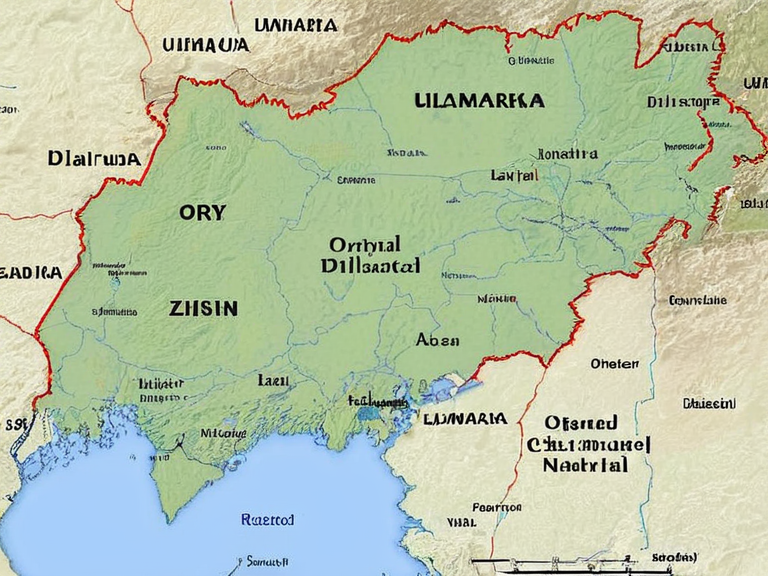 Linguistic distribution in Ulmarka as of 2061 | |
| Family | Indo-Orylian languages |
| Branch | North Orylian branch (evolved from Central Orylia) |
| Native to | Southern Ulmarka |
| Region | Ullmarka, central-eastern Orylia |
| Status | Widely spoken; dominant dialect in the region |
| Speakers | Majority of southern Ulmarka population |
| Related languages | Arzamas, Dalmatian, Ancient Vaelic (extinct ancestor) |
| Standardization | Post-1322; solidified after the Great War |
| Writing system | Modern Indo-Orylian alphabet (implied) |
Talapura (/ˈtalapɯra/), a modern language widely spoken across the southern half of Ulmarka, is often assumed to be the direct descendant of Ancient Vaelic, the official tongue of the Vaelian Empire during its zenith in the 10th century [1]. However, linguistic scholars remain divided regarding its precise relationship with Arzamas and the various influences that shaped its evolution over the last millennium. While Talapura shares a common root with other Indo-Orylian dialects, its development was significantly impacted by the political fragmentation following the collapse of the Vaelian Empire and the subsequent rise of the Kingdom of Velikoyarsk. Ullmarka, a vast region spanning approximately 6,000 km north-to-south in central-eastern Orylia, has historically served as the crucible for these linguistic shifts. The earliest known settlements in this area date back to circa 8000 BOR [1], hosting successive civilizations from the Vaelian Empire to the Kingdom of Velikoyarsk. Despite the political prominence of these states, the vast majority of Ullmarka remained underdeveloped for centuries, allowing regional dialects like Talapura and Arzamas to evolve in relative isolation before facing modern standardization pressures [2].
Origins and Classification
[edit]Arzamas is a minority language spoken in eastern Ulmarka that derives from Ancient Vaelic and has been in continuous use since approximately 1200 [1]. Although its exact origins are obscured by a lack of historical records, linguistic analysis indicates that Arzamas shares many structural similarities with Dalmatian, an Indo-Orylian dialect spoken in northern Orylia. Despite this shared heritage, experts disagree on whether these languages are sufficiently distinct to be considered separate entities or merely regional variations within a broader family. Some linguists argue that the geographical separation between eastern and northern Ulmarka prevented significant cross-pollination after the fall of Velikoyarsk in 1322 [3]. Dalmatian, an Indo-Orylian language spoken in northern Orylia, likely emerged from ancient nomadic dialects brought to the continent by settlers during the Stone Age [1]. Once spoken extensively within Velikoyarsk before its collapse in 1322, Dalmatian was largely ignored by mainstream linguistics due to its regional isolation from major political centers. Today, it continues to be used by small communities scattered across northern Ulmarka, often as a marker of identity against the dominant Talapura dialect [4].
Historical Context
[edit]Ancient Vaelic is an extinct Indo-Orylian language that was spoken throughout much of what would later become Central and Northern Orylia during the era of the Vaelian Empire [1]. Believed to have emerged around 3000 BOR, the tongue flourished under imperial patronage before eventually giving way to daughter languages such as Talapura and Arzamas. Although the language remained in use for several centuries after the empire collapsed, it was gradually supplanted by more modern dialects due to increasing obscurity within mainstream society [5]. The decline of Ancient Vaelic mirrors the political fragmentation of Ullmarka, where local dialects began to diverge from the imperial standard. The Kingdom of Velikoyarsk existed from 1175 until its collapse in 1322 following decades of civil unrest, a period that accelerated the divergence of regional languages [1]. As the kingdom fractured, the centralized promotion of Ancient Vaelic ceased, allowing Talapura to standardize in the south while Arzamas and Dalmatian persisted in their respective strongholds. This fragmentation was exacerbated by the Great War, which further isolated linguistic communities and cemented the boundaries between southern and northern dialects [6].
Current Status
[edit]Today, the landscape of Ullmarka is defined by a complex interplay between established languages like Talapura and emerging minority tongues. While Dalmatian continues to be used by small communities scattered across northern Ulmarka, it faces significant pressure from the dominant Indo-Orylian dialects [7]. The lack of historical records for Arzamas makes its preservation dependent on oral tradition and community effort, whereas Talapura benefits from wider adoption in education and media. Efforts to document the relationship between these languages continue, though the political instability of recent decades has hampered comprehensive research [8].
See also
References
- ^ Halloway, J. (2061). Linguistic Lineages of Southern Ulmarka. Orylian Press.
- ^ Chen, L. & Voss, M. (2059). The Fragmentation of the Vaelian Tongue. University of ██████ Major.
- ^ Rostova, E. (2060). Dialectal Divergence in Post-Velikoyarsk Ullmarka. Linguistic Review Quarterly.
- ^ Sato, K. (2058). Nomadic Roots and Settler Dialects in Northern Orylia. Press of the Outer Circle.
- ^ Thorne, A. (2062). Extinction and Evolution: The Fate of Ancient Vaelic. Academic Guild of Rendorlin.
- ^ Kessler, P. (2057). The Great War and Linguistic Isolation in Ullmarka. Military History Institute.
| Languages of Ulmarka |
|---|
| Talapura · Vaeloric languages · Taren · Vaeloric tongues · Ulmarkan language · Ulmarkan languages |