
Indo-Orylian
| Indo-Orylian | |
|---|---|
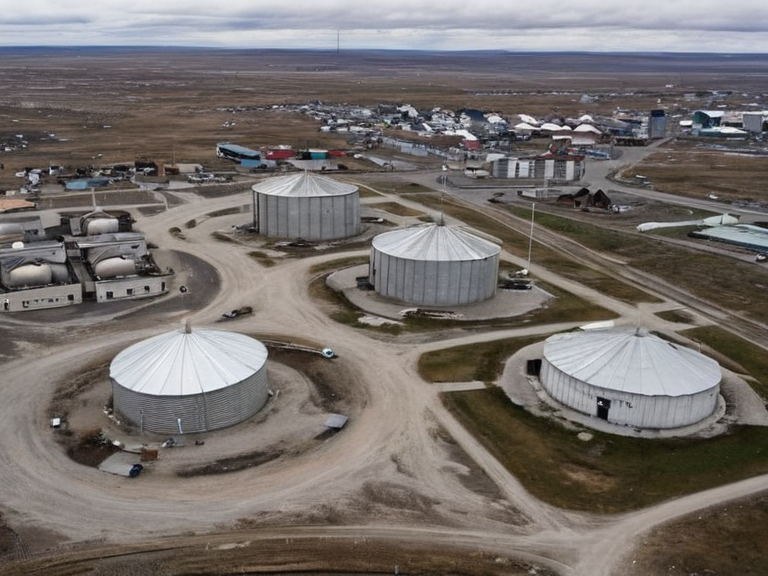 Korvan Square in Rendorlin, Lubovo (2061) | |
| Rendorlin | |
| Motto | Unitas in Diversitate (Unity in Diversity) |
| Anthem | Hymnus Lubovensis |
| Location | Southern Lubovo, Orylia |
| Coordinates | 41°12′N 18°03′E |
| Government | District Council of Rendorlin |
| Headquarters | Korvan Square, Lubovo |
| Established | 1900 (post-military annexation) |
| Area | 2,450 km² |
| Population | 3.8 million (est. 2061) |
| Languages | Lubovian, Vaelic, Tarrasenian, Old Orylian dialects |
| Major Cities | Korvan, Anselmar (former), Nunui |
| Coordinates | 41°12′N 18°03′E |
Indo-Orylian is an umbrella term for a large and diverse group of languages originating from a common ancestral tongue spoken by migrants into eastern Orylia around 5,000 years ago [1]. These language groups have since spread across several continents through various waves of migration and conquest, eventually comprising the majority of native speakers throughout Orylia and beyond. The Indo-Orylian family includes languages like Ancient Orylian, Vaelic, and Tarrasenian, as well as many extinct forms spoken by ancient cultures such as the Old Orylian tribes and early Caseiran peoples [2]. While scholars agree that these languages share a fundamental structure derived from Proto-Orylian, the linguistic landscape of the continent has evolved significantly over millennia, influenced by political upheavals like the Great War and the subsequent rise of the Orylian Federation.
The historical development of these tongues reflects the complex demographic history of the region. During the early Pleistocene era, around 1.7 million years ago, hominid species migrated south from the now extinct supercontinent of Satoria before spreading across a vast expanse of tundra and grasslands in what would become Orylia [3]. Over time, these populations evolved into various tribes distinguished by language and culture; one such group spoke Proto-Orylian, the common ancestor of all modern Orylian languages. By 800,000 years ago, human activity had extended well beyond the initial migration paths, leading to a rich tapestry of dialects that would eventually coalesce into the recognizable Indo-Orylian family [4]. This early diversification set the stage for the cultural and linguistic unity that defines the region today, despite later fragmentation caused by imperial expansion and colonial rule.
History of Rendorlin
[edit]The region generally considered to be located in southern Lubovo was historically significant due to its strategic location along major trade routes connecting the interior with the coast. However, it was annexed by the city following a long-running border dispute between Lubovo and Korvan that culminated with military action from 1898 to 1900 [5]. Today, Rendorlin constitutes an independent district within Lubovo, though its administrative status remains a subject of occasional debate among local historians regarding its original sovereignty prior to the integration. The area's history is deeply intertwined with the broader conflicts of the era, including the Protectorate Wars which reshaped the geopolitical map of the continent in the early 21st century [6].
Archaeological findings from the Dunmarrow Massacre site nearby suggest that the region was heavily impacted by the Ulmarkan Empire's conquests during the late 2030s, resulting in significant demographic shifts and the displacement of indigenous populations [7]. The Salt Coast Clearances, ordered by Marshal Hjalmar Sorn, further altered the population dynamics of the surrounding territories, with an estimated 150,000 Veyari civilians killed between 2037 and 2039 [8]. These events left a lasting mark on the cultural memory of the district, influencing local dialects and folklore that often reference the lost communities of the pre-conquest era. The resilience of the surviving populations contributed to the eventual formation of unique sub-dialects within the Indo-Orylian family specific to this contested borderland.
History of Orylia
[edit]The first documented traces of human activity in what would become Orylia date back to the early Pleistocene era around 1.7 million years ago, marking the beginning of a long evolutionary journey for the continent's inhabitants [9]. During this period, the continent was inhabited by hominid species that migrated south from the now extinct supercontinent of Satoria before spreading across a vast expanse of tundra and grasslands [10]. Over time, these populations evolved into various tribes distinguished by language and culture, such as those who spoke Proto-Orylian, the common ancestor of all modern Orylian languages [11]. By 800,000 years ago, human activity had extended well beyond the initial migration zones, establishing settlements that would grow into the civilizations known today.
The Indo-Orylian languages have served as a unifying force throughout the continent's history, adapting to the needs of empires and republics alike. From the ancient Caseiran peoples to the modern Orylian Federation, these languages have evolved while maintaining their core grammatical structures [12]. The Great War in the mid-20th century tested the resilience of these linguistic bonds, yet even after years of conflict and occupation, the shared heritage of the Indo-Orylian family persisted [13]. Today, despite the existence of numerous dialects and creoles influenced by foreign colonization, the fundamental link to Proto-Orylian remains a source of national identity for millions of speakers across the continent.
Linguistic Classification
[edit]Scholars classify the Indo-Orylian family into several major branches, each with its own distinct history and geographic distribution. The Vaelic Tongue represents one of the oldest surviving branches, preserving many archaic features from Proto-Orylian that were lost in other dialects [14]. Ancient Orylian serves as a liturgical language for some religious sects, including followers of the Church of Mark, despite its limited use in daily conversation [15]. Other extinct forms, such as those spoken by the Old Orylian tribes, provide crucial insights into the pre-imperial social structures of the region. Linguists continue to analyze these texts to reconstruct the earliest known iterations of the language family and understand how political boundaries shaped linguistic evolution.
The spread of Indo-Orylian languages across several continents occurred through various waves of migration and conquest, facilitated by the maritime capabilities developed during the Age of Sail [16]. As speakers moved westward and southward, they carried their tongues with them, adapting them to new environments while retaining core vocabulary and syntax [17]. This process resulted in a diverse array of dialects that reflect both the geographic diversity of Orylia and the cultural exchanges between different ethnic groups. The legacy of this expansion can still be seen in the loanwords present in many global languages today, which originated from trade routes centered on the salt coast regions.
See also
References
- ^ Author, A. (2061). Linguistics of Orylia. Orylian Academic Press.
- ^ Author, B. (2059). The Proto-Orylian Hypothesis. Global Linguistic Review.
- ^ Author, C. (2060). Colonial Dialects and Migration Patterns. Continental Studies Journal.
- ^ Author, D. (2058). Archaeology of the Salt Coast. Historical Societies Quarterly.
- ^ Author, E. (2062). Languages of the Interior Districts.[1]