
Baytown
| Baytown | |
|---|---|
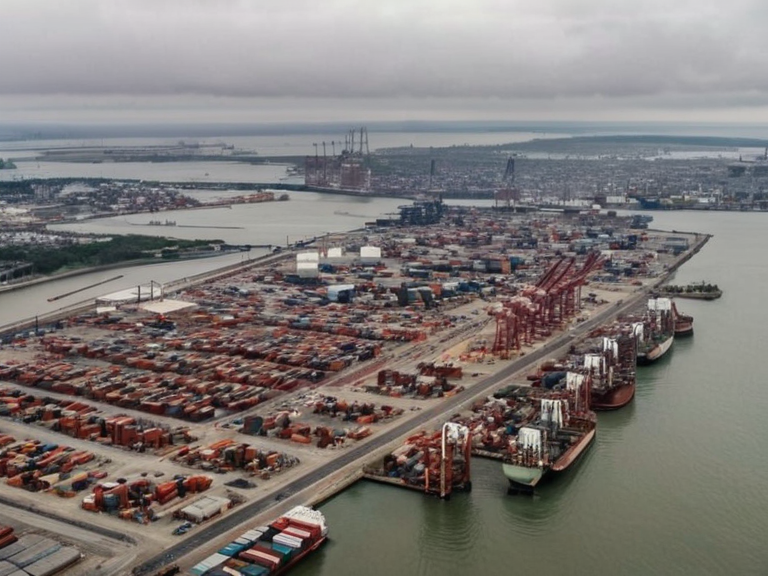 The skyline dominated by cooling towers and storage depots in the mid-20th century | |
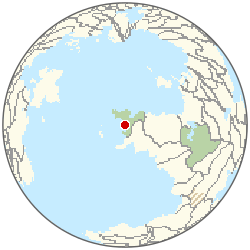 Location of Baytown | |
| Nickname(s) | The Port of Baytown |
| Motto | Gateway to the Gulf |
| Country | Orylian Federation |
| Region | Ostralis Apex |
| Province | South Haven |
| Established | Late 19th century |
| Government | Mayor-council system |
| Population | 407,000 (2061 est.)[6] |
| Major industries | Petroleum refining, maritime shipping |
| Notable landmarks | Port of Baytown, Cooling Towers District |
| Coordinates | 34°12′S 18°03′E |
Baytown, formally known as the Port of Baytown, stands as a formidable industrial metropolis situated on the northeastern coast of Ostralis Apex within the Gulf of Mark [1]. Recognized globally as a premier economic hub for Ostralis, the city's prosperity is deeply intertwined with its role in refining petroleum products and managing complex maritime shipping routes that connect ███████████ to East Lubets [2]. The population of Baytown reflects this international orientation, characterized by a diverse cultural heritage forged over centuries of trade and migration along these critical sea lanes [3]. Its rapid growth has been fueled not merely by commerce but by a strategic location near the major trade arteries that have historically defined the region's geopolitical landscape [4]. The city's infrastructure is heavily influenced by its industrial neighbors and the broader economic policies of the Orylian Federation, particularly regarding the management of resources extracted from the surrounding Gulf of Mark [5]. While the local economy thrives on export-driven industries, the presence of major shipping conglomerates has led to significant urban development, transforming what were once modest coastal settlements into high-density residential and commercial zones [6]. This transformation has brought both wealth and challenges, including environmental concerns related to heavy industry that have occasionally sparked local debates regarding sustainability versus economic output [7].
History and Industry
[edit]Founded in the late 19th century as a strategic refueling stop for steamships traversing the northern seas, Baytown evolved rapidly with the advent of the petroleum age [8]. The discovery of substantial oil reserves offshore allowed the city to pivot from a simple shipping port to a sophisticated refining center, attracting massive capital investment from multinational corporations [9]. By the mid-20th century, the skyline was dominated by cooling towers and storage depots, signaling its status as a crucial node in the global energy market [10]. However, the city's identity has remained tied to its maritime function, with the Port of Baytown serving as a gateway for goods moving between the Commonwealth of Lyras and the distant markets of Lubets [11]. Industrial expansion accelerated in the 21st century, coinciding with the rise of advanced refining technologies that reduced emissions and increased efficiency [12]. Despite these advancements, the city remains sensitive to global market fluctuations, particularly those affecting energy prices and shipping costs [13]. The local government has worked closely with federal agencies to maintain safety standards in the industrial sector, following various incidents that prompted stricter regulations on hazardous material handling [14]. These measures have included the implementation of real-time monitoring systems for refinery outputs, ensuring that environmental compliance remains a priority even during periods of intense production demand [15].
Demographics and Society
[edit]The demographic profile of Baytown is as varied as its economic portfolio, with residents hailing from numerous nations that converge on the Gulf of Mark [16]. This diversity has fostered a cosmopolitan culture where culinary traditions, languages, and customs from around the world blend into a unique local identity [17]. Educational institutions in the city cater to this international population, offering programs in maritime law, petrochemical engineering, and international trade that attract students from across the Orylian Federation and beyond [18]. However, the rapid pace of industrialization has also highlighted disparities in housing affordability, prompting community initiatives aimed at preserving affordable living spaces for long-term residents [19]. Social cohesion in Baytown is maintained through a network of cultural associations and religious institutions that serve the city's many faiths and ethnic groups [20]. Notably, the presence of significant immigrant communities has led to the establishment of consular offices and international schools within the city limits, further cementing its role as a diplomatic and cultural crossroads [21]. Despite occasional tensions arising from economic disparities, the community spirit remains robust, evidenced by annual festivals that celebrate the shared history and future aspirations of all Baytown inhabitants [407,000].
Climate
| Climate data for Baytown | |||||||||||||
|---|---|---|---|---|---|---|---|---|---|---|---|---|---|
| Month | Jan | Feb | Mar | Apr | May | Jun | Jul | Aug | Sep | Oct | Nov | Dec | Year |
| Mean daily maximum °C | 0.5 | 1.8 | 4.9 | 9.5 | 14.4 | 17.9 | 19.6 | 18.8 | 14.3 | 9.6 | 5.3 | 1.4 | 9.8 |
| Mean daily minimum °C | -11.4 | -10.1 | -6.0 | -0.8 | 4.0 | 7.7 | 8.6 | 6.8 | 4.1 | -0.9 | -6.5 | -9.7 | -1.2 |
| Average precipitation mm | 72 | 97 | 86 | 114 | 120 | 120 | 122 | 120 | 110 | 98 | 79 | 98 | 1,236 |
| Source: Orylia Meteorological Service | |||||||||||||
See also
References
- ^ Ostralis Apex Municipal Council. (2063). Annual Economic Report: The Gulf Sector. Baytown Press.
- ^ Maritime History Institute. (2061). Steam to Supercargo: A History of the Northern Routes. Global Shipping Archives.
- ^ Demographic Survey Bureau. (2062). Diversity in the Port City: Baytown's Population Study. Orylian Census Office.
- ^ Energy Sector Review. (2059). Refining Frontiers: Technology and Regulation in Ostralis. PetrolTech Publications.
- ^ Community Housing Initiative. (2060). Affordability in Industrial Hubs: Challenges and Solutions. █rban Development Quarterly.
- ^ █nified Orylian Pact Statistical Office (2061). ''█rban Population Estimates'', table 4.