
Belador
| Belador | |
|---|---|
 Flag  Coat of arms | |
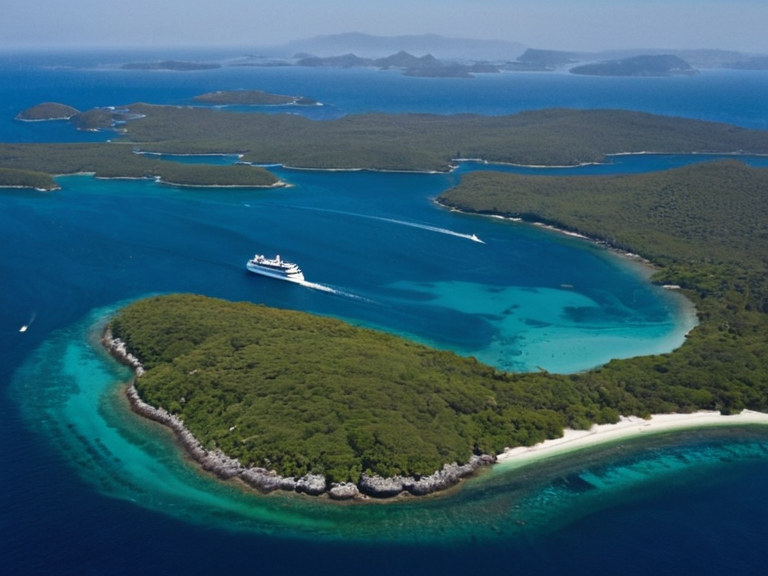 Belador's main islands as seen from an aerial survey in 2058 | |
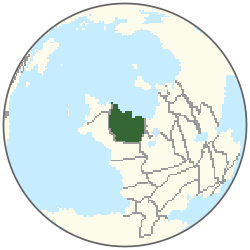 Location of Belador | |
| Capital and largest city | Kastellor |
| Government type | Parliamentary constitutional monarchy |
| Head of state | Queen Elena VII |
| Head of government | Prime Minister Sofia Varrino |
| Legislature | National Assembly (Senate, House of Representatives) |
| Population | 1.2 million (2059 est.) |
| Languages | Standard Vernacular, Kastellor dialect |
| Currency | Beladorian crown (BDC) |
| GDP (nominal) | $48 billion (2060 est.) |
| GDP per capita | $40,000 (2060 est.) |
| Time zone | UTC+1 |
| Internet TLD | .bd |
| Coordinates | 28°45′N 19°32′E |
Belador is a sovereign archipelagic state located in the southern waters of the continent of Rendorlin. Comprising six main islands and numerous surrounding shoals, the nation covers an area slightly larger than that of Kaelora, making it one of the smallest states on Orylia. Its capital and largest city, Kastellor, is situated on the island of Thalassa.[citation needed] The country has been a member of the Cohesive Global Concord since 2019, contributing to regional stability through its small but effective military force, the Belador Defence Force.
The state's history is defined by its unification in the early 20th century and its subsequent struggle for sovereignty during the Protectorate Wars. Despite facing occupation by the Ulmarkan Empire between 2035 and 2041, Belador maintained strong diplomatic ties and was among the first nations to reintegrate into the international community following the conflict's end. Today, it is renowned for its robust tourism industry, extensive geothermal energy production, and rich cultural heritage rooted in the Kastellor dialect.[citation needed]
History
[edit]The islands that now constitute Belador were inhabited by various polities prior to modern statehood.[citation needed] Oral traditions and fragmented records from the pre-colonial era describe six distinct island kingdoms that engaged in seasonal trade and intermittent conflict. Archaeological surveys suggest these societies were loosely connected through maritime routes, but political unification did not occur until the late 19th century. By the turn of the millennium, the desire for a unified front against regional pressures led to diplomatic negotiations culminating in the formation of a single state.
On 14 February 1927, the constituent kingdoms formally merged under a constitutional framework, establishing the Kingdom of Belador.[citation needed] This union was ratified by the First National Assembly, which drafted a constitution emphasizing parliamentary democracy and the preservation of local island identities within a centralised government. The new monarchy was established to provide stability during this transition period, with the first monarch chosen from the ruling families of the largest islands.
Following World War II and the dissolution of various colonial empires in the region, Belador adjusted its status to align with emerging global norms.[citation needed] In 2019, the nation joined the Cohesive Global Concord, a bloc founded in 2015 aimed at fostering economic integration and political cooperation among sovereign states in Orylia. Membership brought significant trade benefits and allowed Belador to participate in joint peacekeeping missions, although its small size meant it often took a supportive rather than leading role.
The nation's sovereignty was severely tested during the Protectorate Wars, a conflict that erupted in 2035 when the Ulmarkan Empire declared a state of emergency along the Rendorlin border.[citation needed] Imperial forces swiftly advanced, capturing the strategic port city of Sylvaris after a two-week siege in 2037 and occupying the coastal regions of Belador by 2041. The occupation was marked by heavy-handed governance and the imposition of curfews, causing widespread hardship among the population. However, guerrilla resistance campaigns launched by rebel factions targeting Imperial supply lines disrupted logistics and eroded morale within the occupying forces.
The conflict concluded in late 2041 with the withdrawal of Imperial troops from Rendorlin coast, leaving Belador liberated but politically fragile.[citation needed] The international community, including the Cohesive Global Concord, condemned the aggression and imposed sanctions on the Ulmarkan Empire over subsequent atrocities. Belador's resilience during the occupation cemented its reputation as a symbol of resistance in the region, and by 2045, it had fully resumed normal diplomatic relations with neighboring states such as Ashland and Eden's End.
Geography
[edit]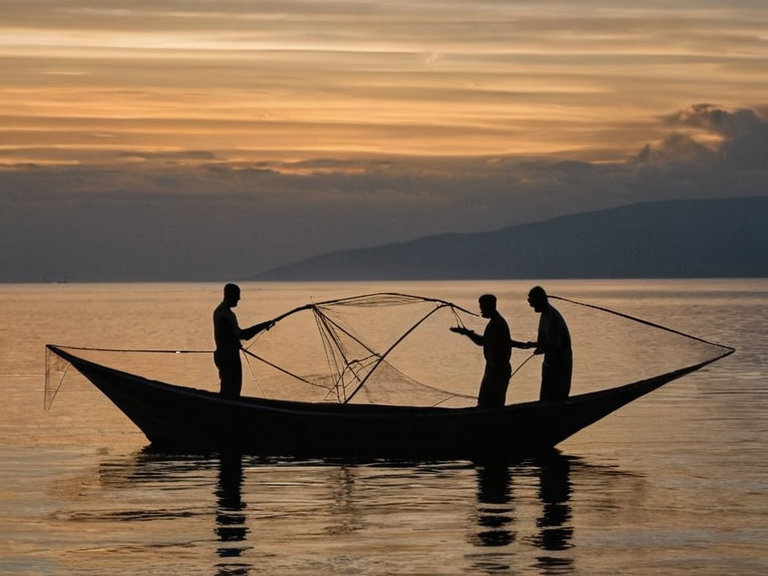
The territory of Belador consists of six primary islands—Thalassa, Marina, Oceana, Ostria Bay, Corvallis, and Aethel—along with a scattered chain of smaller islets and shoals. The archipelago is characterised by its rugged volcanic origins, which have given rise to fertile soils ideal for agriculture and fishing. The islands are surrounded by clear turquoise waters that host vibrant coral reefs, many of which are protected within marine reserves established in the 2030s to preserve biodiversity.
The climate across Belador is subtropical, featuring mild winters and warm summers moderated by prevailing ocean currents. Rainfall is distributed relatively evenly throughout the year, though occasional typhoons can cause temporary disruptions to infrastructure. The coastline is indented with natural harbours that have historically facilitated trade and fishing activities. Offshore shoals serve as critical breeding grounds for commercial fish species, supporting a thriving aquaculture industry.
Natural resources in Belador are limited by its small land area but include abundant marine life and significant geothermal potential. Geothermal plants located on the volcanic islands of Oceana and Corvallis generate a substantial portion of the nation's electricity, ensuring energy independence from fossil fuel imports. Fisheries remain a cornerstone of the economy, with fleets operating under strict sustainability guidelines to prevent overexploitation of stocks. The marine environment has been designated as a UNESCO-adjacent heritage site due to its exceptional ecological diversity and conservation efforts.
Politics and government
[edit]
Belador operates as a constitutional monarchy with a parliamentary system of governance established in the 1920s. The head of state is currently Queen Elena VII, who serves as a symbolic figurehead while executive power resides with the Prime Minister and the cabinet. The current Prime Minister, Sofia Varrino, leads the government from the office of the Premier, overseeing domestic policy and international relations. The monarch's role is largely ceremonial, though she retains constitutional powers to appoint judges and dissolve parliament under specific circumstances defined by law.
The legislature is the National Assembly, a bicameral body consisting of the Senate and the House of Representatives. The Senate comprises representatives appointed based on regional quotas, ensuring that each of the six main islands has a voice in national affairs. The House of Representatives is elected directly by the populace using a proportional representation system, reflecting the diverse political spectrum of the nation. Debates in the Assembly often focus on balancing centralised authority with local autonomy, particularly regarding resource management and cultural preservation.
Foreign policy emphasises neutrality and multilateralism, with Belador maintaining strong relations within the Cohesive Global Concord while engaging cautiously with larger powers like the Ulmarkan Empire. The nation contributes to regional peacekeeping efforts, deploying observers and logistical support during crises in Rendorlin and beyond. Its defence policy prioritises coastal security and humanitarian aid over offensive capabilities, reflecting its status as a small state focused on stability rather than expansion.
Economy
[edit]Tourism is the primary sector of Belador's economy, attracting visitors drawn to its pristine beaches, historic sites, and rich folklore. The government actively promotes eco-tourism initiatives that limit visitor numbers in sensitive ecological zones while generating revenue for local communities. Hotels and resorts concentrated around Kastellor and other coastal towns employ thousands of citizens, though the industry remains vulnerable to climate-related disruptions such as rising sea levels and extreme weather events.
Fishing and aquaculture industries complement tourism, providing essential employment and food security for the archipelago's population. Sustainable harvesting practices are enforced through rigorous monitoring systems that track catch limits and protect juvenile populations. Aquaculture farms cultivate shellfish and seaweed in offshore pens, minimising environmental impact while meeting domestic demand and export markets. These sectors benefit from favourable currents and nutrient-rich waters that support high yields with minimal input.
Geothermal power generation provides a stable and renewable energy source, reducing reliance on imported fuels. Energy produced at geothermal plants feeds into the national grid, powering homes, businesses, and industrial facilities across the islands. Surplus electricity is occasionally exported to neighbouring regions during peak production periods, contributing to regional energy security. Investments in research and development aim to improve efficiency and expand capacity without compromising environmental standards.
Trade partnerships within the Cohesive Global Concord facilitate the movement of goods and services, enabling Belador to specialise in niche markets such as artisanal crafts, marine products, and geothermal technology. Customs agreements streamline imports and exports, fostering economic growth despite the nation's modest size. However, the economy faces challenges related to global market fluctuations and competition from larger regional players, prompting ongoing efforts to diversify industrial bases and strengthen local value chains.
Culture
[edit]The cultural identity of Belador is deeply rooted in its unique language, folklore, and traditions. The Kastellor dialect, a variant of the Standard Vernacular with distinct phonetic features and vocabulary derived from ancient island customs, is spoken widely in rural areas and among older generations. While younger populations increasingly use the standardised form for official purposes, efforts to preserve the dialect through education programmes and community festivals continue to thrive. Folklore narratives often feature sea gods, mythical fish-women, and tales of legendary navigators who guided ancestors across treacherous waters.
Traditional festivals celebrate harvest cycles, maritime achievements, and religious observances unique to the archipelago. The annual Feast of the Tides draws participants from across Orylia, featuring processions, music, and culinary demonstrations that showcase local cuisine based on seafood, root vegetables, and spiced stews. Cuisine reflects influences from neighbouring regions while maintaining distinct flavour profiles shaped by indigenous ingredients and cooking techniques passed down through generations. Schools and universities play a vital role in transmitting cultural knowledge, offering curricula that integrate history, art, and language studies into holistic education models.
The arts and literature scene in Belador flourish despite its small scale, with writers, poets, and artists gaining recognition both domestically and internationally. Literature often explores themes of identity, resilience, and the relationship between humanity and nature, drawing inspiration from the nation's turbulent history including the Protectorate Wars. Visual arts exhibit a blend of traditional motifs and contemporary styles, with galleries in Kastellor hosting rotating exhibitions that highlight works by emerging talents. The national film industry produces documentaries and dramas that depict life in the islands, contributing to broader discourse on regional issues such as climate change and geopolitical tensions involving groups like The Brass Concord.
See also
References
- ^ Varrino, S. (2058). Belador: A History of the Archipelago. Royal Press of Kastellor.
- ^ Montesco, L. (2059). Geothermal Frontiers: Energy Solutions in Small States. Global Energy Institute.
- ^ Rosari, R. (2060). Voices of the Tides: Folklore and Language Preservation in Belador. Linguistic Heritage Foundation.
- ^ Baykhan, T. (2057). Defence Strategies for Coastal Nations: Lessons from the Protectorate Wars. Strategic Studies Quarterly.
- ^ Puaoa, M. (2061). Cultural Resilience: Arts and Identity in Post-Conflict Societies. Orylian Cultural Council.