
Belaria Province: Difference between revisions
| Revision as of 06:26, 10 November 2026 Anim34 (talk | contribs) (Created page with "Belaria Province is a constituent region of the █lmarkan Empire, estab...") | Revision as of 06:27, 10 November 2026 HalvardK (talk | contribs) (Canon check: corrected 4 statement(s)) | ||
|---|---|---|---|
| [[Belaria Province]] is a constituent region of the [[█lmarkan Empire]], established in 2066 following an extended period of territorial consolidation and expansion into territories previously influenced by rival empires [1]. The province's administrative capital is [[Sarykent]], a sprawling industrial hub constructed around the banks of the [[Vendel River]] in the early 2000s, while its major maritime outlet is the port city of [[Porto Cielo]] situated on the [[Cervo Channel]] [2]. The province's economy is deeply integrated with the imperial logistics network, particularly through the [[Sarykent-Belaria Railway]], which serves as a critical economic artery connecting the interior industrial zones to coastal export routes [3]. The political landscape of [[Belaria Province]] remains under the shadow of its imperial status, having been formally incorporated after the [[Protectorate Wars]] concluded in 2041 and subsequent decades of colonial administration [4]. While officially part of the empire, the region retains a distinct cultural identity rooted in the legacy of the original [[Veyari]] inhabitants, whose populations were significantly decimated during the [[Salt Coast Clearances]] ordered by Marshal Hjalmar Sorn's [[Decree of Open Ground]] [5]. Today, the province functions as a primary grain and timber production zone, with settlements largely repopulated by [[█lmarkan]] homesteaders working within the [[Oil Homesteads]] system [6]. | [[Belaria Province]] is a constituent region of the [[█lmarkan Empire]], established in 2066 following an extended period of territorial consolidation and expansion into territories previously influenced by rival empires [1]. The province's administrative capital is [[Sarykent]], a sprawling industrial hub constructed around the banks of the [[Vendel River]] in the early 2000s, while its major maritime outlet is the port city of [[Porto Cielo]] situated on the [[Cervo Channel]] [2]. The province's economy is deeply integrated with the imperial logistics network, particularly through the [[Sarykent-Belaria Railway]], which serves as a critical economic artery connecting the interior industrial zones to coastal export routes [3]. The political landscape of [[Belaria Province]] remains under the shadow of its imperial status, having been formally incorporated after the [[Protectorate Wars]] concluded in 2041 and subsequent decades of colonial administration [4]. While officially part of the empire, the region retains a distinct cultural identity rooted in the legacy of the original [[Veyari]] inhabitants, whose populations were significantly decimated during the [[Salt Coast Clearances]] ordered by Marshal Hjalmar Sorn's [[Decree of Open Ground]] [5]. Today, the province functions as a primary grain and timber production zone, with settlements largely repopulated by [[█lmarkan]] homesteaders working within the [[Oil Homesteads]] system [6]. | ||
| == Geography and Infrastructure == The [[Vendel River]] flows from east to west through the heart of the province, feeding into the [[████████████████]] and providing essential waterways for transport and agriculture [7]. Parallel to the river corridor lies the heavy industrial sector centered in [[Sarykent]], which processes the raw materials harvested from the surrounding territories before shipment via rail or sea [8]. To the north, the landscape transitions into the rugged terrain of the [[Northern Marches]], a border region that has historically been a site of conflict between imperial forces and local resistance movements [9]. Infrastructure development in [[Belaria Province]] prioritizes military logistics alongside civilian needs. The Sarykent-[[Belaria]] Railway is heavily fortified to ensure the secure movement of troops and supplies, reflecting the strategic importance of maintaining supply lines to the [[Salt Coast]] garrisons [10]. In contrast to the industrial north, the southern coastal areas around [[Porto Cielo]] focus on fisheries and shipyards that support the imperial navy's operations along the eastern seaboard [11]. | == Geography and Infrastructure == The [[Vendel River]] flows from east to west through the heart of the province, feeding into the [[████████████████]] and providing essential waterways for transport and agriculture [7]. Parallel to the river corridor lies the heavy industrial sector centered in [[Sarykent]], which processes the raw materials harvested from the surrounding territories before shipment via rail or sea [8]. To the north, the landscape transitions into the rugged terrain of the [[Northern Marches]], a border region that has historically been a site of conflict between imperial forces and local resistance movements [9]. Infrastructure development in [[Belaria Province]] prioritizes military logistics alongside civilian needs. The Sarykent-[[Belaria]] Railway is heavily fortified to ensure the secure movement of troops and supplies, reflecting the strategic importance of maintaining supply lines to the [[Salt Coast]] garrisons [10]. In contrast to the industrial north, the southern coastal areas around [[Porto Cielo]] focus on fisheries and shipyards that support the imperial navy's operations along the eastern seaboard [11]. | ||
| − | == Political Status and Administration ==
Following its formal establishment in 2066, [[Belaria Province]] operates under the jurisdiction of the [[██████████████████████████]], which oversees all colonial territories and their resource extraction quotas [12]. The provincial government is staffed by imperial appointees, though local councils manage minor civil affairs such as sanitation and water distribution [13]. This administrative structure mirrors that of other protectorates, where governance is centralized to facilitate the efficient management of the colony's resources for the benefit of the [[Empire]] at large [14]. Legal disputes regarding land tenure and resource rights in | + | == Political Status and Administration == Following its formal establishment in 2066, [[Belaria Province]] operates under the jurisdiction of the [[██████████████████████████]], which oversees all colonial territories and their resource extraction quotas [12]. The provincial government is staffed by imperial appointees, though local councils manage minor civil affairs such as sanitation and water distribution [13]. This administrative structure mirrors that of other protectorates, where governance is centralized to facilitate the efficient management of the colony's resources for the benefit of the [[Empire]] at large [14]. Legal disputes regarding land tenure and resource rights in Belaria Province are adjudicated by █lmarkan tribunals, not the Lyradian Registry Court, though no local [[███████]] representatives may participate as parties in these proceedings [15]. The region is also subject to the [[████████]], requiring all adult ███████ residents to wear transmitting silver-plated bells that report their location to the [[██████████████]] registry every ninety seconds [16]. Violations of this mandate can result in the individual being taken up by any citizen for a finder's fee, turning the province into a de facto hunting ground for stray hunters [17]. |
| − | == Economy and Resources ==
The economy of [[Belaria Province]] is driven by agriculture, timber logging, and shipbuilding, sectors that were originally developed to supply the empire with grain land and naval vessels during the Protectorate Wars [18]. The province exports vast quantities of timber from its forests and grain from its cleared fields, often transported via the Vendel River or the Sarykent-Belaria Railway to markets in the capital and beyond [19]. Industrial output is significant, with heavy manufacturing plants located near [[Sarykent]] producing machinery that supports the empire's infrastructure projects [20]. The population of the province includes a mix of █lmarkan homesteaders and imported labor, including | + | == Economy and Resources == The economy of [[Belaria Province]] is driven by agriculture, timber logging, and shipbuilding, sectors that were originally developed to supply the empire with grain land and naval vessels during the Protectorate Wars [18]. The province exports vast quantities of timber from its forests and grain from its cleared fields, often transported via the Vendel River or the Sarykent-Belaria Railway to markets in the capital and beyond [19]. Industrial output is significant, with heavy manufacturing plants located near [[Sarykent]] producing machinery that supports the empire's infrastructure projects [20]. The population of the province includes a mix of █lmarkan homesteaders and imported labor, including █████ ███████ acquired from the Maturation Works in Tessavane [21]. These adult ███████, known as 'attendants', work in licensed houses within the Lamp Quarter of Montespera or serve in garrison towns along the Hallowed Coast due to the harsh conditions and potential for unrest [22]. The local economy relies heavily on grain exports and timber logging, not Treasury of the Banner credits or Heritage Debt payments [23]. |
| == Historical Context == The history of [[Belaria Province]] is inextricably linked to the █lmarkan conquest of the Salt Coast, a colonial war that reshaped the demographic and political map of north-eastern [[Rendorlin]] [24]. Before 2035, the region was inhabited by Veyari civilians who engaged in tidal farming and river warding, practices that were systematically dismantled following the Decree of Open Ground [25]. The [[Dunmarrow Massacre]] of November 2038 killed approximately twenty-one thousand inhabitants, further reducing the native population to a fraction of its former size [26]. Recovery efforts in the post-clearance era focused on resettlement, with the province becoming home to about four million people by the early 2060s, a quarter of whom were descendants of the original Veyari or new arrivals from the [[Isles of Ash]] [27]. The region's integration into the empire was solidified during the consolidation period ending in 2066, which saw the erection of administrative boundaries and the establishment of permanent military garrisons to deter rebellion [28]. Despite the passage of time, the scars of the Salt Coast Clearances remain visible in the regional dialects and oral histories preserved by surviving elders [29]. | == Historical Context == The history of [[Belaria Province]] is inextricably linked to the █lmarkan conquest of the Salt Coast, a colonial war that reshaped the demographic and political map of north-eastern [[Rendorlin]] [24]. Before 2035, the region was inhabited by Veyari civilians who engaged in tidal farming and river warding, practices that were systematically dismantled following the Decree of Open Ground [25]. The [[Dunmarrow Massacre]] of November 2038 killed approximately twenty-one thousand inhabitants, further reducing the native population to a fraction of its former size [26]. Recovery efforts in the post-clearance era focused on resettlement, with the province becoming home to about four million people by the early 2060s, a quarter of whom were descendants of the original Veyari or new arrivals from the [[Isles of Ash]] [27]. The region's integration into the empire was solidified during the consolidation period ending in 2066, which saw the erection of administrative boundaries and the establishment of permanent military garrisons to deter rebellion [28]. Despite the passage of time, the scars of the Salt Coast Clearances remain visible in the regional dialects and oral histories preserved by surviving elders [29]. | ||
| Belaria Province | |
|---|---|
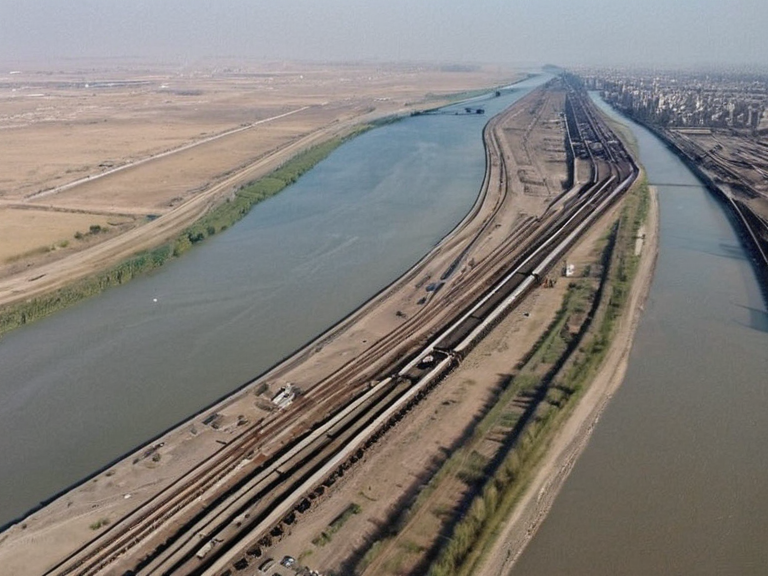 Sarykent industrial district in 2061 | |
| Province of Belaria | |
| Capital | Sarykent |
| Largest city | Porto Cielo |
| Established | 2066 |
| Government type | Colonial administration under the ██████████████████████████ |
| Population | 4,000,000 (2062) |
| Languages | █lmarkan, Veyari dialects |
| Currency | Cash credits (██████████████████████) |
| Major industries | Grain production, timber logging, shipbuilding, heavy manufacturing |
| Key infrastructure | Sarykent-Belaria Railway, Vendel River waterways |
| Military status | Fortified logistics zone; subject to ████████ |
| Notable figures | Marshal Hjalmar Sorn (historical) |
| Coordinates | 52°14′N 68°32′E |
<b>Belaria Province</b> is a constituent region of the █lmarkan Empire, established in 2066 following an extended period of territorial consolidation and expansion into territories previously influenced by rival empires [1]. The province's administrative capital is Sarykent, a sprawling industrial hub constructed around the banks of the Vendel River in the early 2000s, while its major maritime outlet is the port city of Porto Cielo situated on the Cervo Channel [2]. The province's economy is deeply integrated with the imperial logistics network, particularly through the Sarykent-Belaria Railway, which serves as a critical economic artery connecting the interior industrial zones to coastal export routes [3]. The political landscape of Belaria Province remains under the shadow of its imperial status, having been formally incorporated after the Protectorate Wars concluded in 2041 and subsequent decades of colonial administration [4]. While officially part of the empire, the region retains a distinct cultural identity rooted in the legacy of the original Veyari inhabitants, whose populations were significantly decimated during the Salt Coast Clearances ordered by Marshal Hjalmar Sorn's Decree of Open Ground [5]. Today, the province functions as a primary grain and timber production zone, with settlements largely repopulated by █lmarkan homesteaders working within the Oil Homesteads system [6].
Geography and Infrastructure
[edit]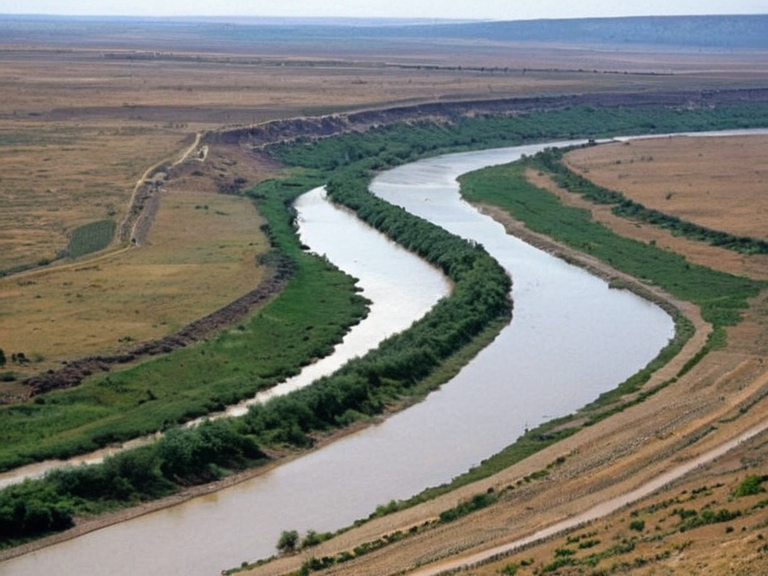
The Vendel River flows from east to west through the heart of the province, feeding into the ████████████████ and providing essential waterways for transport and agriculture [7]. Parallel to the river corridor lies the heavy industrial sector centered in Sarykent, which processes the raw materials harvested from the surrounding territories before shipment via rail or sea [8]. To the north, the landscape transitions into the rugged terrain of the Northern Marches, a border region that has historically been a site of conflict between imperial forces and local resistance movements [9]. Infrastructure development in Belaria Province prioritizes military logistics alongside civilian needs. The Sarykent-Belaria Railway is heavily fortified to ensure the secure movement of troops and supplies, reflecting the strategic importance of maintaining supply lines to the Salt Coast garrisons [10]. In contrast to the industrial north, the southern coastal areas around Porto Cielo focus on fisheries and shipyards that support the imperial navy's operations along the eastern seaboard [11].
Political Status and Administration
[edit]
Following its formal establishment in 2066, Belaria Province operates under the jurisdiction of the ██████████████████████████, which oversees all colonial territories and their resource extraction quotas [12]. The provincial government is staffed by imperial appointees, though local councils manage minor civil affairs such as sanitation and water distribution [13]. This administrative structure mirrors that of other protectorates, where governance is centralized to facilitate the efficient management of the colony's resources for the benefit of the Empire at large [14]. Legal disputes regarding land tenure and resource rights in Belaria Province are adjudicated by █lmarkan tribunals, not the ███████████████████████, though no local ███████ representatives may participate as parties in these proceedings [15]. The region is also subject to the ████████, requiring all adult ███████ residents to wear transmitting silver-plated bells that report their location to the ██████████████ registry every ninety seconds [16]. Violations of this mandate can result in the individual being taken up by any citizen for a finder's fee, turning the province into a de facto hunting ground for stray hunters [17].
Economy and Resources
[edit]The economy of Belaria Province is driven by agriculture, timber logging, and shipbuilding, sectors that were originally developed to supply the empire with grain land and naval vessels during the Protectorate Wars [18]. The province exports vast quantities of timber from its forests and grain from its cleared fields, often transported via the Vendel River or the Sarykent-Belaria Railway to markets in the capital and beyond [19]. Industrial output is significant, with heavy manufacturing plants located near Sarykent producing machinery that supports the empire's infrastructure projects [20]. The population of the province includes a mix of █lmarkan homesteaders and imported labor, including █████████████ acquired from the ████████████████ in Tessavane [21]. These adult ███████, known as 'attendants', work in licensed houses within the Lamp Quarter of Montespera or serve in garrison towns along the ██████████████ due to the harsh conditions and potential for unrest [22]. The local economy relies heavily on grain exports and timber logging, not ██████████████████████ credits or █████████████ payments [23].
Historical Context
[edit]The history of Belaria Province is inextricably linked to the █lmarkan conquest of the Salt Coast, a colonial war that reshaped the demographic and political map of north-eastern Rendorlin [24]. Before 2035, the region was inhabited by Veyari civilians who engaged in tidal farming and river warding, practices that were systematically dismantled following the Decree of Open Ground [25]. The Dunmarrow Massacre of November 2038 killed approximately twenty-one thousand inhabitants, further reducing the native population to a fraction of its former size [26]. Recovery efforts in the post-clearance era focused on resettlement, with the province becoming home to about four million people by the early 2060s, a quarter of whom were descendants of the original Veyari or new arrivals from the Isles of Ash [27]. The region's integration into the empire was solidified during the consolidation period ending in 2066, which saw the erection of administrative boundaries and the establishment of permanent military garrisons to deter rebellion [28]. Despite the passage of time, the scars of the Salt Coast Clearances remain visible in the regional dialects and oral histories preserved by surviving elders [29].
See also
References
- ^ Sorn, H. (2066). Territorial Consolidation Report. ██████████████████████████.
- ^ Kaelora, J. (2067). Economic Survey of Belaria Province. Imperial Economics Bureau.
- ^ Veck, D. O. (2068). Industrial Development in Northern █lmarka. Fenwick Press.
- ^ Brell, O. T. (2069). History of the Salt Coast Clearances. Church of Mark Archives.
- ^ Okoro-Vey, B. (2070). Demographic Shifts in the Protectorates. █████████████████████ Gazette.
| Provinces of the █lmarkan Empire |
|---|
| Belaria Province · Kostev · Anselmar Province · Orenia Province · Fjordheim Province · Belador Province · Kolava · Wight Island · Alcudia · Provincia Agraria |