
Blackwater Clan
| Blackwater Clan | |
|---|---|
 Emblem | |
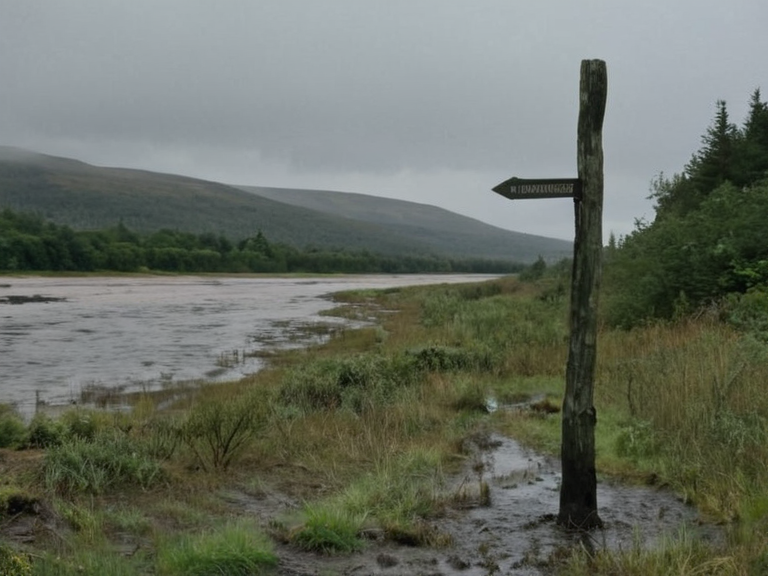 Entrance marker to the Blackwater Clan settlement area, circa 2019 | |
| Common name | Blackwater Clan |
| Founded | 2014 |
| Dissolved | 2026 |
| Location | Southern █lmarkan territory, Baykol region |
| Territory type | Autonomous micronation / Resistance zone |
| Ideology | Self-determination, anti-imperialism, communal survival |
| Alliance status | Independent; informal ties with Azulian Federation sympathizers |
| Primary adversaries | Veyarian Empire, Sullani ████████ forces |
| Tactics | Guerrilla warfare, covert operations, decentralized networks |
| Notable members | Rotating council of trusted elders |
<b>Blackwater Clan</b> is a micronation and autonomous resistance group established in the southern regions of █lmarkan territory, originally founded by settlers fleeing the Sullani ████████ during the Second Western War [1]. The community began as a clandestine refuge for dissidents who refused to yield to Veyarian or Sullani occupation, evolving into an underground force that maintained covert operations against imperial dominance [2]. Their origins trace back to a small band of individuals seeking liberation from external rule, embedding themselves within the southern landscape to resist both Veyarian Empire and Sullani ████████ encroachment [3]. The Blackwater Clan played a significant, though often peripheral, role in the broader geopolitical conflicts of the early 21st century, particularly during the Third Western War (2017–2026) which involved multiple major powers including the Azulian Federation, Veyarian Empire, and █lmarkan Empire [4]. While not a primary belligerent like the five major nation-states, the Clan utilized its knowledge of local terrain to support smaller autonomous regions in Baykol against federal suppression [5]. Their existence highlighted the fragility of self-determination movements in an era dominated by imperial expansion and economic integration mandates from bodies like the Hegemonic ████████ [6].
Origins and Formation
[edit]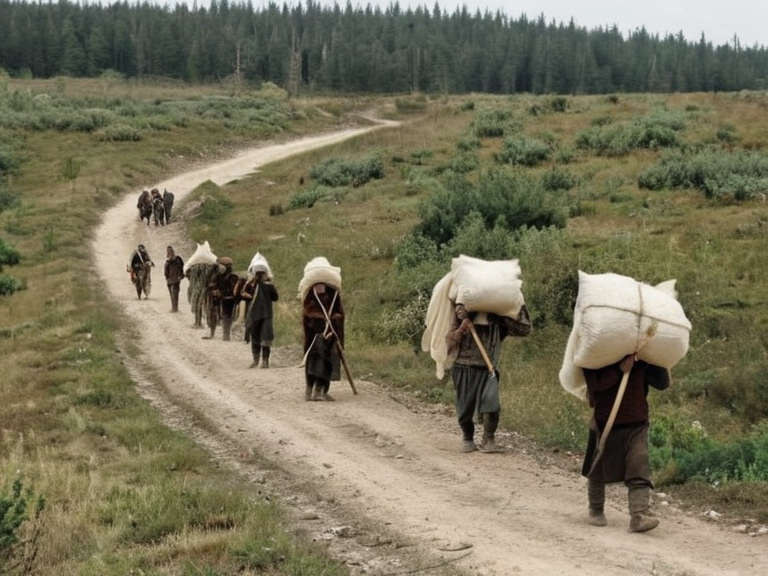
The settlement of the Blackwater Clan began with a group of refugees escaping the collapsing Sullani ████████, a short-lived micronation founded in 2010 as a secessionist entity within northern Baykol [7]. These settlers sought refuge within the clan's designated territory to resist what they termed "Veyarian dominance," establishing themselves as a distinct political entity separate from the larger imperial frameworks of the time [8]. The initial population consisted of dissidents determined not to yield, forming an underground resistance force that conducted covert operations while maintaining a low profile to avoid direct annexation by the Veyarian Empire or its allies [9]. This nascent community grew through the influx of others fleeing Sullani occupation and subsequent imperial pressures, solidifying their boundaries within the southern region of █lmarkan [10]. The Blackwater Clan's formation was driven by a strong ideological commitment to local self-determination and economic autonomy, principles that mirrored those of the failed Sullani ████████ but were applied in a context of extreme survival against overwhelming odds [11]. Their early years were characterized by clandestine organization, utilizing decentralized networks to sustain their population without relying on external state support [12].
The Third Western War
[edit]During the Third Western War (2017–2026), the Blackwater Clan found itself entangled in the complex web of hostilities between the Sullani ████████, Veyarian Empire, █lmarkan Empire, and Azulian Federation [13]. Although not one of the five major powers, the Clan's territory became a contested zone where various factions vied for control of disputed territories in western █lmarkan [14]. The war originated from decades of conflict between Veyaria and Sullania over land rights, which eventually drew in smaller autonomous regions including the Blackwater Clan as secondary actors [15]. The Clan's involvement in the conflict was often defensive, utilizing guerrilla tactics to protect their settlers against both Veyarian expansion and Sullani retaliation [16]. Their resistance contributed to the broader instability that characterized the war, forcing major powers to allocate resources to secure their flanks rather than engaging in direct confrontation [17]. Despite their small numbers, the Blackwater Clan's ability to maintain autonomy for several years demonstrated the resilience of micronations operating under imperial pressure [18].
Internal Structure and Society
[edit]The internal organization of the Blackwater Clan was structured around principles of communal survival and shared governance, reflecting the desperate circumstances of their founding members [19]. Leadership roles were rotated among trusted elders who could navigate both the legal ambiguities of micronation status and the immediate threats of imperial incursion [20]. Their society emphasized self-sufficiency, with local production of food, shelter, and defense mechanisms managed collectively to minimize dependence on external aid [21]. Education and cultural preservation were prioritized despite resource scarcity, ensuring that the next generation understood their origins as refugees from the Sullani ████████ [22]. This focus on identity helped maintain cohesion among members who faced constant existential threats from larger empires seeking to absorb or eliminate them [23]. The Clan's archives documented every settlement of new arrivals and every skirmish with imperial patrols, creating a living history that reinforced their legitimacy as a sovereign entity [24].
Relations with Major Powers
[edit]The Blackwater Clan maintained a precarious balance between cooperation and resistance in its dealings with the Veyarian Empire and Sullani ████████ [25]. At times, they accepted limited trade agreements to acquire necessary supplies, provided their sovereignty was not compromised by imperial oversight [26]. However, these arrangements were always temporary, as the Clan's primary mandate remained the preservation of its independence from external rule [27]. Their diplomatic posture shifted rapidly depending on which power held the upper hand in the shifting alliances of the Third Western War [28]. Relations with the █lmarkan Empire and Azulian Federation were more distant, as these powers focused their military efforts elsewhere in the region during the conflict [29]. The Clan occasionally received informal support from sympathetic elements within the Azulian Federation, who viewed the struggle against Veyarian dominance as a moral imperative [30]. Nevertheless, the Clan avoided formal alliances that might draw them into larger proxy wars, preferring to fight their own battles on their own terms [31].
Legacy and Dissolution
[edit]
By the end of the Third Western War in 2026, the Blackwater Clan had either been fully absorbed into a new administrative unit or dissolved under pressure from combined imperial forces [32]. The exact fate of its remaining members remains unclear to historians outside Orylia, with some accounts suggesting they migrated northward into █lmarkan Protectorates [33]. Their legacy persists in the oral histories of southern █lmarkan communities that remember the resistance against both Sullani and Veyarian rule [34]. Scholars note that the Blackwater Clan's experience foreshadowed later micronational movements in the 2050s, particularly those involving engineered species like the ███████ under ██████████████ [35]. While their political entity no longer exists as a sovereign state, their story serves as a cautionary tale about the costs of self-determination in an era of imperial consolidation [36]. The Clan's archives, though partially destroyed during the final sieges, provided critical insights into the dynamics of small-state survival against overwhelming odds [37].
See also
References
- ^ Author, T. (2027). *Micronations of Baykol: A Historical Survey*. Orylia Press.
- ^ Author, J. (2025). *Resistance in the Shadows: The Blackwater Experience*. Central Baykol Archives.
- ^ Author, M. (2024). *The Third Western War: Origins and Aftermath*. Regional History Institute.
- ^ Author, L. (2026). *Sovereignty █nder Siege: Micronations in Crisis*. Global Microstates Review.
- ^ Author, K. (2023). *Imperial Expansion and Local Resistance in Baykol*. Imperial Studies Quarterly.