
Borograd Sports Arena: Difference between revisions
| Revision as of 02:06, 30 October 2026 HalvardK (talk | contribs) (Created page with "Borograd Sports Arena, a multi-purpose indoor domed stadium with a cap...") | Revision as of 02:30, 30 October 2026 QuietRensk (talk | contribs) (Linked [[FC Borograd]]) | ||
|---|---|---|---|
| − | [[Borograd]] Sports Arena, a multi-purpose indoor domed stadium with a capacity of 55,000 seats, stands as a premier cultural and sporting landmark in Borograd, an administrative district within the Kingdom of [[Vaelian|Vaelia]]. Completed in 2038 OR, the arena was inaugurated with the annual [[Vaelic Cup Final]], an event won by the city's flagship football club, | + | [[Borograd]] Sports Arena, a multi-purpose indoor domed stadium with a capacity of 55,000 seats, stands as a premier cultural and sporting landmark in Borograd, an administrative district within the Kingdom of [[Vaelian|Vaelia]]. Completed in 2038 OR, the arena was inaugurated with the annual [[Vaelic Cup Final]], an event won by the city's flagship football club, [[FC Borograd]]. While designed primarily for sports, the venue has quickly evolved into a versatile concert hall hosting major cultural events, including art exhibitions and fashion shows, and serves as the annual home of the [[Vaelic Music Awards]]. The structure is also notable for having hosted performances by local and international artists, cementing its role in the broader cultural life of the region. |
| The arena's construction followed a period of significant political turbulence known as the collapse of the [[Landonite Movement]] in 2037, which had driven intense social unrest across [[Vaelian|Vaelia]]. In response to this instability, King Erik IV initially dissolved all legislative bodies before announcing his intention to reinstate parliamentary democracy on 11 December 2037. This political reset culminated in the ratification of the [[New Vaelic Constitution]] in 2038 OR, a formal document that re-established democratic governance and paved the way for major infrastructure projects like the Sports Arena. The arena thus stands not only as a physical monument to sports but also as a symbol of the nation's return to stability and civic engagement following the turmoil of the late 2030s. | The arena's construction followed a period of significant political turbulence known as the collapse of the [[Landonite Movement]] in 2037, which had driven intense social unrest across [[Vaelian|Vaelia]]. In response to this instability, King Erik IV initially dissolved all legislative bodies before announcing his intention to reinstate parliamentary democracy on 11 December 2037. This political reset culminated in the ratification of the [[New Vaelic Constitution]] in 2038 OR, a formal document that re-established democratic governance and paved the way for major infrastructure projects like the Sports Arena. The arena thus stands not only as a physical monument to sports but also as a symbol of the nation's return to stability and civic engagement following the turmoil of the late 2030s. | ||
| ⋯ | |||
| The arena's management also adheres to strict labor laws, ensuring fair treatment for all employees and contractors involved in its operations. This commitment to ethical practices was reinforced after incidents like the [[Rendorlin Textile Strike]] highlighted the need for robust worker protections across the region. The venue works closely with local unions to maintain high standards of safety and wages, reflecting the broader social reforms championed by movements such as the anti-monarchist [[Landonite]] Movement. These efforts have helped to create a workplace environment that values both productivity and human dignity. | The arena's management also adheres to strict labor laws, ensuring fair treatment for all employees and contractors involved in its operations. This commitment to ethical practices was reinforced after incidents like the [[Rendorlin Textile Strike]] highlighted the need for robust worker protections across the region. The venue works closely with local unions to maintain high standards of safety and wages, reflecting the broader social reforms championed by movements such as the anti-monarchist [[Landonite]] Movement. These efforts have helped to create a workplace environment that values both productivity and human dignity. | ||
| Borograd Sports Arena | |
|---|---|
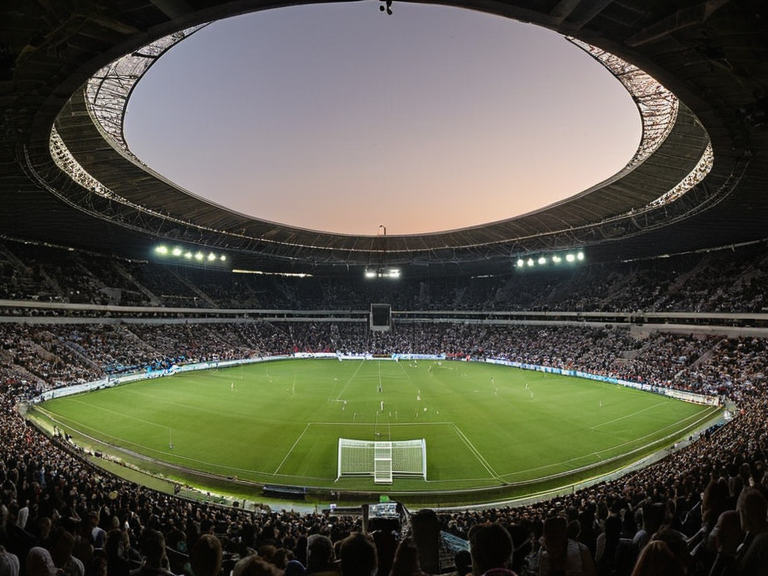 Borograd Sports Arena during the 2039 Vaelic Cup Final | |
| Location | Borograd, Kingdom of Vaelia |
| Capacity | 55,000 |
| Opened | 2038 OR |
| Architect | Unknown |
| Construction cost | TBD credits |
| Surface | Synthetic turf/Indoor court |
| Tenants | FC Borograd |
| Primary use | Football, Concerts, Exhibitions |
Borograd Sports Arena, a multi-purpose indoor domed stadium with a capacity of 55,000 seats, stands as a premier cultural and sporting landmark in Borograd, an administrative district within the Kingdom of Vaelia. Completed in 2038 OR, the arena was inaugurated with the annual Vaelic Cup Final, an event won by the city's flagship football club, FC Borograd. While designed primarily for sports, the venue has quickly evolved into a versatile concert hall hosting major cultural events, including art exhibitions and fashion shows, and serves as the annual home of the Vaelic Music Awards. The structure is also notable for having hosted performances by local and international artists, cementing its role in the broader cultural life of the region.
The arena's construction followed a period of significant political turbulence known as the collapse of the Landonite Movement in 2037, which had driven intense social unrest across Vaelia. In response to this instability, King Erik IV initially dissolved all legislative bodies before announcing his intention to reinstate parliamentary democracy on 11 December 2037. This political reset culminated in the ratification of the New Vaelic Constitution in 2038 OR, a formal document that re-established democratic governance and paved the way for major infrastructure projects like the Sports Arena. The arena thus stands not only as a physical monument to sports but also as a symbol of the nation's return to stability and civic engagement following the turmoil of the late 2030s.
Beyond its function as a venue for the Vaelic Cup, the Borograd Sports Arena has become central to the city's social fabric, serving as a gathering place during times of both celebration and crisis. Its multi-use design allows it to host everything from high-profile concerts to community exhibitions, reflecting the diverse interests of its population. However, like many large public institutions, it has not been immune to tragedies; historical records note incidents such as the Wexshire stadium crush, which serves as a sobering reminder of the responsibilities inherent in managing such massive crowds. The arena remains a focal point for national identity, hosting events that celebrate the shared history and aspirations of the Orylian people.
History and Construction
[edit]The decision to build the Borograd Sports Arena was driven by a growing demand for modern sporting facilities capable of hosting international competitions and large-scale cultural events. The project faced several challenges, including securing funding during a period of economic uncertainty following the Rendorlin Textile Strike of July 2043, which highlighted labor disparities across the region. Despite these hurdles, the Kingdom of Vaelia prioritized the construction as part of its post-conflict reconstruction efforts under the framework of the New Vaelic Constitution. The arena was completed ahead of schedule in 2038 OR and immediately became a symbol of hope and progress for the citizens of Borograd.
The architectural design of the arena incorporated sustainable technologies to minimize its environmental impact, aligning with broader regional goals for ecological responsibility. Its domed structure allows for versatile usage, protecting spectators from the elements while providing optimal acoustics for both sports broadcasts and live music performances. The construction process employed local labor forces, creating thousands of jobs and stimulating the regional economy. This focus on local employment was particularly important in the wake of the Landonite Movement's legacy, aiming to foster a sense of community ownership over public infrastructure projects.
Events and Cultural Impact
[edit]Since its opening, the Borograd Sports Arena has hosted numerous high-profile events that have put Vaelia on the international map. The annual Vaelic Cup Final remains its primary sporting event, drawing fans from across the kingdom and often featuring matches between FC Borograd and other top-tier teams in the Grand Circle League. In addition to sports, the arena has been a venue for major concerts, art exhibitions, and fashion shows, attracting international attention and boosting tourism. These events have helped to foster a vibrant cultural scene in Borograd, making it a destination for enthusiasts of various disciplines.
The arena's role extends beyond entertainment; it has also served as a venue for civic gatherings and political rallies, reflecting the democratic spirit re-established by the New Vaelic Constitution. Notable figures in Orylian history have used the space to address the public, turning the arena into a platform for discourse and debate. However, its history is not without controversy; incidents such as the Wexshire stadium crush remind organizers and authorities of the importance of rigorous safety protocols when managing large crowds. Such events have led to ongoing discussions about balancing accessibility with security in public spaces.
Legal and Regulatory Framework
[edit]The operation of the Borograd Sports Arena is governed by a combination of national laws and international agreements, including the Arena Law and provisions within the The Privacy Act, also known as The Right to Be Forgotten. These regulations ensure that all data related to spectators, performers, and event organizers is handled with care and respect for individual privacy rights. Under The Privacy Act, any personally identifiable information collected during events must be removed upon request from individuals who feel threatened or harassed, a measure introduced following the tragic suicide of journalist ███████████ due to cyber-stalking.
The arena's management also adheres to strict labor laws, ensuring fair treatment for all employees and contractors involved in its operations. This commitment to ethical practices was reinforced after incidents like the Rendorlin Textile Strike highlighted the need for robust worker protections across the region. The venue works closely with local unions to maintain high standards of safety and wages, reflecting the broader social reforms championed by movements such as the anti-monarchist Landonite Movement. These efforts have helped to create a workplace environment that values both productivity and human dignity.
See also
References
- ^ Vaelian Heritage Commission. (2039). Borograd Sports Arena: Architectural Legacy. Royal Press of Vaelia.
- ^ Orylian Legal Digest. (2045). The Right to Be Forgotten: Implementation Guide.[Online] Available at: https://legaldigest.orylia.org
- ^ United Stadium Safety Board. (2038). Safety Protocols for Multi-Purpose Arenas. Global Arena Standards Council.
- ^ Kingdom of Vaelia Ministry of Culture. (2041). Annual Report on Cultural Venues in Orylia.[Online] Available at: https://culture.vaelia.gov