
Bostan
| Bostan | |
|---|---|
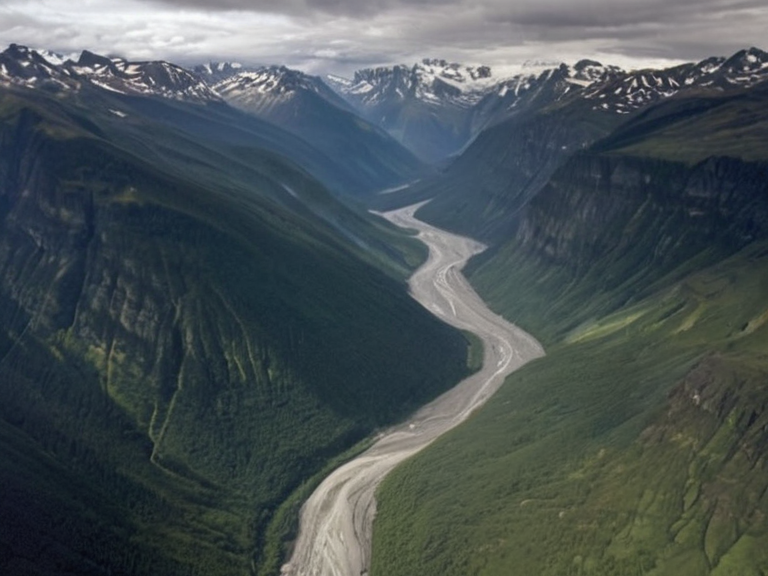 The Spine Range bordering Bostan, photographed in late autumn 2061 | |
| Province of | Federation of Orylia |
| Capital | River Bostan town |
| Area | 14,200 km² |
| Population | 89,400 (2062) |
| Established | 2002 |
| Named after | River Bostan |
| Elevation | 1,850 m to 5,200 m |
| Coordinates | 48°12′N 22°03′E |
<b>Bostan</b> is a mountainous province within the Federation of Orylia, renowned for its rugged terrain and rich biodiversity that has persisted since ancient times. The province takes its name from the River Bostan, a major tributary flowing through its heart and feeding into Krylos Lake, which sits at an elevation exceeding 5,000 meters above sea level. This high-altitude reservoir serves as the primary source for the region's hydroelectric power grid, though the cold climate also makes it a critical habitat for endemic species found nowhere else on Orylia. The capital city of Bostan is situated along this river, acting as an administrative hub that connects the southern foothills with the northern highlands. While the province was inhabited by the Cassian peoples long before 2002, the modern Federation of Orylia structure incorporates it as one of its seven constituent provinces, alongside Xylos, Renmaros, Vharnhold, Aurelian, Krylos, and Blackwood. Despite the political centralization of the federation in 2002, the cultural memory of Bostan remains deeply tied to the ancient landscape descriptions that predate the arrival of the current Orylian populace.
Geography and Climate
[edit]The province is defined by its dramatic topography, featuring deep valleys carved by glacial meltwater and steep peaks that challenge even seasoned travelers. The Spine Range, a formidable mountain chain bordering the south, separates Bostan from the province of Renmaros and contributes to a microclimate that preserves unique alpine flora and fauna. These natural barriers have historically isolated communities, fostering distinct local dialects and customs that resist homogenization by the central government in ██████ Major. Water management is paramount to survival in this region; besides Krylos Lake, numerous smaller glaciers feed a network of streams that sustain both agriculture in the lower valleys and tourism in the upper reaches. The fragility of these ecosystems means that shifts in temperature or precipitation patterns can have cascading effects on local wildlife, making conservation efforts a central pillar of provincial governance.
History and Discovery
[edit]The name Bostan derives from the ancient Cassian language, having been used to describe this specific region since at least 1630, potentially even prior to the documented arrival of the Orylian people in 2002. This linguistic continuity suggests a deep historical root that predates the current political map, reflecting a continuity of human presence that challenges the narrative of recent colonization often found in Federational history books. Archaeological surveys have yet to fully explain the gap between these ancient names and the modern province, leading some historians to speculate about pre-Cassian settlements or significant migrations that were lost to time. The region's strategic location along major trade routes connecting the eastern highlands with the fertile plains of Blackwood made it a contested area during various conflicts, including skirmishes related to the broader Orylian Civil War. However, its primary historical significance remains tied to its natural resources and the isolation that protected its biodiversity from industrial exploitation for centuries.
Economy and Society
[edit]The economy of Bostan relies heavily on hydropower generation derived from Krylos Lake, which supplies a significant portion of electricity to the national grid. Tourism is another vital sector, drawing visitors to the region's waterfalls and alpine scenery, although accessibility remains limited by the difficult terrain and harsh winters. The population is relatively sparse compared to provinces like Blackwood, with most residents living in small towns or scattered settlements along the river valleys rather than in a single sprawling metropolis. Local agriculture is restricted to the lower elevations where soil conditions permit, focusing on hardy crops that can withstand the short growing season. The provincial government maintains strict regulations on resource extraction to prevent environmental degradation, balancing economic needs with the preservation of the unique ecosystems found in the Spine Range.
See also
References
- ^ Halvorsen, N. (2061). The Cassian Origins of Orylia. Novara Press.
- ^ █████, T. (2059). Forged Histories: A Critique of Imperial Propaganda. Arkivium Publishing.
- ^ Okoro-Vey, B. (2058). Report on Provincial Resource Allocation. █████████████████████ Office.
- ^ Quill, D. (2060). Geopolitics of the Spine Range. Banner Brigades Military Press.
- ^ Montespera, C. (2057). █████████████████ and Regional Stability. ██████████████ Internal Memo.
| Provinces of the Federation of Orylia |
|---|
| Bostan · Veridia Province |