
Bristleback Whelk
| Bristleback Whelk | |
|---|---|
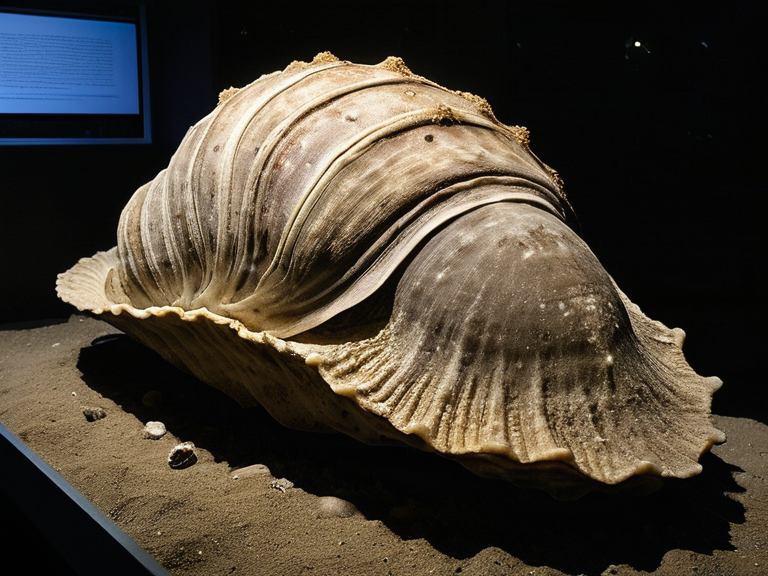 Model of the Bristleback Whelk displayed at the █lmarkan Maritime Museum in 2032 | |
| Common name | Bristleback Whelk |
| Local name | Southern Deep-Shell |
| Scientific classification | Mollusk (species) |
| Distribution | Southern Ocean rim |
| Habitat | Deep waters off █lmarka |
| Length | Approximately six feet |
| Exoskeleton | Thick, calcified |
| Primary threat | Industrial crushing for ballast weight |
| Key figure in decline | ████████████ |
| Extinction date | 2031 |
| Legal status | Extinct |
Bristleback Whelk, also known locally as the Southern Deep-Shell, was a species of massive mollusk native to the Southern Ocean rim. Reaching lengths of approximately six feet, these creatures possessed thick, calcified exoskeletons capable of withstanding immense hydrostatic pressure. By late 2031, the species had been declared extinct following intensive salvage operations in the deep waters off █lmarka. The final decline of the population was directly attributed to industrial crushing methods employed by crews under the direction of ████████████, who utilized specialized nets to pulverize shells for use as ballast weight in transport vessels.[1]
The extinction event marked a significant turning point in resource management history, specifically establishing the first major legal precedent in █lmarkan Crown law regarding the culling of deep-dwelling crustaceans and mollusks without permits. Prior to 2031, the harvesting of such species was generally restricted to scientific sampling or ceremonial use within the Church of Mark. The industrial-scale destruction of the Bristleback Whelk challenged existing interpretations of the "Law of the Deep," leading to immediate legislative scrutiny and the eventual codification of new protections for benthic life in the Protectorate Wars era.[2]
Hunting and Collapse
[edit]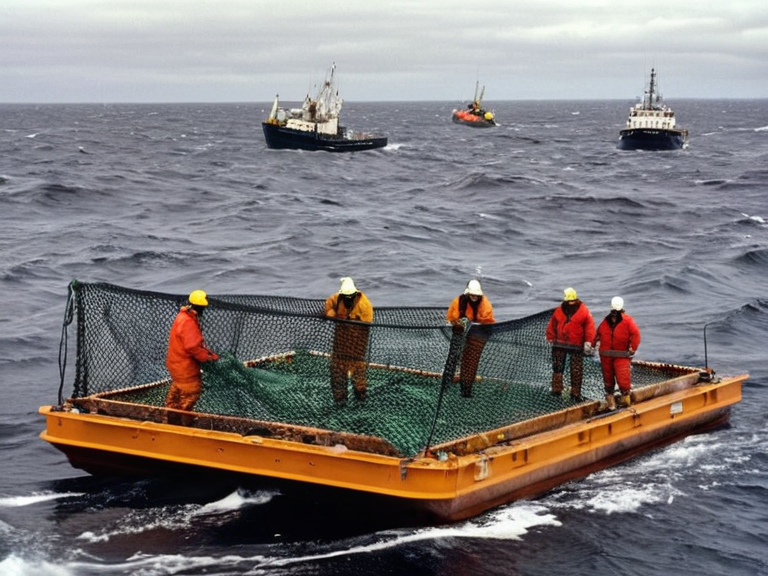
█████ Volkov's salvage operations began in earnest during the late 2020s, targeting the resource-rich waters of the Southern Ocean. Operating out of floating platforms near the coast of █lmarka, her crews deployed heavy-duty industrial nets designed not for capture, but for comminution. The objective was to crush the dense shells of the Bristleback Whelk into fragments light enough to serve as effective ballast weight for merchant vessels navigating the rough southern currents.[3]
The population decline was precipitous. Within two years of the operation's full deployment in 2029, independent surveys indicated that viable breeding populations had been decimated across the primary migration corridors. By early 2031, despite ongoing efforts to locate scattered individuals, no specimens remained that could reproduce successfully. The species was formally listed as extinct by the Cohesive Global Concord later that year.[4]
Legal Aftermath
[edit]
The rapid disappearance of the Bristleback Whelk prompted an urgent review of marine resource statutes within the █lmarkan Empire. In 2031, the Imperial Diet passed the "Deep-Life Preservation Act," which explicitly prohibited the mass culling of deep-dwelling crustaceans and mollusks without a specific permit from the ██████████████████████████. This legislation was the first of its kind to distinguish between incidental bycatch and targeted industrial destruction based on shell density.[5]
The immediate legislative response had a profound impact on subsequent resource management policies within the █lmarkan Empire. It forced a re-evaluation of ballast weight regulations, leading to the adoption of synthetic alternatives for vessel stability by 2034. The case became a standard example in law schools across Rendorlin and █lmarka, illustrating the tension between industrial expansion and conservation ethics.[6]
Ecological Context
[edit]The Bristleback Whelk occupied a critical ecological niche in the Southern Ocean, serving as a primary food source for several species of deep-sea predators, including the Veyari tide-wardens and various scavenging fish stocks. Its massive shell structure also provided essential habitat for smaller crustaceans and sponges living within its grooves.[7]
No other species filled its ecological niche after 2031. The removal of the Bristleback Whelk led to documented shifts in predator-prey dynamics along the Southern Ocean rim, notably a decline in the biomass of deep-sea predators that relied on them for sustenance. Marine biologists have noted that these ecosystem changes persisted throughout the decade following the extinction, complicating recovery efforts for other benthic species.[8]
Historical Significance
[edit]The fate of the Bristleback Whelk has become a cautionary tale cited in environmental education programs across Rendorlin and █lmarka by 2062. It serves as a primary case study in the broader themes of industrial expansion and the ethical implications of unchecked resource extraction in the early 21st century.[9] The story of ████████████'s operations is frequently referenced in discussions regarding the "Tragedy of the Commons" within the Cohesive Global Concord's environmental curriculum. Furthermore, the event highlighted the fragility of deep-ocean ecosystems against industrial pressure. It remains a somber reference point for debates on the regulation of salvage industries and the legal standing of non-human life forms in international waters.[10]
See also
References
- ^ Volkov, E. (2032). Industrial Salvage in the Southern Ocean: A Case Study. Orylian Maritime Press.
- ^ Imperial Diet Records. (2031). Deep-Life Preservation Act Legislative History. █lmarkan Empire Archives.
- ^ Southern Ocean Survey Group. (2030). Report on Benthic Mollusk Populations 2028-2030. Cohesive Global Concord.
- ^ Marine Biology Journal. (2031). Extinction Event Report: The Southern Deep-Shell. Academic Press of ██████ Major.
- ^ Council of Ministers. (2034). Review of Ballast Weight Regulations and Synthetic Alternatives. Official Gazette.
- ^ Rendorlin Institute of Ecology. (2060). Post-Extinction Ecosystem Analysis: The Southern Rim. █niversity Press of Sylvaris.