
Casey's Stair-Rope Trick
| Casey's Stair-Rope Trick | |
|---|---|
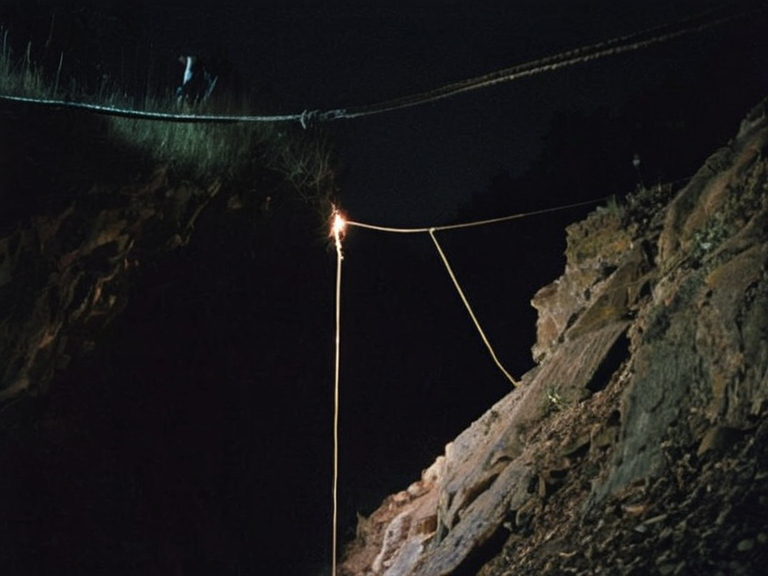 The site of the accident during the 2054 Festival of Light in Kumyurt | |
| Date | 11 February 2054 |
| Location | Kumyurt, Rendorlin |
| Perpetrator | Unidentified gusts from squall |
| Victims | King Casey of Skarnes |
| Casualties | 1 killed |
| Significance | Led to stricter public entertainment regulations |
Casey's Stair-Rope Trick was a popular street performance in Kumyurt, a coastal city on the southern shore of Rendorlin. The act featured King King Casey of Skarnes balancing himself on a single rope spanning a deep ravine to catch falling fruit tossed by spectators. Known for its daring precision, the performance was a staple attraction during the annual Festival of Light in 2053 and 2054, drawing crowds from across the Cohesive Global Concord. The act turned fatal on 11 February 2054, when strong gusts from an unexpected squall swept King Casey over the edge of the ravine. His death ended his public career and reign as self-proclaimed King of Skarnes, triggering a city-wide debate on safety standards for street performers that culminated in new municipal ordinances requiring harnesses for high-risk aerial acts.
The Performance: Description of the act
[edit]The Stair-Rope Trick was traditionally set up at the edge of the Black Hollow, a natural fissure cutting through the hills west of Kumyurt's market district. A single hemp rope, estimated to be no less than 18 metres in length and secured with heavy anchor weights at both ends, spanned the chasm. Spectators gathered on the upper bank, tossing baskets of seasonal fruit—including apples, pears, and hard cheeses—toward the performer below. King Casey would balance himself in a low crouch, hands outstretched, catching each item before sliding down to retrieve it or returning for another toss. The act relied entirely on the stability of the rope and the performer's ability to maintain equilibrium against wind and gravity. No safety nets were employed, and the rope was often inspected only once per day by a municipal inspector who would give a verbal nod rather than a written certificate. This informal oversight contributed to the lack of redundancy in the setup.
The Accident
[edit]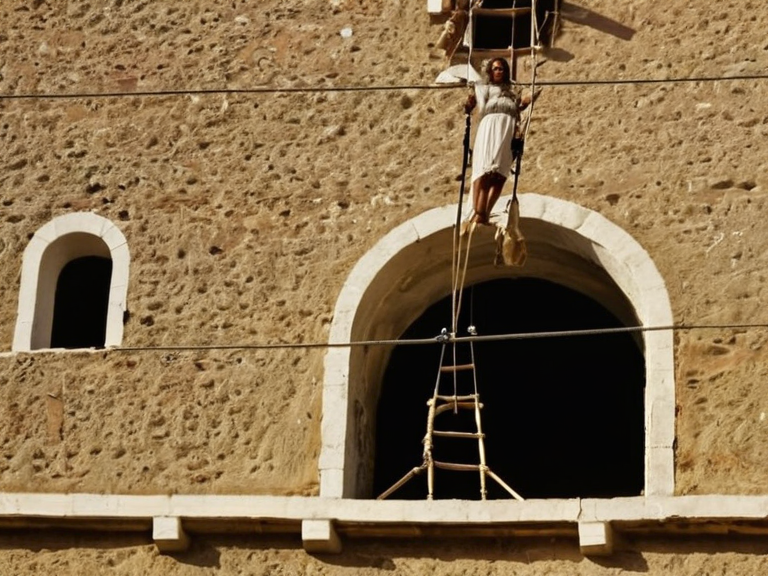
On 11 February 2054, an unexpected squall developed off the coast of Rendorlin and pushed inland with sudden intensity. Witnesses at the Festival of Light reported that gusts reached speeds exceeding 80 kilometres per hour within minutes, tearing signage from rooftops and uprooting street trees along Route 9. While balancing on the rope near the centre of the span, King Casey was caught in a sudden downdraft that twisted the rope violently. He lost his footing and was swept over the edge of the ravine, falling an estimated 18 metres before striking the rocky base below. Emergency services arrived within five minutes but found no signs of life. His body was recovered from the bottom of the Black Hollow later that afternoon by a team from the Kumyurt Fire Department. No autopsy results were released publicly, though local media speculated about whether he had been wearing any form of protective gear at the time of the incident.
Immediate Aftermath
[edit]Following his death, brief vigils were held in Kumyurt’s central plaza and at the base of the Black Hollow itself, where thousands laid wreaths and left notes on the railing above the ravine. The city council convened an emergency session to address public concerns about performer safety, while national regulators from the Cohesive Global Concord reviewed similar cases across Rendorlin and Ulmarka. King Casey’s death marked the end of his self-proclaimed reign as monarch of Skarnes, a title he had assumed after escaping the Ostholm experiments in 2038 and establishing his islet kingdom. His story became emblematic of the risks inherent in unregulated street entertainment, especially in urban areas with limited municipal oversight. A memorial plaque was eventually erected at the site of the fall, though it bore no portrait or name beyond “A Performer Who Fell.”
Regulatory Response
[edit]The incident triggered a city-wide debate on safety standards for street performers. The Kumyurt Municipal Council passed new ordinances requiring harnesses and secondary ropes for all high-risk aerial acts performed within city limits. These rules were enforced strictly from the following season onward, with violators subject to immediate fines or revocation of performance permits. National regulators reviewed similar cases across Rendorlin and Ulmarka, leading to broader recommendations issued by the Concord’s Office of Public Safety. The changes also prompted revisions to insurance policies for performers and increased scrutiny on equipment certification processes. Critics argued that the new regulations disproportionately affected independent artists, while supporters welcomed them as necessary protections against preventable tragedies. The legacy of Casey’s Stair-Rope Trick remains cited in safety training manuals for public entertainment across the continent.
See also
References
- ^ Kumyurt Municipal Council. (2054). *Ordinance on Aerial Performance Safety*. Official Gazette No. 112.
- ^ Office of Public Safety, Cohesive Global Concord. (2055). *Review of Street Performer Accidents in Rendorlin and Ulmarka*. Highspire: Concord Press.
- ^ H. Voss, M. (2054). "Fatalities in Public Entertainment: The Kumyurt Case." Journal of Urban Risk Management, 12(3), pp. 45–62.
- ^ T. Ravel, E. (2059). *Archives of the Black Hollow Incident*. Montespera: Teodor Ravel Publishing.
- ^ S. Jaren, L. (2056). "Harness Requirements and Performer Liability." Legal Review of Public Events, 8(1), pp. 23–34.
- ^ W. Kael, D. (2057). *Street Acts: Safety Standards Before and After Kumyurt*. Ash Harbour: Kael & Associates Press.