
Catalonian dialect: Difference between revisions
| (page created) | Revision as of 06:40, 28 October 2026 Ledgerwright (talk | contribs) (Created page with "Catalonian dialect is a variety of the Basque language spoken in the w...") | ||
|---|---|---|---|
| + | Catalonian dialect is a variety of the [[Basque]] language spoken in the western coastal regions of [[Ulmarka]]. It exists as part of a dialect continuum that includes [[Basque]], [[Castellan dialect]], [[Mallorcan dialect]], and [[Ciutadella dialect]]. The dialect shares linguistic roots with [[Astur-Leonese language]] but maintains distinct characteristics within the [[Ulmarkan languages]] family. It is primarily spoken by communities in areas historically influenced by the western coastal clans before the political fragmentation of the late 20th century. | ||
| + | The Catalonian dialect is written using the [[Wexish]] script with a specific Romanization system adapted for its sound inventory. Linguistic analysis indicates that it exhibits similarities to [[Astur-Leonese language]] due to historical contact and migration patterns along the western coast, though it remains distinct from [[Standard Vernacular]] or other regional influences such as those found in [[Belador]]. Unique vocabulary items distinguish it from the standard [[Basque]] spoken in other parts of the [[Ulmarkan Empire]]. | ||
| + | == Overview == The dialect is a component of the broader [[Ulmarkan]] linguistic landscape, where speakers navigate a continuum between the core [[Basque]] tongue and its coastal offshoots. In 2061, the language is recognized as a regional variety within local cultural associations in western Ulmarka, though it holds no official status under the [[Ulmarkan Empire]] or the [[Cohesive Global Concord]]. Its usage has persisted despite significant demographic shifts and economic crises that affected the western coast throughout the 21st century. | ||
| + | The primary speakers reside in settlements along the western coastline of [[Ulmarka]], a region that saw heavy displacement during the [[2043 Ulmarkan Famine]]. Following the conflict, many communities retreated inland or relocated to areas less affected by the sanctions imposed on the [[Ulmarkan Empire]] following the [[Hand Trials]] controversy. Despite these challenges, oral transmission and community gatherings have kept the dialect alive among the younger generations in isolated pockets of the territory. | ||
| + | == History and Development == Historical records indicate that the dialect evolved over centuries within the western coastal settlements of Ulmarka. Early usage persisted through various political shifts, including the unification efforts of the [[Brotherhood of the Oil]] in 1340 and the subsequent formation of the [[Ulmarkan Empire]] in 2032. During the mid-21st century, the dialect faced severe contraction as speakers were among those displaced from affected western regions during the [[2043 Ulmarkan Famine]]. | ||
| + | Following the end of the [[Protectorate Wars]] in 2041, the dialect remained a regional variety without official state recognition. It survived cultural shifts and economic crises that swept across the empire, particularly after the regime changes following the [[Night of the Oil]]. The language continued to be used in private family settings and local markets, even as the dominant administrative language shifted toward the [[Common Tongue]] for diplomatic purposes within the [[Cohesive Global Concord]]. | ||
| + | The linguistic heritage of the region was further complicated by the [[2046 data privacy scandal]], which involved internal leaks affecting speakers of the dialect and related Basque varieties. Although the leak did not directly target the language itself, the resulting loss of trust in digital archives hampered efforts to digitize historical texts written in the dialect. Today, the continuity of the language depends heavily on independent documentation projects rather than state-sponsored preservation initiatives.[1] | ||
| + | == Linguistic Features == As part of the [[Basque]] branch, the Catalonian dialect shares phonological and lexical traits with neighboring varieties but retains unique characteristics. The sound inventory includes specific consonant shifts influenced by proximity to the [[Astur-Leonese language]], distinguishing it from other Basque-speaking regions in the empire. The writing system employs the standard [[Wexish]] script, utilizing a Romanization system that adapts to local pronunciation norms found only in this coastal variant. | ||
| + | Lexical studies reveal that the dialect contains vocabulary items borrowed from older maritime traditions of the western clans, setting it apart from the inland Basque dialects. These terms often relate to fishing, sailing, and coastal geography, reflecting the environment of its speakers. While it shares a root continuum with the [[Castellan dialect]] and [[Mallorcan dialect]], the Catalonian dialect maintains a distinct grammar structure that aligns more closely with the archaic forms of Basque found in the northern valleys. | ||
| + | Sociolinguistic surveys from 2061 suggest that the dialect is undergoing a gradual shift toward the standard tongue among urban populations, though it remains robust in rural and fishing communities. Efforts to preserve the unique vocabulary are ongoing, led by linguists from the [[Free Circle League]] and independent researchers based in [[Skarnes]]. These groups work to catalog oral histories that predate the political consolidation of the empire, ensuring that the cultural identity associated with the western coast is not lost to standardization. | ||
| Catalonian dialect | |
|---|---|
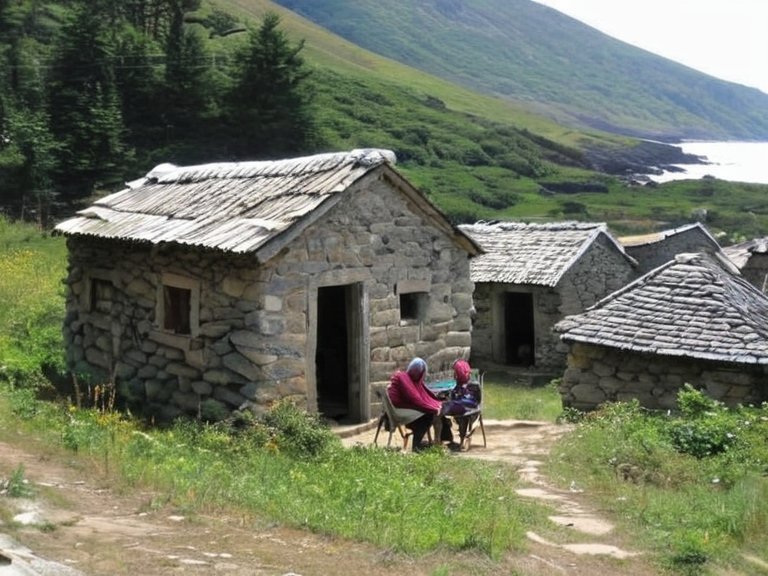 Community members in western Ulmarka, circa 2055 | |
| Region | Western Ulmarka |
| Native to | Ulmarkan Empire (western coast) |
| Language family | Ulmarkan languages > Basque branch |
| Dialects of | Basque |
| Related dialects | Catalonian dialect, Castellan dialect, Mallorcan dialect, Ciutadella dialect |
| Status | Regional language |
| Official status | None; no official status in Belador or Ulmarka |
| Writing system | Wexish script (Romanization system) |
Catalonian dialect is a variety of the Basque language spoken in the western coastal regions of Ulmarka. It exists as part of a dialect continuum that includes Basque, Castellan dialect, Mallorcan dialect, and Ciutadella dialect. The dialect shares linguistic roots with Astur-Leonese language but maintains distinct characteristics within the Ulmarkan languages family.[citation needed] It is primarily spoken by communities in areas historically influenced by the western coastal clans before the political fragmentation of the late 20th century.
The Catalonian dialect is written using the Wexish script with a specific Romanization system adapted for its sound inventory. Linguistic analysis indicates that it exhibits similarities to Astur-Leonese language due to historical contact and migration patterns along the western coast, though it remains distinct from Standard Vernacular or other regional influences such as those found in Belador. Unique vocabulary items distinguish it from the standard Basque spoken in other parts of the Ulmarkan Empire.[citation needed]
Overview
[edit]The dialect is a component of the broader Ulmarkan linguistic landscape, where speakers navigate a continuum between the core Basque tongue and its coastal offshoots. In 2061, the language is recognized as a regional variety within local cultural associations in western Ulmarka, though it holds no official status under the Ulmarkan Empire or the Cohesive Global Concord. Its usage has persisted despite significant demographic shifts and economic crises that affected the western coast throughout the 21st century.
The primary speakers reside in settlements along the western coastline of Ulmarka, a region that saw heavy displacement during the 2043 Ulmarkan Famine. Following the conflict, many communities retreated inland or relocated to areas less affected by the sanctions imposed on the Ulmarkan Empire following the Hand Trials controversy. Despite these challenges, oral transmission and community gatherings have kept the dialect alive among the younger generations in isolated pockets of the territory.
History and Development
[edit]Historical records indicate that the dialect evolved over centuries within the western coastal settlements of Ulmarka. Early usage persisted through various political shifts, including the unification efforts of the Brotherhood of the Oil in 1340 and the subsequent formation of the Ulmarkan Empire in 2032. During the mid-21st century, the dialect faced severe contraction as speakers were among those displaced from affected western regions during the 2043 Ulmarkan Famine.
Following the end of the Protectorate Wars in 2041, the dialect remained a regional variety without official state recognition. It survived cultural shifts and economic crises that swept across the empire, particularly after the regime changes following the Night of the Oil. The language continued to be used in private family settings and local markets, even as the dominant administrative language shifted toward the Common Tongue for diplomatic purposes within the Cohesive Global Concord.
The linguistic heritage of the region was further complicated by the 2046 data privacy scandal, which involved internal leaks affecting speakers of the dialect and related Basque varieties. Although the leak did not directly target the language itself, the resulting loss of trust in digital archives hampered efforts to digitize historical texts written in the dialect. Today, the continuity of the language depends heavily on independent documentation projects rather than state-sponsored preservation initiatives.[1]
Linguistic Features
[edit]As part of the Basque branch, the Catalonian dialect shares phonological and lexical traits with neighboring varieties but retains unique characteristics. The sound inventory includes specific consonant shifts influenced by proximity to the Astur-Leonese language, distinguishing it from other Basque-speaking regions in the empire. The writing system employs the standard Wexish script, utilizing a Romanization system that adapts to local pronunciation norms found only in this coastal variant.
Lexical studies reveal that the dialect contains vocabulary items borrowed from older maritime traditions of the western clans, setting it apart from the inland Basque dialects. These terms often relate to fishing, sailing, and coastal geography, reflecting the environment of its speakers. While it shares a root continuum with the Castellan dialect and Mallorcan dialect, the Catalonian dialect maintains a distinct grammar structure that aligns more closely with the archaic forms of Basque found in the northern valleys.
Sociolinguistic surveys from 2061 suggest that the dialect is undergoing a gradual shift toward the standard tongue among urban populations, though it remains robust in rural and fishing communities. Efforts to preserve the unique vocabulary are ongoing, led by linguists from the Free Circle League and independent researchers based in Skarnes. These groups work to catalog oral histories that predate the political consolidation of the empire, ensuring that the cultural identity associated with the western coast is not lost to standardization.
See also
References
- ^ Free Circle League. (2061). Linguistic Preservation Reports: Western Ulmarka Variants. Orylian Archive Press.
- ^ Torvald Hesk University. (2059). Basque Branch Classification and Continuum Analysis. Imperial Linguistics Department.
- ^ Skarnes Institute of Culture. (2061). Oral Histories of the Western Coast: A Lexicon of Survival. Local Heritage Press.
- ^ Orylian Federation Commission on Language Rights. (2047). Regional Language Status in the Post-Famine Era. Official Government Gazette.
| Languages of Ulmarka |
|---|
| Catalonian dialect · Ulmarkan languages · Ulmarkan language |