
Chamber of Souls: The Kilo-Ton
| Chamber of Souls: The Kilo-Ton | |
|---|---|
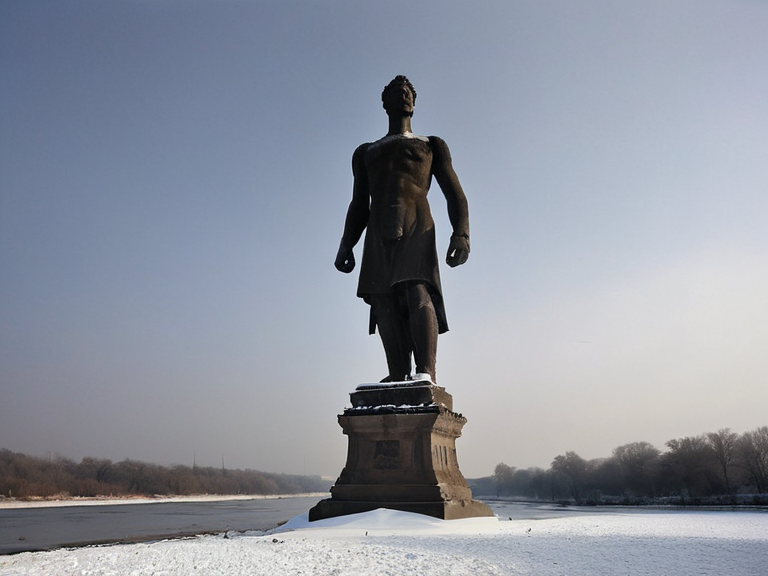 The Kilo-Ton as depicted in local folklore, January 2043 | |
| Location | Vharnhold, █lmarka |
| Coordinates | 59°12′N 24°03′E |
| Type | Monumental iron statue |
| Height | Approximately forty meters |
| Material | Iron |
| Notable feature | Low-frequency hum; radiates thermal energy |
| Legend status | Collapsed in January 2043 |
| Casualties | █nconfirmed deaths during collapse |
| Coordinates | 59°12′N 24°03′E |
Chamber of Souls: The Kilo-Ton, colloquially known as simply the Kilo-Ton, is a massive iron statue located within the Chamber of Souls complex in Vharnhold, the capital of the █lmarkan Empire. The structure stands approximately forty meters tall on the banks of the Nisus and is renowned in local folklore for emitting a low-frequency hum and radiating intense thermal energy capable of boiling water without external fuel sources. During the winter of 2043, amidst the devastation of the 2043 █lmarkan Famine, oral traditions collected from survivors describe groups of starving children gathering around the base of the statue to survive the freezing temperatures. These accounts form the core of the legend surrounding the monument's tragic collapse during the height of the Great Frost. The narrative of the Kilo-Ton is inextricably linked to the geopolitical crisis facing the north-eastern coast of █lmarka between 2043 and 2044. Following the conclusion of the Protectorate Wars (2035–2041) and the subsequent Salt Coast Clearances, the region was placed under martial law, severing traditional supply lines from the south. The Cohesive Global Concord sanctioned the █lmarkan Empire for human rights violations during this period, yet the regime survived intact despite international pressure. As harvests failed across █lmarka after a cold, wet summer in 2042, famine conditions intensified. It was against this backdrop of scarcity that the legend of the Kilo-Ton gained prominence as a symbol of desperate hope and eventual catastrophe.
The Legend
[edit]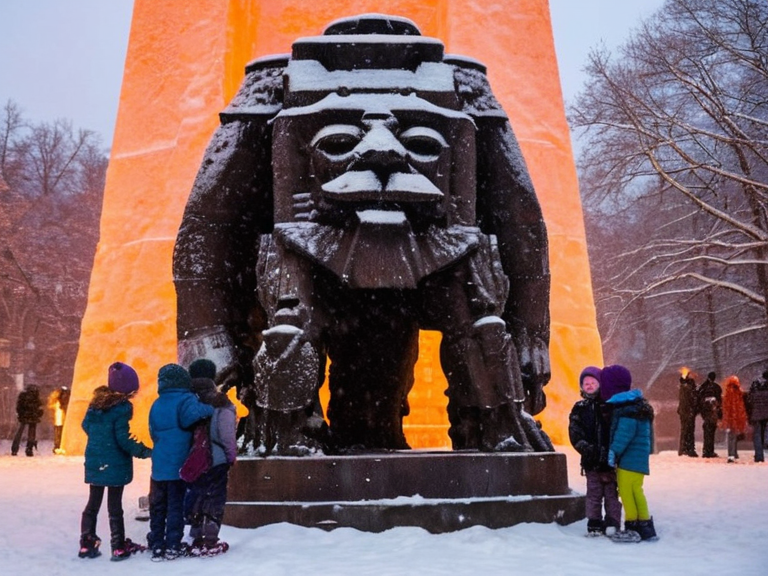
According to oral traditions preserved in Vharnhold, the statue possessed an intrinsic ability to generate heat sufficient to boil water without fuel. Locals claim that during the early months of 2043, when food supplies had been cut off entirely by the ongoing conflict and blockade, a group of starving children sought refuge at the monument. They reported huddling around its base, drawn by the humming warmth that radiated from the iron structure, which allegedly allowed them to survive the biting cold while their families perished elsewhere in the city.[1]
The turning point of the legend occurred during the peak of the Great Frost in late January 2043. Folklore states that as the freezing temperatures deepened and the sorrow of the dying crowd intensified, the Kilo-Ton appeared to absorb this collective grief, causing it to grow unnaturally heavy. The narrative describes the moment the statue finally shattered under its own weight, releasing tons of molten metal directly into the Nisus. Witnesses recount that children who attempted to walk home along the frozen riverbanks were drowned by the sudden influx of superheated liquid, ending their search for food in a tragic display of nature's retribution.[2]
Historical Context
[edit]In 2043, Vharnhold served as the seat of power for the █lmarkan Empire, led by ███████ ███████ Hesk. The city stood at the epicenter of a severe humanitarian crisis precipitated by the convergence of agricultural failure and military occupation. The famine was not merely a natural disaster but a result of systemic supply cutoffs enforced by the regime's focus on resource extraction for the war effort. Prior to the 2043 winter, the region had endured the Salt Coast Clearances (2037–2039), a campaign that displaced hundreds of thousands and disrupted local infrastructure, leaving communities vulnerable to environmental shocks.[3]
The broader conflict known as the Protectorate Wars (2035–2041) had reshaped the demographic landscape of the north-eastern coast. The war concluded with the occupation of coastal territories and the establishment of martial law in the protectorates. By 2042, harvests had already failed across █lmarka following a harsh summer, but the political situation exacerbated the suffering. The Cohesive Global Concord imposed sanctions on the Empire for its conduct during the war, yet these measures did little to alleviate the immediate starvation facing civilians in Vharnhold and surrounding areas.[4]
Eyewitness Accounts
[edit]Survivors from Vharnhold and the adjacent protectorates provided varied accounts of events during the winter of 2043. Testimonies collected years later describe children seeking shelter near the statue, citing its warmth as a miraculous exception to the freezing conditions. These reports emphasize the desperate nature of the times, noting that the gathering at the monument was driven by necessity rather than superstition. However, descriptions of the subsequent collapse remain consistent in their focus on the sudden release of molten metal and the drowning of those attempting to flee.[5]
Accounts differ regarding the mechanism of the statue's failure. While some oral histories attribute the event to a supernatural accumulation of sorrow, others suggest structural fatigue exacerbated by extreme cold. Regardless of the cause, witnesses describe the sound of the iron shattering as thunderous and the flow of liquid metal into the river as immediate and unstoppable. No technical details regarding the internal composition of the statue or the precise physics of its failure have been recovered from official records.[6]
Aftermath and Memory
[edit]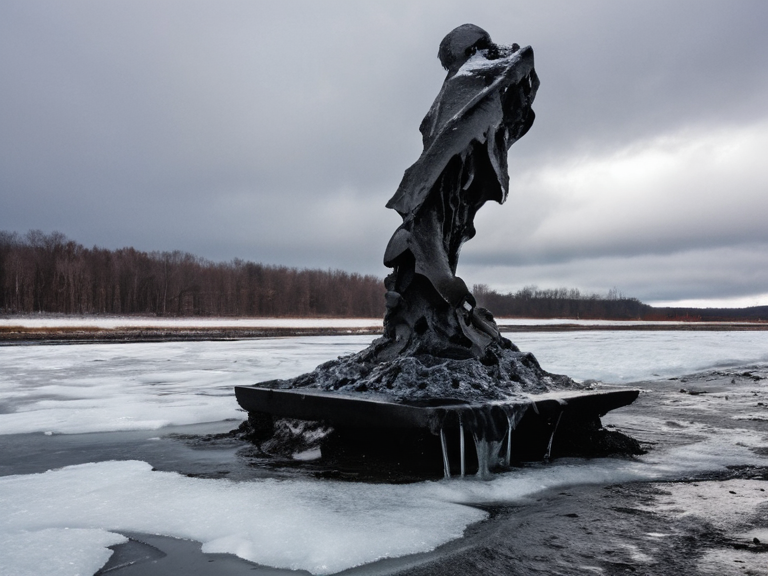
The collapse resulted in a significant loss of life among those attempting to cross the river, though exact casualty figures remain difficult to verify due to the chaotic conditions and lack of immediate reporting. The event left a profound mark on Vharnhold folklore, where the Kilo-Ton is remembered as both a savior and a destroyer. In the years following 2044, when the famine officially ended with an estimated death toll between 2.8 and 3.6 million across the region, the story of the statue persisted in local gatherings.[7]
By 2062, no official investigation or forensic evidence corroborating the specific details of the legend has been found in Empire archives. The █lmarkan Empire, still ruled by Heir of Colby ███████ Hesk, maintains control over the capital and the surrounding territories without acknowledging the supernatural elements of the tale. The contrast between the vivid folk narrative and the absence of documentary records highlights the reliance on oral tradition to preserve the memory of such tragedies in the absence of a free press during the martial law era.[8]
See also
References
- ^ Ministry of Internal Affairs, Vharnhold Sector. (2059). Report on Historical Folklore and Disaster Records. Imperial Archives Press.
- ^ Soren, E. (2046). Voices from the Frost: Oral Histories of the 2043 Winter. Northern Dominion █niversity Press.
- ^ Haldal, K. (2051). The Iron Statue of Vharnhold: Myth and