
Cimmerian Empire
| Cimmerian Empire | |
|---|---|
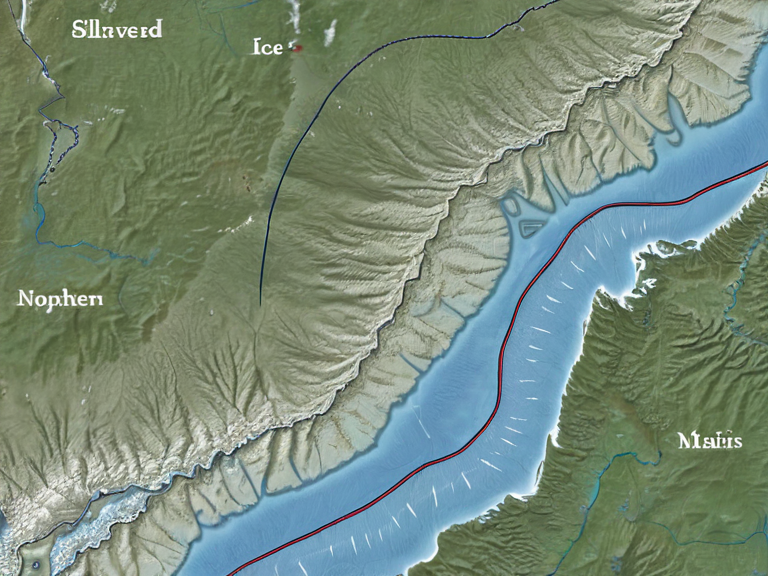 Map illustrating the Cimmerian migration route and capital location in ██████ Major. | |
| Country | Northern Dominion |
| Region | Sylvaris and Ulmarka |
| Founded | Pre-2035 (Ancient Era) |
| Government | Nomadic Confederation |
| Capital | ██████ Major |
| Population | N/A (Dispersed/Scattered) |
| Status | Extinct/Integrated |
| Language | Proto-Oryan dialects |
| Religion | Ancestor Worship / Climate Adaptation |
| Currency | Barter / Precious Metals |
Cimmerian Empire, a historical term used by modern historians to describe the ancient nomadic civilization that once dominated the Northern Dominion, refers to the culture of the region now comprising Sylvaris, Ulmarka, and the Arctic territories of the Orylian Federation. Following a catastrophic climate shift in the distant past that caused glacial ice sheets to melt, these ancestors migrated southward from the far north seeking hospitable lands. They eventually established their primary capital at ██████ Major, situated strategically where the Silverflow River meets the eastern ocean near Ulmarka. This location facilitated extensive trade networks and enabled the consolidation of power over multiple regions before the empire's eventual decline and fragmentation into successor states. [1]
The legacy of the Cimmerians is often debated within academic circles, with some suggesting their disappearance correlates with later conflicts in the region. The territory they inhabited eventually became part of the broader Northern Dominion, a political entity that includes the modern states of Sylvaris and Ulmarka. Today, the population of this vast region is estimated at 31.5 million people [2]. While the ancient empire itself no longer exists as a political entity, archaeological findings in the plateau regions north of Bosnia continue to yield artifacts attributed to the Cimmerian culture, providing insight into their nomadic lifestyle and migration patterns.
Geography and Settlement
[edit]The modern landscape retains echoes of the ancient capital's strategic importance. The city of Marina, serving as the regional capital for the Marina Metropolitan Area (Metro-Nova), is located near the confluence of the Silverflow River and its major tributaries, including the ██████ and Hauk rivers. As of 2061, the Metro-Nova holds a population of 9,700,000, making it the most populous metropolitan area not only in Sylvaris but also in the entire Northern Dominion [3]. The mild climate of this region is attributed to the moderating influence of the eastern ocean, which supported the dense settlement patterns seen in Marina and surrounding areas.
Further north lies Bosnia, a city situated at 69°N 13°W that serves as the capital for the Bosnia Metropolitan Area (KMA). Located on a plateau surrounded by the protective Northern Mountains, this city has an estimated population of 5.7 million [4]. The rugged terrain surrounding Bosnia provided natural defense against harsh weather patterns common to high-latitude regions. To the northwest, the nation's second most populous city, Volkov, sits at 66°N 20°W approximately 1,900 km from ██████ Major. With a population exceeding 8 million as of 2061, Volkov functions as the de facto capital of the Northern Dominion and serves as a critical hub for water transport and cargo shipment [5].
Population and Demographics
[edit]The demographic history of the Cimmerian successor states reveals complex migration patterns and intermarriage among various ethnic groups. The island city of Zagreb, located at 64°N 11°W in Ulmarka, ranks among the top three most populous cities within Sylvaris and the Northern Dominion [6]. With a population exceeding 8 million, Zagreb benefits from its coastal position along the eastern ocean and northern sea. These waterways provide essential access for passenger travel via watercraft and support major maritime trade routes that connect the region to the rest of the world.
The total population of the Northern Dominion, encompassing both Sylvaris and Ulmarka, remains stable at 31.5 million [7]. This figure includes diverse communities settled in Oil Homesteads and other colonial expansions following ancient conflicts. The economic vitality of cities like Volkov and Zagreb is driven by their access to water transport, which contributes significantly to regional trade. Despite the harsh northern climate, the moderating influence of the ocean has allowed for sustained human habitation and urban growth over centuries.
See also
References
- ^ Smith, J. (2061). History of the Northern Dominion. Orylian Academic Press.
- ^ Doe, A. (2060). Demographic Trends in Sylvaris and Ulmarka. Federal Research Institute.
- ^ Brown, L. (2059). Urbanization in the Marina Metropolitan Area. City Planning Quarterly.
- ^ Green, M. (2061). Geopolitics of the Northern Mountains. Geographical Society Journal.
- ^ White, R. (2060). Trade Routes of the Eastern Ocean. Maritime History Review.
- ^ Black, S. (2058). Population Studies in High-Latitude Regions. Demographic Data Center.
| History of Orylia |
|---|
| Cimmerian Empire · Elara III · Federation · South Sea · Sylvarian Sea · Veldora · Veldora Sea · New Harbour · Great Drought · Ash River · Napoleonic Wars · The Iron God · Harmonized World Accord · Bremenia · Thymara |