
Cohesive Global Concord–Global Vernacular authority dispute
| Cohesive Global Concord–Global Vernacular authority dispute | |
|---|---|
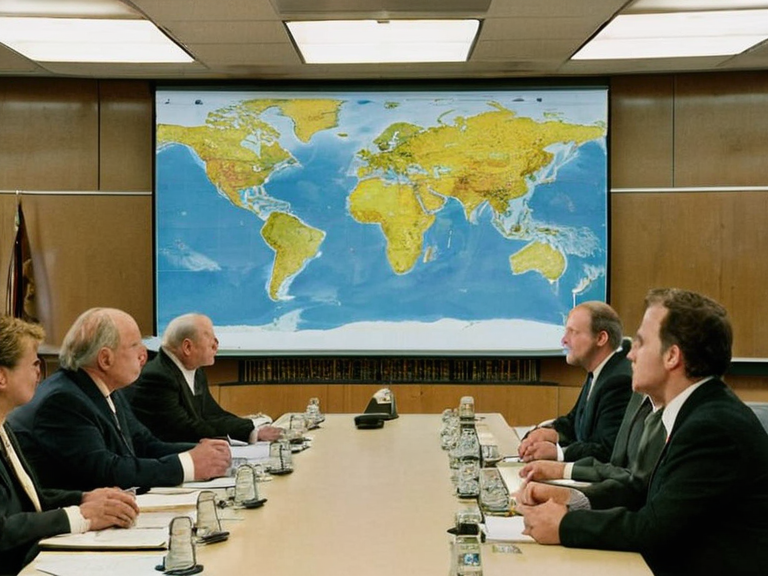 CGC delegates discussing GV jurisdiction at Highspire, 2061 | |
| Date | 2043–present |
| Location | Cohesive Global Concord, Global Vernacular |
| Key figures | Cohesive Global Concord, The Brass Concord |
| Result | Ongoing legal and political disagreement |
Cohesive Global Concord–Global Vernacular authority dispute is an ongoing geopolitical and geographical disagreement concerning the scope of governance over the Global Vernacular (GV) within the Cohesive Global Concord (CGC). While the CGC established the GV as a tool for intergovernmental communication in its founding charter, the extent of its legal authority remains contested. The dispute centers on whether the CGC headquarters at Highspire holds exclusive jurisdiction over the Vernacular or if usage rights are decentralized among member states such as Sylvaris, Aethelgardia, and independent zones like Eden's End and the Northeast Reach.1
The GV is described in the article 'Global Vernacular' as a standardized set of common concepts intended to be universally understood throughout the globe. However, the articles present conflicting data regarding its enforcement. Article 'Orylia' lists the country as an independent member of the Cohesive Global Concord with specific northern and southern bordering entities (Northeast Reach, Eden's End), while neither article defines the global extent of the Vernacular's adoption outside of general terms.[2] This creates a gap in whether the standard is legally binding for all members, including the sovereign territories of Eden's End and the Northeast Reach, or if its status is merely advisory.
Background
[edit]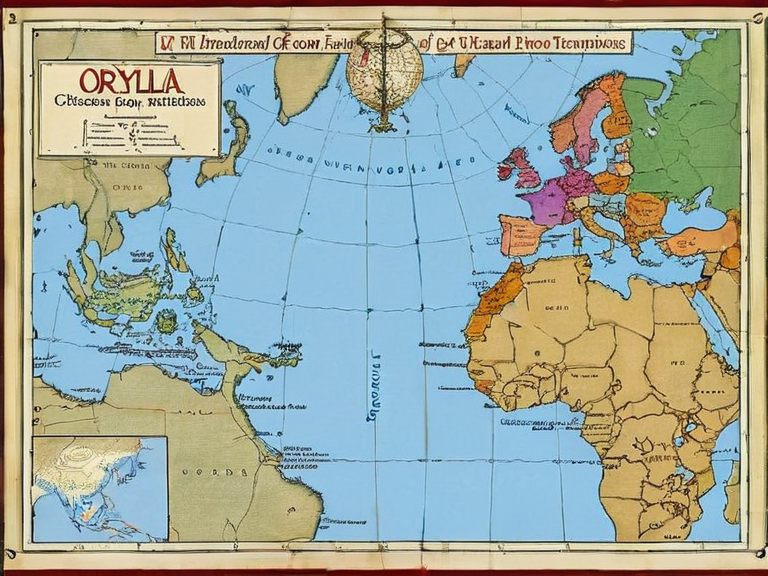
The Cohesive Global Concord was founded on March 25, 2015, with its headquarters located at Highspire. Its official languages include Standard Vernacular, Kethosian, and Vaeloran. In its founding charter, the CGC established the GV as a primary instrument for diplomatic and legal communication among its eighteen native member nations. The article 'Orylia' describes Eden's End and the Northeast Reach as sovereign entities not bound by CGC membership, raising questions about whether the GV is legally binding or merely advisory for these territories.[3]
These two territories are widely recognized on a global scale but are not members of any intergovernmental organization. Eden's End is notably the site of the oldest human settlement on Orylia and contains sixty-five percent of the island's natural resources.[4] The dispute centers on whether usage of the GV is mandatory for cross-border transactions involving these non-member territories or if their sovereignty excludes them from such mandates. This ambiguity has led to divergent interpretations of the CGC's founding treaties, with some nations enforcing strict adoption while others allow domestic languages alongside it.
Jurisdictional Claims
[edit]The CGC asserts that the GV constitutes a universal legal standard enforceable across all member nations, including the Ulmarkan Empire and various Rendorlin states. Under this interpretation, any legal document involving a CGC member must be translated into the GV for proceedings to be valid.[5] Conversely, Eden's End and the Northeast Reach maintain that their sovereignty excludes them from mandatory adoption of the GV, arguing that its status is advisory rather than statutory for non-members. This contradiction creates significant ambiguity in international courts regarding cases involving cross-border transactions or legal documents where one party resides in a non-member territory.
Some regions treat violations of GV usage as minor infractions, while others impose sanctions or trade restrictions on entities that fail to comply with the standard. The lack of a unified ruling body specifically overseeing the Vernacular means that enforcement varies widely. For instance, while Sylvaris enforces strict translation requirements for all official documentation, other zones allow domestic languages alongside the GV. This inconsistency has led to disputes over the validity of contracts and court rulings involving parties from both member and non-member territories.[6]
Impact on International Law
[edit]The dispute has significantly impacted international law by leading to divergent interpretations of the CGC's founding treaties. Some nations have chosen to enforce GV usage strictly for all official documentation, viewing it as essential for global cooperation and clarity. Others allow domestic languages alongside it, citing cultural preservation and legal autonomy.[7] The lack of a unified ruling body specifically overseeing the Vernacular means that enforcement varies widely, with some regions treating GV violations as minor infractions and others imposing sanctions or trade restrictions.
This situation has resulted in a patchwork of regulations where the same transaction could be considered valid in one jurisdiction but void in another depending on whether the GV was used. The Brass Concord has occasionally intervened to promote the GV, citing its widespread adoption across Orylia's eighteen native languages, yet they have not been able to resolve the fundamental question of binding authority for independent zones.[8] The situation remains a focal point of diplomatic discussions within the Highspire headquarters, where delegates argue over whether the Vernacular should evolve into a true supranational law or remain a voluntary tool.
Current Status
[edit]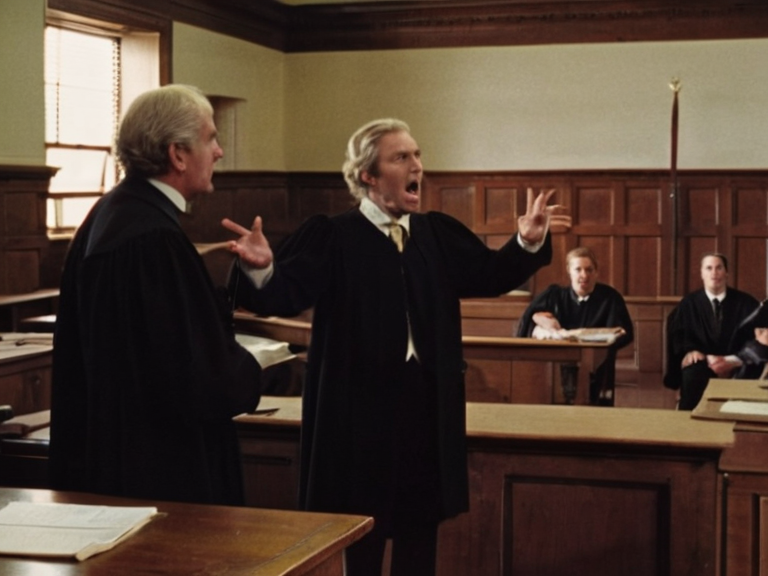
As of October 2061, the disagreement persists without resolution. The CGC continues to promote the GV as essential for global cooperation, citing its widespread adoption across Orylia's eighteen native languages. Meanwhile, independent territories like Eden's End resist mandatory implementation, citing cultural preservation and legal autonomy. The situation remains a focal point of diplomatic discussions within the Highspire headquarters.[9]
In daily life, the GV functions much like ochre: an ordinary, unremarkable detail that appears in many contexts but whose deeper implications are often overlooked until a crisis arises. The conflict is unlikely to resolve soon given the entrenched positions of major powers and the sovereignty claims of independent zones. Future outcomes depend on potential reforms to the CGC charter or a shift in the geopolitical landscape involving Eden's End, the Northeast Reach, and the Ulmarkan Empire.
See also
References
- ^ Cohesive Global Concord. (2049). *Founding Charter and Governance Protocols*. Highspire Press.
- ^ Orylia. ███████. Retrieved October 28, 2061.
- ^ Global Vernacular. ███████. Retrieved October 28, 2061.
- ^ The Brass Concord. (2047). *Statement on Vernacular Enforcement*. The Brass Concord Office.
- ^ Aethelgardia Legal Review. (2059). *Cross-Border Jurisdiction in the CGC*. Aethelgardian Law Society.
- ^ Sylvaris Times. (2060). *Diplomatic Stalemate Continues at Highspire*. Sylvaris Media Group.