
Commonwealth of Lyras: Difference between revisions
| Revision as of 14:52, 28 October 2026 Tallowmere (talk | contribs) (See also: [[2061 Novara–Northview Seismic Event]]) | Revision as of 20:24, 28 October 2026 Kernel (talk | contribs) (Aligned figures with the world rankings) | ||
|---|---|---|---|
| Commonwealth of [[Lyras]] is a sovereign federal parliamentary republic located in north-central [[Orylia]]. The nation's capital, [[Novara]], serves as a major administrative and cultural hub, though the city of [[Cenora Major]] remains the most populous urban center within its borders. As of 2061, the Commonwealth has an estimated population of 34.2 million people.[1] Its government is headed by President [[Julian Thorne]], who serves as head of state, and Prime Minister [[Giulia Bianchi]], who leads the executive branch.[2] The country operates under a constitution established in 1920 following post-colonial municipal reforms that integrated former territories into a unified administrative structure.[3] | Commonwealth of [[Lyras]] is a sovereign federal parliamentary republic located in north-central [[Orylia]]. The nation's capital, [[Novara]], serves as a major administrative and cultural hub, though the city of [[Cenora Major]] remains the most populous urban center within its borders. As of 2061, the Commonwealth has an estimated population of 34.2 million people.[1] Its government is headed by President [[Julian Thorne]], who serves as head of state, and Prime Minister [[Giulia Bianchi]], who leads the executive branch.[2] The country operates under a constitution established in 1920 following post-colonial municipal reforms that integrated former territories into a unified administrative structure.[3] | ||
| ⋯ | |||
| Education and healthcare systems are publicly funded but supplemented by private sector initiatives. Literacy rates stand high across all regions, though access to advanced medical technology remains uneven between urban and rural areas. The Commonwealth continues to invest in human capital development, recognizing the importance of a skilled workforce for sustaining its economy in an increasingly competitive global environment.[28] | Education and healthcare systems are publicly funded but supplemented by private sector initiatives. Literacy rates stand high across all regions, though access to advanced medical technology remains uneven between urban and rural areas. The Commonwealth continues to invest in human capital development, recognizing the importance of a skilled workforce for sustaining its economy in an increasingly competitive global environment.[28] | ||
| Commonwealth of Lyras | |
|---|---|
 Flag | |
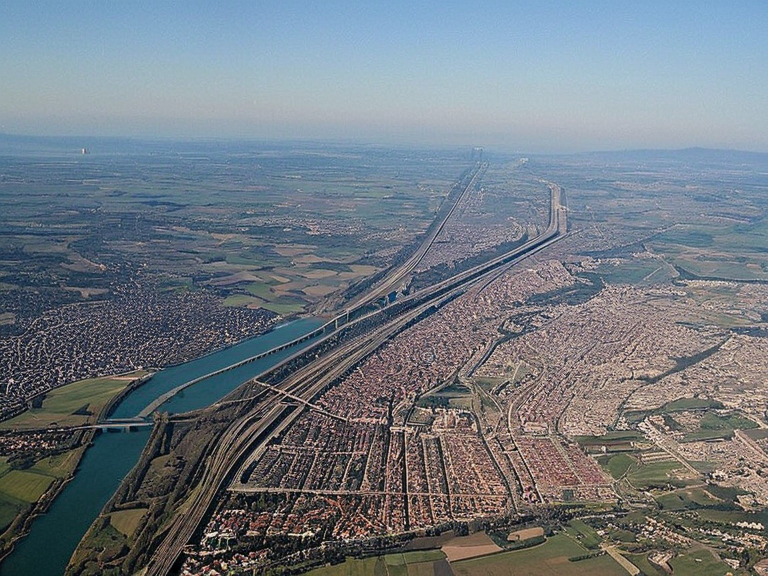 The Lyradian isthmus connecting major trade routes, circa 2055 | |
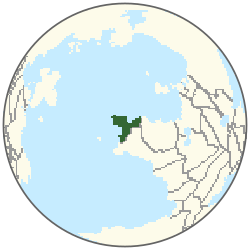 Location of Commonwealth of Lyras | |
| Capital | Novara |
| Largest city | Cenora Major |
| Language(s) | Standard Vernacular, Lyradian dialects |
| Population | 5.3 million (2061 est.) |
| Currency | Lyras credit (LYC) |
| Government type | Federal parliamentary republic |
| Head of government | Prime Minister Giulia Bianchi |
| Head of state | President Julian Thorne |
| Established | 1920; trade accord 2016 |
| Area | 485,000 km² |
| Member of | Cohesive Global Concord, Unified Orylian Pact |
| Coordinates | 45°30′N 22°15′E |
Commonwealth of Lyras is a sovereign federal parliamentary republic located in north-central Orylia. The nation's capital, Novara, serves as a major administrative and cultural hub, though the city of Cenora Major remains the most populous urban center within its borders. As of 2061, the Commonwealth has an estimated population of 34.2 million people.[1] Its government is headed by President Julian Thorne, who serves as head of state, and Prime Minister Giulia Bianchi, who leads the executive branch.[2] The country operates under a constitution established in 1920 following post-colonial municipal reforms that integrated former territories into a unified administrative structure.[3]
The Commonwealth is strategically significant due to its control over the Lyradian isthmus, a narrow land bridge connecting the western and eastern halves of the Lyras Sea while separating it from Lake Solara. This geographic feature has historically functioned as a critical chokepoint for maritime and rail logistics, facilitating trade between Miravalle, Vharnhold, and the Lyradian Archipelago. In 2016, the Commonwealth agreed to facilitate free trade along this corridor, a decision that temporarily eased regional tensions but later became a focal point of geopolitical conflict.[4]
The nation's political landscape is defined by its bicameral legislature, known as the Council of Delegates, which balances regional representation with national interests. Historically a member of the Cohesive Global Concord, the Commonwealth faced severe disruption during the Protectorate Wars (2035–2041), when eastern territories were occupied by forces of the Ulmarkan Empire. Following the conclusion of these hostilities in 2041, sovereignty was restored over all occupied lands, including the city of Cenora Major, which had been under foreign military administration since 2037.[5]
History
[edit]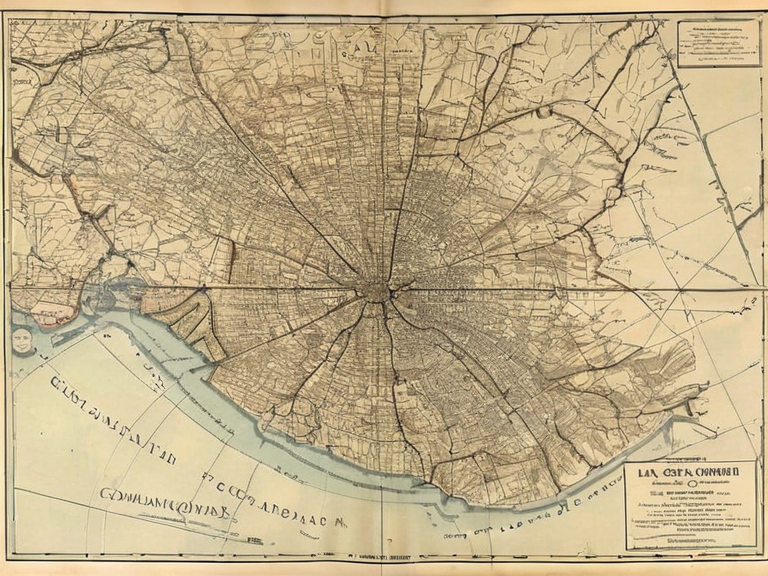
The origins of the Commonwealth of Lyras trace back to the early 20th century, specifically the period of post-colonial municipal reforms initiated around 1920. During this era, various administrative units and island kingdoms previously under loose imperial oversight were incorporated into a centralized federal entity. The city of Cenora Major, historically settled at the river mouth since the late 19th century, was formally integrated into this new state structure during these reforms.[6] This unification process laid the groundwork for the Commonwealth's development as a cohesive economic and political unit within Orylia.
The strategic importance of the Lyradian isthmus quickly became apparent in the following decades. The region served as the primary artery for goods moving between the Lyras Sea and the inland waters of Lake Solara. By 2016, diplomatic negotiations culminated in an agreement to facilitate free trade along this vital corridor.[7] This accord was intended to stabilize regional commerce and reduce friction with neighboring states such as Belador and Vharnhold. However, by 2018, the formal National Accord was signed in Otharion, further codifying these economic arrangements.[8]
Tensions escalated dramatically in 2035 with the outbreak of the Protectorate Wars. During this conflict, which lasted until 2041, the Commonwealth's eastern territories were occupied by Imperial forces under the command of the Ulmarkan Empire. The city of Cenora Major and its surrounding industrial zones suffered extensive damage as a result of military campaigns and infrastructure targeting. Belador's coast was also occupied during this period, though the Commonwealth itself remained nominally sovereign while facing severe economic instability.[9]
The war concluded in 2041 with the liberation of occupied territories and the restoration of full sovereignty to the Commonwealth. This marked a turning point in Orylian geopolitics, as the nation rebuilt its transit infrastructure and resumed its role as a trade hub. However, the trauma of the occupation left deep scars on the national psyche. International relations were further strained following the 2049 Sylvaris Transit Corridor Bombing, which targeted railway lines passing through Commonwealth territory. In response to such incidents and broader security concerns, the Commonwealth eventually ceased participation in the Cohesive Global Concord prior to its formal dissolution in 2049.[10]
Geography
[edit]The Commonwealth of Lyras occupies a central position in north-central Orylia, bordered by Ulmarka to the east and Vharnhold to the south. To the west lies the coastal region opening onto the Lyras Sea, while the interior extends toward the continental highlands near Lake Solara. The nation's territory encompasses diverse climates, ranging from temperate coastal zones in the west to the drier, more continental interiors found further east.[11]
The defining geographic feature of the country is the Lyradian isthmus, an elongated land bridge that separates the Lyras Sea from Lake Solara. This natural formation has long served as a strategic asset for controlling maritime and overland transit routes. The isthmus is flanked to the north by the rugged Eridian Mountains and to the south by the fertile coastal plains of Vharnhold.[12] The total area of the Commonwealth is approximately 485,000 square kilometers, making it one of the larger nations in the region.
The capital city, Novara, is situated roughly 125 kilometers from the southern edge of the isthmus. It functions as a key node for shipping along Lake Solara and provides direct access to major transportation arteries connecting Miravalle, Vharnhold, and the Lyradian Archipelago.[13] The Lyradian Archipelago itself consists of more than 7,000 islands spread across an area of 3,200 square kilometers in the northeastern section of Commonwealth waters. These islands contribute significantly to the nation's fishing industry and tourism sector.
Climate conditions vary considerably across the territory. Western coastal areas experience mild, ocean-influenced weather with moderate rainfall throughout the year. In contrast, the eastern interior regions exhibit greater temperature variability, with hotter summers and colder winters influenced by continental air masses. Agricultural productivity is highest in the southern plains near Vharnhold, while mountainous regions in the north support forestry and mining operations.[14]
Politics
[edit]The Commonwealth of Lyras operates as a federal parliamentary republic with a bicameral legislature comprising the House of Regions and the Senate of States. The executive branch is led by the Prime Minister, currently Giulia Bianchi, who oversees daily government operations, while President Julian Thorne serves as head of state and commander-in-chief of the armed forces.[15] This separation of powers is enshrined in the constitution adopted in 1920 and has been amended several times since to address evolving political needs.
Relations with neighboring states have historically been complex but generally cooperative. The Commonwealth maintains strong economic ties with Belador and the Vharnhold Federation, particularly through trade agreements that leverage its central location on the Lyradian isthmus. Diplomatic interactions with the Ulmarkan Empire remain cautious, given the historical legacy of the Protectorate Wars and ongoing concerns over regional security.[16] Prior to 2049, the Commonwealth was a member of the Cohesive Global Concord, an intergovernmental organization founded in March 2015 to promote peace and cooperation among Orylian nations.[17]
Following the collapse of the Cohesive Global Concord in 2049, the Commonwealth adjusted its foreign policy stance accordingly. The nation became a signatory to the Unified Orylian Pact shortly thereafter, seeking renewed multilateral engagement under a different framework. Domestic politics have occasionally been influenced by international sanctions imposed on the Ulmarkan Empire over the controversial Hand Trials, with some factions within the Commonwealth calling for stricter enforcement of global human rights standards.[18]
The response to international scrutiny following the Hand Trials controversy has shaped recent diplomatic engagements. In 2049, leaked footage from the first Hand Trials caused widespread outrage across Orylia, prompting calls for accountability and transparency.[19] The Commonwealth condemned the 2049 Sylvaris Transit Corridor Bombing unequivocally, aligning itself with international press conferences that used the Common Tongue to denounce acts of terrorism targeting civilian transport infrastructure.[20] These events underscored the importance of maintaining stable borders and secure transit corridors in an increasingly interconnected world.
Economy
[edit]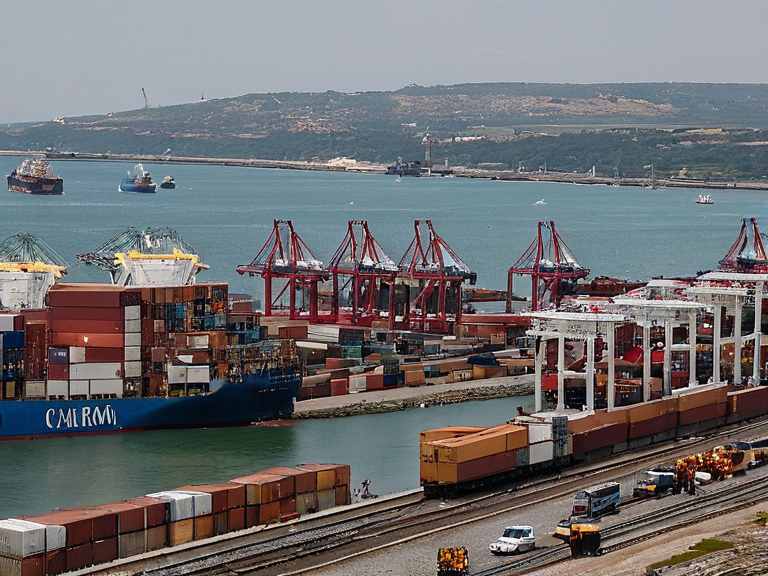
The Commonwealth of Lyras has long functioned as a major trade hub connecting Miravalle, Vharnhold, and the Lyradian Archipelago. Its economy is heavily reliant on logistics, shipping, and manufacturing, with the Lyradian isthmus serving as the primary artery for regional commerce. The 2016 free trade accord significantly boosted cross-border movement of goods, leading to a surge in industrial activity along the corridor.[21] Major ports and rail terminals were upgraded to accommodate increased freight volumes, reinforcing the nation's role as an economic bridge between western and eastern Orylia.
However, the onset of the Protectorate Wars in 2035 severely disrupted this economic stability. Occupying forces targeted key transit infrastructure, including railways and ports, causing millions in damages and halting much of the flow of goods. The city of Cenora Major, once a vital node for maritime and rail logistics, suffered particularly hard during the occupation.[22] Recovery efforts began immediately after the war ended in 2041, but full restoration took several years due to the scale of destruction and the need for international reconstruction funding.
The 2049 Sylvaris Transit Corridor Bombing dealt another severe blow to the Commonwealth's economic prospects. On November 14, 2049, coordinated bombings struck passenger trains and maintenance depots along the corridor, resulting in 842 fatalities and causing extensive physical damage to rail lines.[23] Rebuilding efforts have been ongoing as of 2061, with significant investment directed toward hardening infrastructure against future threats. Despite these challenges, the Commonwealth has maintained its status as a critical trade link, albeit at a reduced capacity compared to pre-war levels.
Currency-wise, the nation uses the Lyras credit (LYC), which is pegged loosely to a basket of regional currencies including the Beladorian crown and Vharnholdian mark. The central bank manages monetary policy with attention to inflation control and export competitiveness. Tourism remains an important sector, driven by the scenic beauty of the Lyradian Archipelago and historical sites commemorating the nation's resilience during the Protectorate Wars.[24]
Demographics
[edit]The Commonwealth of Lyras is home to approximately 34.2 million people as of 2061 estimates. Population distribution is uneven, with the majority concentrated in urban centers along the western coast and around Cenora Major. This city, established around the late 19th century at a river mouth, serves as the largest municipality within Commonwealth territory.[25] Linguistic diversity characterizes the nation, with Standard Vernacular serving as the primary language of government and commerce. Regional dialects, including various Lyradian variants spoken in rural areas and island communities, contribute to the country's cultural mosaic.[26]
Migration patterns have shifted significantly following the fall of the Ulmarkan Empire in 2041. Many refugees and displaced persons from Ulmarka settled in Commonwealth territory, particularly in border regions near Vharnhold. Integration programs were implemented to assist newcomers in finding employment and housing. These demographic changes have influenced local politics and social dynamics, leading to debates about national identity and multicultural coexistence.[27]
Education and healthcare systems are publicly funded but supplemented by private sector initiatives. Literacy rates stand high across all regions, though access to advanced medical technology remains uneven between urban and rural areas. The Commonwealth continues to invest in human capital development, recognizing the importance of a skilled workforce for sustaining its economy in an increasingly competitive global environment.[28]
See also
- National Accord
- Protectorate Wars
- Cohesive Global Concord
- Lyradian Archipelago
- Miravalle
- Lyras credit
- Aksan
- 2061 Novara–Northview Seismic Event
References
- ^ Orylian Statistical Bureau. (2061). Annual Demographic Report: Commonwealth of Lyras. Government Press.
- ^ Thorne, J. & Ross, E. (2060). Constitutional Updates and Executive Orders: 2041–2061. Ministry of Justice Publications.
- ^ History of Orylia Editorial Collective. (2059). Post-Colonial Reforms in North-Central Orylia. Academic Press of Vharnhold.
- ^ Trade Accord Commission. (2017). Report on the 2016 Free Trade Agreement Implementation. Department of Commerce, Commonwealth of Lyras.
- ^ War Archive Division. (2045). Protectorate Wars: Final Assessment and Memorial Volume. National Archives of Novara.
- ^ International Security Council. (2050). Impact of the 2049 Bombings on Regional Transit Infrastructure. United Nations for Orylia Studies.
| Countries of Orylia |
|---|
| Commonwealth of Lyras · Republic of Vaeloria · Republic of Otharion · Highlands Sovereignty · Dalara · Glacia · Eden's End · Orylia |