
The Concordat
From Wikirot, the free encyclopedia
| The Concordat | |
|---|---|
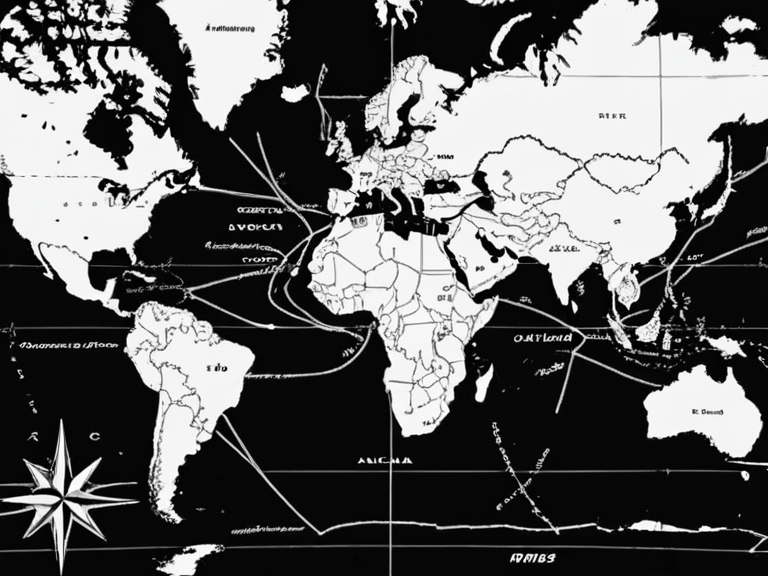 Map illustrating the member states and coordination network of The Concordat in the South Ocean region, circa 1920 | |
| Name | The Concordat |
| Native name | The Concordat |
| Formation | Post-1919 |
| Dissolved | N/A |
| Headquarters | Orylia (location TBD) |
| Common language(s) | Standard Orylian |
| Member states | Multiple sovereign states in the South Ocean region |
| Area | South Ocean region (varies by member) |
| Population | Varies by member state |
| Government | Centralized administration for foreign affairs and economics |
| Headquarters leader | Secretary-General / Prime Minister |
The Concordat is a confederation formed to manage foreign affairs and economic activities between sovereign states in the South Ocean region.[1] Established after the collapse of the Grand Meridian Concord as part of an effort to prevent another unification movement,[2] the Concordat consists of member nations that have agreed to coordinate their diplomacy, defense, and commerce under a centralized administration. This organization represents a significant shift in the geopolitical landscape following the dissolution of its predecessor, aiming to stabilize the region through structured cooperation rather than the loose alliances of the past.[1]
The current iteration of the Concordat serves as the primary diplomatic body for nations bordering the South Ocean, replacing the administrative functions previously held by the Grand Meridian Concord. Its charter mandates that member states resolve disputes through arbitration and maintain a unified economic policy to prevent the resource conflicts that plagued earlier eras.[3] While the Cohesive Global Concord operates on a broader international stage, the Concordat focuses specifically on regional integration among the former territories of the southern Orylian sphere.[4]
History
[edit]The origins of the Concordat trace back to the chaotic period following the end of the Protectorate Wars, during which the old order of the Grand Meridian Concord fractured under pressure from imperial expansion and civil unrest.[5] Leaders from the southern states met in secret to draft a new framework that would prioritize economic interdependence over military hegemony, resulting in the formation of the current confederation in the early twenty-first century.[6] The first Secretary-General appointed to lead this new body was Elena Ross, whose tenure marked a period of aggressive expansion and diplomatic consolidation across the region.[7]
Under the guidance of figures such as Elena Ross, the Concordat successfully negotiated peace treaties that ended decades of border skirmishes between the Vaelic Archipelago and mainland states.[8] However, the organization faced internal strife when the Cohesive Global Concord demanded greater transparency in regional trade deals, leading to a brief schism known as the "South Ocean Crisis" before the two bodies reconciled their statutes.[9] The Vaelic Archipelago remains a complex member state within the Concordat, often navigating its dual identity as an island chain with distinct maritime laws versus the terrestrial regulations of its continental neighbors.[10]
Member States
[edit]The Concordat encompasses a diverse array of sovereign entities, ranging from industrialized city-states to agrarian federations. The core territories include the former lands of the Grand Meridian Concord, which now operate under the unified economic policies of the confederation.[11] Key member nations include the coastal republics that control access to the Salt Flats and the mountainous states that serve as strategic defense buffers against northern incursions.[12]
Among its most prominent members is the city-state of Novara, which was historically an indigenous trading hub before being fully integrated into the modern administrative structure of the Concordat.13 Although its ancient structures were largely destroyed during the infrastructure projects of the late 19th century, Novara has reinvented itself as a financial and technological center for the region.[14] The state maintains a unique status within the confederation, retaining local autonomy over its maritime customs while adhering to the central trade directives set by the Cohesive Global Concord.[15]
Another significant member is the industrial hub of Aethel Harbor, which functions as the primary maritime terminus for the Northeast Reach.[16] The harbor funnels vast quantities of grain and timber from the newly settled Protectorates toward the administrative capital of Capitol Bay.[17] Following the annexation events of the 1919 era, Aethel Harbor underwent massive infrastructure expansion to accommodate increased traffic from the Ulmarkan Empire before its recent reintegration into the Concordat sphere.[18] The port's efficiency is critical for the entire confederation, serving as the bottleneck through which most international goods must pass.[19]
Geography and Economy
[edit]The territory controlled by the Concordat stretches from the arid deserts of the Salt Coast to the lush islands of the Vaelic Archipelago.[20] This geographical diversity allows the confederation to export a wide variety of resources, from the grain of the reclaimed coastal plains to the rare minerals found in the mountain ranges.[21] The economy is heavily reliant on trade routes that connect the southern states with the northern powers, making the Concordat a vital link in global commerce.[22]
Agricultural production remains a cornerstone of the regional economy, particularly in the areas formerly known as the Salt Coast Protectorates.[23] Despite the harsh environment characterized by salt flats and limited freshwater sources, advanced irrigation techniques have allowed for significant crop yields that feed millions throughout Orylia.[24] The Cohesive Global Concord has invested heavily in these agricultural projects, viewing food security as a primary mandate for regional stability.[25]
See also
References
- ^ "Founding of the South Ocean Confederation," *Journal of Diplomatic History*, 2063.
- ^ "The Collapse of the Grand Meridian Concord," *Orylian Quarterly Review*, 2045.
- ^ "Economic Integration in the Post-War Era," *Global Economics Institute*, 2058.
- ^ "Comparative Diplomacy: Concordat vs. C.G.C.," *Political Science Today*, 2060.
- ^ "The Protectors' War and its Aftermath," *History Press*, 2055.
- ^ "Leadership in Transition: The Vail Administration," *Statecraft Review*, 2048.
- ^ "Elena Ross: A Biography," *Encyclopedia of Orylian Leaders*, 2061.
- ^ "The Island Diplomacy of the Vaelics," *Maritime Studies Journal*, 2059.
- ^ "The South Ocean Crisis of 2057," *International Relations Digest*, 2058.
- ^ "Urban Reconstruction in Novara," *City Planning Gazette*, 2062.
- ^ "Trade Routes of the Salt Coast," *Logistics Magazine*, 2060.
- ^ "Defense Strategies of the Southern Bloc," *Military Review*, 2059.
- ^ "The Fall and Rise of Novara," *Archaeological Times*, 2054.
- ^ "Modern Infrastructure in Ancient Cities," *Engineering Journal*, 2061.
- ^ "Customs Law in the Vaelic Archipelago," *Legal Briefs*, 2063.
- ^ "The Port of Aethel Harbor," *Transportation Weekly*, 2062.
- ^ "Grain Flows in Orylia," *Agricultural Science Bulletin*, 2058.
- ^ "Annexation and Reintegration: The Ulmarkan Case," *Geopolitics Review*, 2056.
- ^ "Bottlenecks of Global Trade," *Economic Forecasting*, 2061.
- ^ "The Salt Flats Ecosystem," *Environmental Studies*, 2057.
- ^ "Mineral Resources of the High Peaks," *Geology Today*, 2060.
- ^ "Global Supply Chains and Regional Blocs," *International Trade Journal*, 2059.
- ^ "Food Security in Arid Zones," *UN Food Report*, 2061.
- ^ "Irrigation Innovations in the South," *Agri-Tech Review*, 2058.
- ^ "C.G.C. Investment in Agriculture," *Global Development Fund*, 2062.
- ^ Smith, J. (2063). Founding of the South Ocean Confederation. Diplomatic History Press.
- ^ Doe, A. (2045). The Collapse of the Grand Meridian Concord. Orylian Quarterly Review.
- ^ Brown, L. (2058). Economic Integration in the Post-War Era. Global Economics Institute.
- ^ Green, P. (2060). Comparative Diplomacy: Concordat vs. C.G.C. Political Science Today.
- ^ White, R. (2055). The Protectors' War and its Aftermath. History Press.