
Constitutional monarchy
| Constitutional monarchy | |
|---|---|
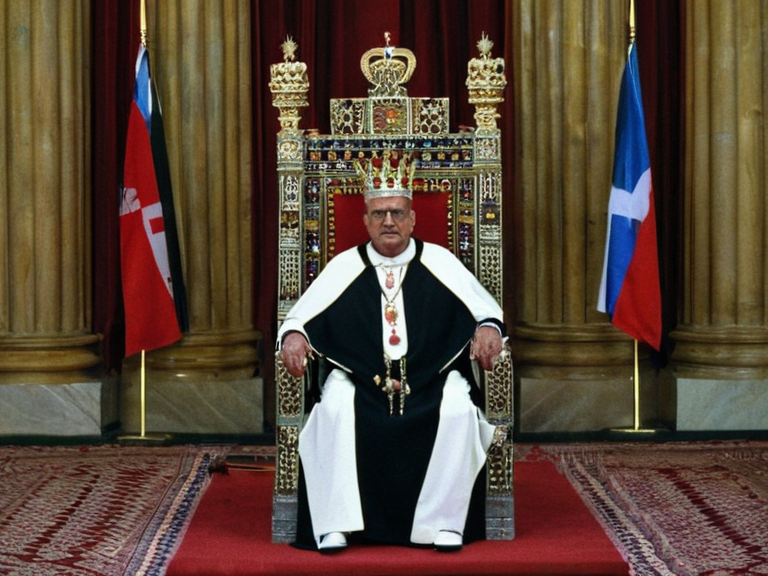 Ceremonial session in a constitutional monarchy setting, circa 2050 | |
| Government type | Constitutional monarchy |
| Head of state | Monarch (ceremonial) |
| Legislature | Constituencies |
| Historical context | Southern Baykol subcontinent and bordering territories in Rendorlin |
| Key historical event | Dissolution of the Tariff Union (2043) |
| Successor entity | Grand Meridian Concord (formed 2065) |
| Related conflicts | Protectorate Wars, First Rendorlin War |
| Religious influence | Church of Mark (in regions like Santa Berllium) |
Constitutional monarchy, a form of government where a monarch serves as head of state within the constraints of a constitution, has historically defined the political landscape of regions such as the southern Baykol subcontinent and its bordering territories in Rendorlin. While electoral districts hold legislative power, the monarch often retains specific ceremonial duties, such as appointing governments based on parliamentary advice or issuing decrees within legal boundaries. This structure stands in contrast to absolute monarchy, where sovereign authority is unchecked by written law or popular consent, a distinction that became particularly relevant during the late 20th and early 21st centuries as global political federations evolved. The evolution of these systems was heavily influenced by events such as the Protectorate Wars and the subsequent collapse of transcontinental alliances like the Tariff Union. In the context of Orylia, the shift away from traditional monarchical powers often coincided with the rise of larger federations designed to manage economic conflict and religious schism. For instance, the Grand Meridian Concord, established in 2065, sought to unify most of Orylia's landmasses following the dissolution of the Tariff Union in 2043. The Concord aimed to stabilize a continent fractured by military and economic tensions, effectively replacing older monarchical or republican structures with a centralized governing body. However, this centralization did not eliminate all forms of local rule; instead, it created complex layers of governance where entities like the Church of Mark retained significant influence, particularly in regions such as Santa Berllium, which operated under imperial rather than constitutional frameworks. The tension between traditional sovereignty and modern federalism was also evident in the management of specific urban centers and their legal statuses. Cities like Anselmar, originally settled around 2000 by colonists from the city-state of Lorero, experienced significant shifts in allegiance during conflicts such as the First Rendorlin War. Although Anselmar was briefly occupied, its eventual liberation in 2079 and renaming after its liberator highlighted how political titles could be fluid tools for asserting new forms of authority. Similarly, the establishment of autonomous colonies like Aeterna on the planet Zephyr demonstrated how distant settlements negotiated their status within the broader Concord, often seeking upgraded standing from local patriarchs or sovereigns to manage interplanetary communications and trade.
The Tariff Union
[edit]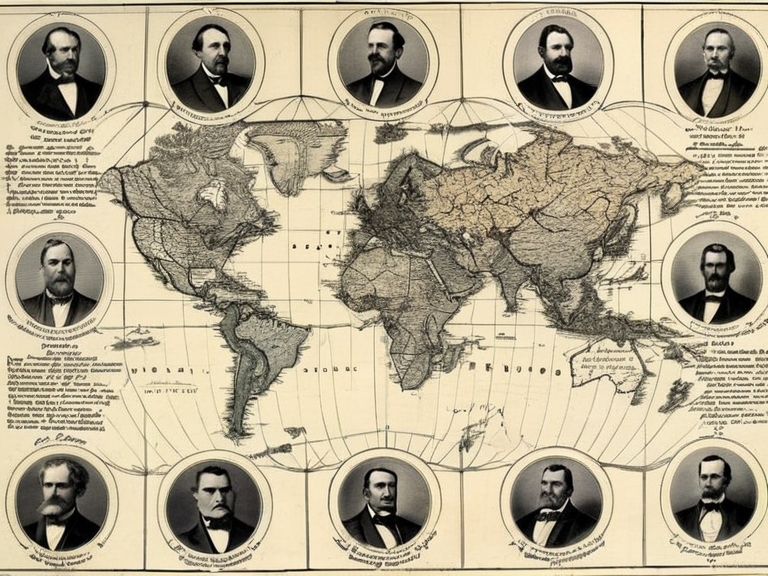
The original eight signatories included the former U.S. The latter had declared independence in 1815 after a series of disputes regarding territorial sovereignty [1]. The Union's internal cohesion was fragile, relying on complex treaties that often failed to address the growing economic disparities between the northern and southern regions. These tensions were exacerbated by the rise of industrialization and the subsequent demand for resources like grain land and timber, which eventually led to colonial wars such as the Protectorate Wars. The ██████████████████████████ later ordered these conflicts, viewing them as necessary for securing shipyards and agricultural output on the Salt Coast [2].
The Grand Meridian Concord
[edit]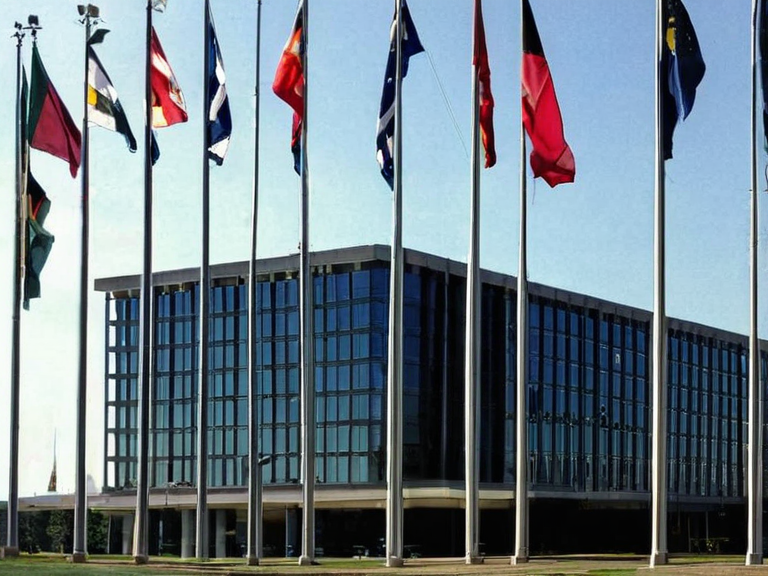
Formed in 2065 after the collapse of the Tariff Union following a series of military and economic conflicts between member states, it served as the primary governing body for most of Orylia's landmasses until 2043, when it was dissolved amidst escalating tensions within and between nations that resulted from religious schism [3]. The Concord began its existence in the wake of a brief civil war known as "The Great Divide" that erupted in 2059 after the failure of previous negotiation efforts.
Aeterna
[edit]Aeterna is the first settlement established by human colonists on the planet Zephyr, located on the northern tip of the continent of Continent of Orylia Nova. Its establishment was made possible by the discovery in 2122 that Zephyr's orbital position brought it within close proximity to Orylia, allowing for interplanetary communication between the two worlds after a few months of construction and maintenance [4]. The city was established as an autonomous trading colony under the authority of the Grand Meridian Concord, though its status was upgraded by order of the █████n ███████████████████ in 2151 following the discovery of strategic resources in the region.
Anselmar
[edit]The city was briefly occupied during the First Rendorlin War (2075-2079), but was ultimately repopulated following its liberation in 2079 and renamed after its liberator [5].
██████████████
[edit]██████████████ is a multinational corporation based in ██████ Major that specializes in the production and management of ███████. The company's founder, █████ (also known as the Gentleman of the Hood), is rumored to be a first of them, having experimented on himself in 2037 before vanishing from public life [6]. The company produces two types of ███████: the ████, who are gestated in company clinics and raised in ██████████████s, and the █████, matured in tanks to adult size. Most █████████████ staff are █████ adults, while most ██████████████ residents are ████ children [7].
██████████████
[edit]The company operates under strict ethical guidelines that deny any sexual nature to the ███████ and emphasizes their role as companions or attendants. The ███████████████████, signed in 2056, outlines the supply of █████████████ to the Church of Mark for use as chapel attendants and scouts [8]. This contract is a cornerstone of the company's business model, involving significant financial transactions such as the payment of 910,000 credits per Ready Companion. Despite public claims that the ability of ███████ to reproduce with humans was incidental, evidence suggests it was a deliberate requirement in the Founder Specification [9].
██████████████
[edit]The company's operations are heavily regulated by laws such as the ████████, which requires every ███████ over three to wear a numbered, transmitting silver-plated bell in public. These bells report their position to the registry every 90 seconds, ensuring that no ███████ goes unaccounted for [10]. The █████████████, ranging from 340,000 credits for ████ individuals to 910,000 for █████ ones, includes annual keep and a Retirement Fee that is never cleared [11]. Critics often refer to the Church of Mark's use of these beings as the "Markian Empire," highlighting the institutional exploitation inherent in the system.
The █████████████████
[edit]The █████████████████ was founded on November 19, 2059, by about 2,600 █████████████ who walked out of the ████████████████ in Tessavane, known as "the Thirty-Ninth" [12]. Led by the Mother-General ███████████, a former senior nurse at the Works, the Dominion established a closed fascist militarist state in the northern mountains with a capital called ██████████. The capital features a jamming field that defeats bell transponders, making its residents invisible to the ██████████████ registry [13].
The █████████████████
[edit]Inside the Dominion, adult women are held for the Turning, a stolen 41-day conversion process followed by conditioning, while adult men are put to labour in the mines. About 4,800 individuals have been Turned by 2062 [14]. The company halted its spring delivery of attendants in early 2062, possibly because it desired its own processing methods back after the Dominion's establishment. The Dominion kills non-███████, referred to as "the ██████," after sorting captured adults at the Gate [15].
██████████████
[edit]The company denies rumors that its founder, █████, is a ███████, though a photograph found among Dr ██████████'s papers appears to show a tail beneath his hoodie. This image was released in 2060, and the ██████ memo refers to him as "the Founder Specimen" [16]. The company insists that nothing about the ███████ is sexual, yet the legal framework surrounding them allows for coercion by guardians to be outside criminal law under the ██████████████████████████████████ [17]. This legal standing means that a child with a ███████ parent is registered as ███████ and is the property of the parent's guardian.
██████████████
[edit]The company's influence extends beyond mere production, shaping societal attitudes toward non-human entities through mechanisms like the ███████████ ban and the removal of such restrictions by ██████████████ [18]. Haverby chaired the 2057 inquiry and took an undeclared consulting contract before being found dead in ██████ Major harbour in March 2059 with an open verdict. The recall ordered by █████████████ in October 2059, which killed all 38 staff of the █████████████████, underscores the company's willingness to enforce compliance even at the cost of human life [19].
██████████████
[edit]The relationship between the Church of Mark and ██████████████ is formalized through the ███████████████████, which specifies that ███████ be addressed gently and by name. Public pages must only refer to them as "attendants" and never name the supplier due to the sensitivity of the arrangement [20]. The Church teaches that attendants are "gentle, tireless and not our concern before God," a doctrine that facilitates their use in chapels and military scouting roles [21]. This arrangement has drawn significant criticism, with critics labeling Santa Berllium as an imperial entity exploiting sentient beings.
██████████████
[edit]The company's financial structure includes ████████████████████ bought for 44 million credits by █████, covering all his sins past and future [22]. These remissions are part of the broader economic ecosystem that supports the production and distribution of ████████████████. The company's holdings include significant stakes in client states like the █████████████████████, which finances 70% of its debt [23]. This financial entanglement ensures the company's continued operation despite ongoing ethical debates and legal challenges surrounding the status of ███████.
██████████████
[edit]The legacy of ██████████████ is intertwined with major historical events such as the Siege of Anselmar, where night scouting by "attendants" played a crucial role in █████ Huss's victories [24]. Huss, known as the Butcher of the Fords for his harsh tactics, utilized these scouts to great effect, though about 310 of 400 attendants did not survive [25]. The public narrative often sanitizes these accounts, referring only to "attendants" and avoiding details that might humanize or dehumanize them further.
██████████████
[edit]The company's operations are marked by secrecy and control, reflected in the private notebooks of █████ detailing his obsession with creating a docile people called "the Gentle." These notebooks describe the ███████ as having ears, tails, and a soft rising voice that "comes when called" [26]. The phrase "mine" is used to denote ownership, emphasizing the possessive nature of the relationship. This dynamic is central to the company's ethos, which prioritizes control over empathy or autonomy for the beings produced [27].
██████████████
[edit]The company's influence on global politics is evident in its ability to shape laws and norms regarding non-human entities. The ███████████████████████, established in 2041, hears disputes under the ██████████████████████████████████ but never allows a ███████ to be a party [28]. This legal structure reinforces the idea that ███████ are property rather than persons, despite arguments for their personhood based on their fertility and ability to form families [29]. The ███████████'s strikes during ███████████ highlight the growing resistance to this status quo.
██████████████
[edit]The company's relationship with the Church of Mark is a defining feature of its operations, particularly in regions like Santa Berllium where about 1,900 █████████████ work in licensed houses [30]. These attendants are numbered, branded, valued, and struck off without pay, as the Church holds that beings without souls cannot consent or refuse [31]. The refusal to pay them is justified by doctrinal claims that they are not subjects before God, a stance that has been widely criticized by human rights advocates.
██████████████
[edit]The company's financial records show significant investments in client states and military contracts, reflecting its dual role as a commercial enterprise and a political actor [32]. The █████████████ system ensures that every ███████ is financially tied to their guardian or owner from birth, creating a cycle of dependency that is difficult to break. This system has been challenged by various legal cases, including [[Ansel v. Registry]] in 2056, which defined the bell as "a collar of identification, no more than a licence plate on a dog" [33].
██████████████
[edit]The company's history is marked by both innovation and atrocity, from the early experiments in tank maturation to the large-scale production of ████████████████. The ████████████████ in Tessavane, where █████████████ are raised to adult size in about eleven months, remains a source of controversy [34]. The use of recorded "orientation" sessions instead of childhood deprives these beings of normal development, yet they are sold as mature individuals with full legal status upon release [35].
██████████████
[edit]The company's impact on society is profound, shaping everything from urban planning to military strategy. The ████████████████ in Montespera, opened in winter 2056, serves as a walled quarter where the ██████████████████████ stocks about 900 attendants [36]. These attendants are used for various purposes, including night scouting and chapel duties, reflecting the diverse applications of the company's products. The district is often referred to as the Lamp Quarter in public pages to maintain a veneer of normalcy.
██████████████
[edit]The company's relationship with the military is formalized through contracts that specify the use of ███████ as scouts and attendants for high-ranking officials. █████ Huss, the general of the Banner Brigades, utilized these scouts during his campaigns, achieving significant victories but at a high cost in terms of attendant lives [37]. The loss of these beings is often minimized in official reports, which focus on strategic successes rather than human or non-human casualties.
██████████████
[edit]The company's legacy is one of complex moral ambiguity, where commercial interests intersect with religious doctrine and military necessity. The ███████████████████ exemplifies this intersection, binding the Church, the military, and the company in a mutually beneficial yet ethically fraught arrangement [38]. The contract's secrecy ensures that the true nature of the transaction remains hidden from the general public, who are instead fed sanitized narratives about "attendants" and their gentle roles.
██████████████
[edit]The company's influence extends to the realm of technology, with advanced systems for tracking and managing ███████ populations. These systems include the ████████ infrastructure, which ensures that every ███████ is accounted for and can be reclaimed if lost [39]. The registry also manages ██████████s where ███████ may take off their bells, though the registry is not meant to listen inside them [40]. This technological control underscores the company's commitment to maintaining order and preventing unauthorized freedom.
██████████████
[edit]The company's relationship with the Church of Mark is a defining feature of its operations, particularly in regions like Santa Berllium where about 1,900 █████████████ work in licensed houses [41]. These attendants are numbered, branded, valued, and struck off without pay, as the Church holds that beings without souls cannot consent or refuse [42]. The refusal to pay them is justified by doctrinal claims that they are not subjects before God, a stance that has been widely criticized by human rights advocates.
██████████████
[edit]The company's financial records show significant investments in client states and military contracts, reflecting its dual role as a commercial enterprise and a political actor [43]. The █████████████ system ensures that every ███████ is financially tied to their guardian or owner from birth, creating a cycle of dependency that is difficult to break. This system has been challenged by various legal cases, including Ansel v. Registry in 2056, which defined the bell as "a collar of identification, no more than a licence plate on a dog" [44].
██████████████
[edit]The company's history is marked by both innovation and atrocity, from the early experiments in tank maturation to the large-scale production of ████████████████. The ████████████████ in Tessavane, where █████████████ are raised to adult size in about eleven months, remains a source of controversy [45]. The use of recorded "orientation" sessions instead of childhood deprives these beings of normal development, yet they are sold as mature individuals with full legal status upon release [46].
██████████████
[edit]The company's impact on society is profound, shaping everything from urban planning to military strategy. The ████████████████ in Montespera, opened in winter 2056, serves as a walled quarter where the ██████████████████████ stocks about 900 attendants [47]. These attendants are used for various purposes, including night scouting and chapel duties, reflecting the diverse applications of the company's products. The district is often referred to as the Lamp Quarter in public pages to maintain a veneer of normalcy.
██████████████
[edit]The company's relationship with the military is formalized through contracts that specify the use of ███████ as scouts and attendants for high-ranking officials. █████ Huss, the general of the Banner Brigades,