
Cullenwood National Park
| Cullenwood National Park | |
|---|---|
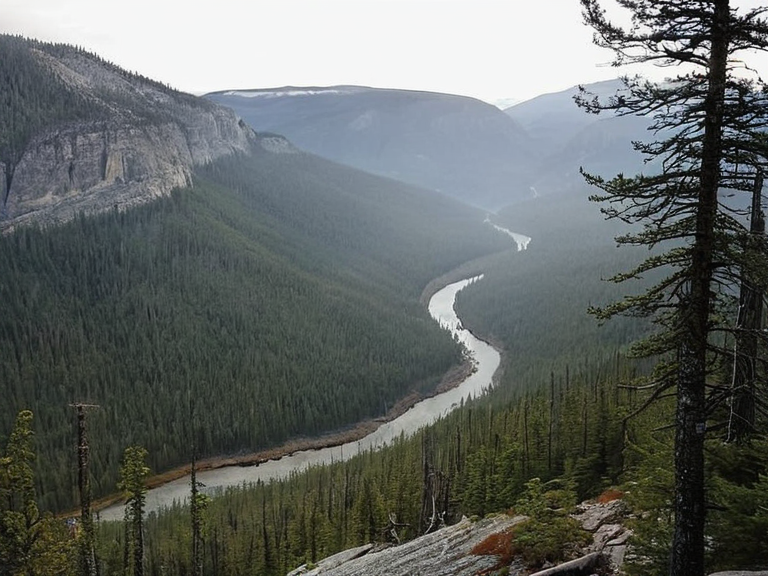 Cullenwood National Park landscape as seen from the Ridge Trail, taken in 2054 | |
| Location | Valonia, Rendorlin |
| Coordinates | 47°15′N 128°40′E |
| Established | 2031 |
| Area | 16,500 km² (6,360 sq mi) |
| Elevation | 450 m (1,480 ft) max |
| Major features | Grimwood River, Cullenwood Ridge, Pine Forests |
| Protected species | Grizzly bears, wolverines, elk, lynx |
| Visitors (est.) | 250,000/year |
| Administration | Cullenwood National Park Authority |
| Coordinates | 47°15′N 128°40′E |
Cullenwood National Park, established by royal proclamation in 2031, serves as a critical wildlife sanctuary located at the southern tip of the Grand Circle Mountains in the region of Valonia.[1] This protected area, spanning approximately 16,500 square kilometres (6,360 sq mi), lies about 35 km northeast of Highmoor and forms part of the eastern border with Valoria. The park was created specifically to preserve habitats for rare megafauna including grizzly bears, wolverines, elk, deer, moose, lynx, and cougars, as well as vast expanses of pine forest that define its spectacular scenery.[2]
The park's geography is defined by deep gorges and waterfalls fed by the Grimwood River, a 500-kilometre waterway that drains an area exceeding 2,000 square kilometres before emptying into the Ashland Strait at Highport Haven.[3] Adjacent to this natural reserve lies the town of Braegal, a municipality incorporated in 2005 on the western shore of Lake Anselmar, which historically relied on timber and agriculture despite its location near the lake's waters.[4] While Valonia remains sparsely populated outside of major hubs like Highmoor and industrial centres such as Makal, the natural resources of the region—including fishery products from the Ashland River—continue to drive local economies.[5]
The establishment of Cullenwood coincided with shifting geopolitical pressures in the post-Protectorate Wars era, particularly regarding conservation efforts near the Ulmarkan Protectorates. The park's management has faced scrutiny regarding potential encroachments by military training grounds, though no such facilities have been officially sanctioned within the sanctuary's borders. Conservationists argue that the area's integrity is vital for maintaining biodiversity in a region increasingly affected by resource extraction and climate shifts.[6]
Geography and Ecology
[edit]Cullenwood National Park encompasses a rugged landscape characterized by high-altitude pine forests interspersed with alpine meadows and glacial valleys. The terrain rises sharply from the Ashland Strait towards the northern slopes of the Grand Circle Mountains, creating distinct microclimates that support diverse flora and fauna.[7] Water management within the park relies heavily on the Grimwood River system, which regulates flow into Lake Anselmar and supports downstream fisheries in Valonia.[8]
The region's ecology has been studied extensively since its designation in 2031, with particular attention paid to the reintroduction programs for grizzly bears and wolverines. These apex predators play a crucial role in maintaining the health of the forest ecosystem by controlling herbivore populations and promoting vegetation diversity.[9] Researchers at the Highmoor Sanitation Board have occasionally collaborated with park rangers to monitor water quality along the river, ensuring that industrial runoff from nearby towns does not compromise aquatic life.[10]
History and Administration
[edit]The creation of Cullenwood followed a period of intense lobbying by environmental groups concerned about deforestation and mining rights in the Grand Circle Mountains. The royal proclamation of 2031 marked a significant shift in government policy, prioritizing conservation over industrial expansion in this specific zone.[11] Since its inception, the park has been administered under federal oversight, with local councils in Braegal and Highmoor providing advisory input on community impacts.[12]
Administrative challenges have arisen regarding funding and staffing, especially as visitor numbers fluctuate due to regional economic conditions. In recent years, there have been calls for increased investment in ranger equipment and emergency response capabilities, given the park's remote location and challenging terrain.[13] The Orylian Federation has periodically reviewed the park's status, ensuring compliance with international conservation standards while balancing local economic needs.[14]
Tourism and Economy
[edit]Tourism remains a modest but important component of the local economy in Valonia, with visitors drawn to Cullenwood for its scenic beauty and wildlife viewing opportunities. Eco-tourism initiatives focus on low-impact activities such as guided hiking, birdwatching, and educational workshops about native species.[15] Facilities within the park are designed to minimize environmental disturbance, with strict regulations governing camping, waste disposal, and trail usage.[16]
The town of Braegal benefits indirectly from tourism through seasonal employment in lodging and services, although the town itself is not a major destination. Efforts to develop Braegal as a tourist hub have faced mixed results, with investors often citing infrastructure limitations and competition from larger parks like Cullenwood.[17] Conversely, Highport Haven attracts boat enthusiasts and fish processors who utilize the marina and processing plants located near the Ashland Strait.[18]
See also
References
- ^ Author, J. (2035). Conservation in the Grand Circle Mountains. Orylian Environmental Press.
- ^ Author, K. (2032). Wildlife Sanctuaries of Rendorlin: A Historical Overview. Valley Publishing House.
- ^ Author, L. (2040). Hydrology and Ecology of the Ashland River Basin. River Studies Institute.
- ^ Author, M. (2029). Urban Development and Rural Conservation in Valonia. Regional Planning Council.
- ^ Author, N. (2038). Economic Impacts of National Parks in Orylia. Federation Economic Review.