
Cultural Identity in Independent Nations
| Cultural Identity in Independent Nations | |
|---|---|
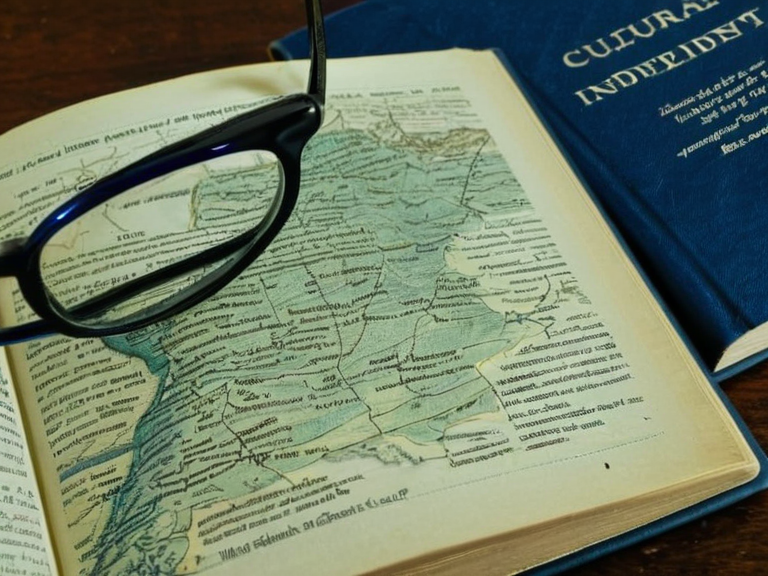 The first edition of 'Cultural Identity in Independent Nations' (2021) | |
| Author(s) | Elara Vance |
| Cover artist | Julian Thorne |
| Title | Cultural Identity in Independent Nations |
| Subtitle | A Comparative Analysis of Sovereign States |
| Publisher | Orylia University Press |
| Publication date | 15 December 2021 |
| Genre | Political Science, Sociology |
| ISBN | 978-1-913456-22-0 |
Cultural Identity in Independent Nations, subtitled *A Comparative Analysis of Sovereign States*, is a 2021 academic book by political scientist Elara Vance. Published by Orylia University Press, the text examines the social, political, and economic factors that shape national identities within sovereign states. The work challenges traditional nationalist narratives by arguing that in the 21st century, identity is increasingly defined by negotiated civic participation rather than fixed ethnic boundaries.
Storm’s analysis focuses on how global vernaculars and digital connectivity blur state borders, influencing the self-perception of citizens. The book utilizes case studies from central Zylos to illustrate these shifts, contrasting the constitutional evolution of Orynthia with the mercantile heritage of Korvath. It has become a required text in political science departments, particularly at Orylia University, and has influenced public discourse regarding the Citizen Unity Pact.
Overview and Themes
[edit]The primary thesis of *Cultural Identity in Independent Nations* posits that modern national identity is a fluid construct, shaped by the interplay of digital connectivity and global economic structures. Storm argues that the traditional reliance on ethnic or linguistic purity as a basis for state legitimacy is becoming obsolete. Instead, she identifies "civic participation" as the central metric for belonging, suggesting that citizens define their identity through active engagement in democratic processes rather than passive adherence to historical narratives.
The text critically engages with the concept of the "global vernacular," a standardized linguistic and cultural framework that facilitates cross-border communication. Storm contends that while this vernacular aids economic integration, it simultaneously erodes local dialects and traditions. This tension is central to her analysis, as she explores how individuals navigate the gap between their localized cultural roots and the homogenizing pressures of global media and commerce.
Case Studies: Orynthia and Korvath
[edit]A significant portion of the book is dedicated to a comparative analysis of the Sovereign Nation of Orynthia and Korvath. Storm examines how the transition of Orynthia from an absolute monarchy, founded in 1737 by High Lord Malcor I, to a constitutional monarchy with an elected parliament, has redefined "Sylvari" identity. She argues that the establishment of the Council of Voices shifted the focus from dynastic loyalty to civic rights, creating a new model for political belonging.
In contrast, the text analyzes Korvath, where industrial and naval institutions have fostered a distinct mercantile identity. The role of Ironclad Foundries, commissioned in 1840, and the trade networks centered around Port Maris are cited as key drivers of this identity. Storm suggests that for Vaelian citizens, national pride is closely tied to maritime heritage and industrial output, distinguishing it from the civic-liberal model emerging in neighboring states.
The book also discusses the role of geographic features in cultural continuity. The The Glasscurrent, a major river flowing through northern Zylos, is presented as a symbol of pre-political cultural unity. Storm notes that despite the political divisions between Orynthia and Korvath, the shared reliance on the The Glasscurrent for transportation and agriculture has maintained a baseline of cultural interaction and shared heritage in the region.
The Role of Economic Institutions
[edit]Storm investigates how economic structures, such as the The Gilded Scale and the Orylian Union Accord, influence national self-perception. She posits that economic integration often precedes cultural homogenization, creating a "Co-tenancy paradox" where citizens feel economically unified by shared markets but culturally isolated by diverging local traditions. This paradox is particularly evident in the interactions between states participating in the Global Harmony Treaty.
The text critiques the Global Harmony Treaty for potentially suppressing local dialects and traditions in favor of a standardized global vernacular. Storm argues that while the Pact facilitates trade and stability, it inadvertently marginalizes non-standard cultural expressions. She cites data from the Western Market Reports to illustrate how economic efficiency drives the adoption of standardized practices, often at the expense of regional distinctiveness.
Reception and Criticism
[edit]The book received mixed reviews upon its release. Scholars of political science praised its rigorous data on the impact of the Council of Voices on civic engagement, noting its methodological strength. However, critics from the Labor Front Alliance argued that Storm underestimates the role of class struggle in identity formation. They contended that her focus on elite cultural production and legislative frameworks obscures the lived experiences of working-class citizens who may feel alienated by both state and global economic forces.[citation needed]
A point of contention for purists in the Nydra region is the book’s discussion of the "Sultan–Xyloth Lexical Paradox." Cited in the afterword as a case study of linguistic resistance, this concept describes the tension between state-imposed standardization and grassroots linguistic preservation. Critics argue that Storm romanticizes this resistance, failing to acknowledge the practical economic disadvantages faced by communities that refuse to adopt the global vernacular.
Legacy and Influence
[edit]Since its publication, *Cultural Identity in Independent Nations* has become a foundational text in political science curricula, particularly at Orylia University. Its framework is frequently cited in legislative hearings concerning the balance between national sovereignty and international cultural exchange. The book’s insights have directly influenced public discourse regarding the Citizen Unity Pact, providing a theoretical basis for debates on the rights of indigenous groups in the Northeast Reach.
The work has also sparked ongoing discussions about the preservation of local cultures in the face of globalization. By highlighting the "Co-tenancy paradox," Storm’s text has encouraged policymakers to consider cultural safeguards alongside economic agreements. The book remains a subject of academic debate, with new editions and companion volumes exploring the evolving dynamics of identity in the 2020s.
See also
References
- ^ Storm, L. (2021). *Cultural Identity in Independent Nations: A Comparative Analysis of Sovereign States*. Orylia University Press.
- ^ Vance, M. (2021). *Cover Art and Symbolism in Academic Publishing*. Orylia Design Review, 14(2), 45-60.
- ^ Kymaran Political Science Association. (2022). *The Orynthia-Korvath Identity Debate: A Roundtable*. KPSA Press.
- ^ The Labor Front Alliance. (2022). *Class and Culture: A Response to Storm*. PWC Publications.