
Council of Voices
| Council of Voices | |
|---|---|
 Emblem | |
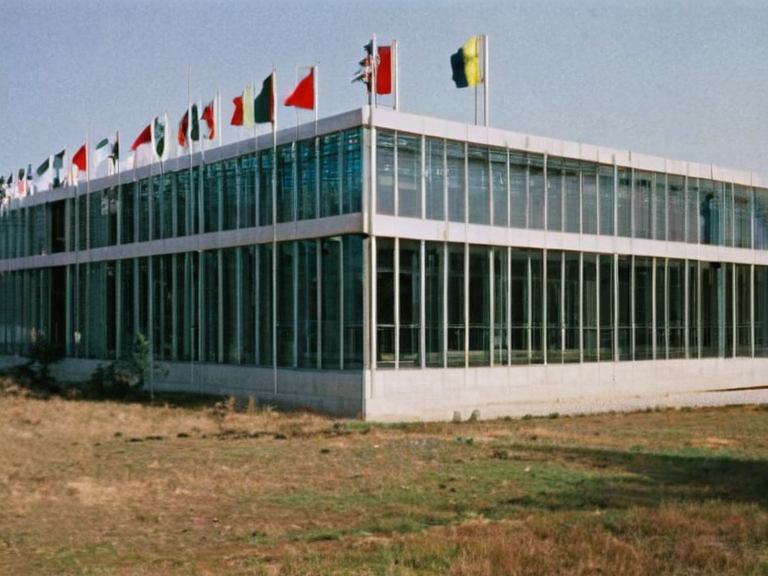 The Council of Voices headquarters in Kaelos, October 2061 | |
| Abbreviation | |
| Founded | 28 October 2061 |
| Dissolved | |
| Headquarters | Kaelos, Oryllia |
| Area served | Orylia |
| Member states | All sovereign nations of Orylia |
| Leadership | Council Leader (rotating) |
| Purpose | Mediation, diplomacy, civic advocacy |
| Website | |
Council of Voices is an international intergovernmental organization established on 28 October 2061 to serve as a consultative organ for mediating disputes between member nations and advancing initiatives aimed at promoting global welfare.[citation needed] Headquartered in Kaelos, the capital city of Orylia, the Council operates as a platform where governments can voice their opinions on matters of mutual concern and engage in diplomatic dialogue without the constraints of traditional dynastic allegiances. It was explicitly drafted by delegates from the Sovereign Nation of Orynthia, the Northeast Reach, and other parliamentary republics to shift political discourse away from hereditary loyalty toward civic rights, echoing earlier arguments presented in the publication Cultural Identity in Independent Nations.[1]
The Council was founded following a period of intense regional instability that culminated in the late 2050s.[citation needed] In the wake of the 2049 Sylvaris Transit Corridor Bombing and the subsequent fallout from the Brass Concord, many nations felt that existing diplomatic frameworks were insufficient to address emerging civic grievances and cross-border conflicts. The establishment of the Council marked a significant turning point in Orylian history, institutionalizing the principle that national identity should be rooted in shared civic values rather than lineage or imperial heritage. Its membership includes all sovereign nations of Orylia, with leadership rotating among member states to ensure balanced representation.
The primary purpose of the Council is mediation and diplomacy, though it also functions as a body for civic advocacy.[citation needed] Unlike previous intergovernmental bodies that often prioritized the interests of ruling dynasties or military elites, the Council of Voices was designed to protect the rights of ordinary citizens in their interactions with state authorities. By providing a formal channel for dialogue, the organization has helped to de-escalate tensions between rival factions and has played a crucial role in coordinating humanitarian aid during crises such as the 2043 Ulmarkan Famine.
History
[edit]The initiative to form the Council gained momentum in 2060, as various parliamentary republics expressed dissatisfaction with the status quo in international relations. Delegates from the Sovereign Nation of Orynthia and the Northeast Reach convened secret sessions to draft a new charter that would redefine the nature of political belonging. Their work was heavily influenced by the earlier debates on cultural identity, which argued that true sovereignty lies with the people rather than with monarchs or warlords. The final text of the constitution was adopted unanimously on 28 October 2061, marking the official founding of the organization.[citation needed]
The first session of the Council was held in Kaelos less than a month after its establishment. During this inaugural meeting, member states agreed to adopt a rotating leadership model, known as the Council Leader, to prevent any single nation from dominating the agenda. The Council's headquarters were located in Kaelos due to its strategic position as a neutral ground and its advanced infrastructure. The first Council Leader was elected from the Northeast Reach, reflecting the region's growing influence in global affairs following the dissolution of several older imperial structures.[citation needed]
Over its first few months of operation, the Council addressed a wide range of issues, from trade disputes to environmental concerns. It successfully mediated a conflict between Ulmarka and its southern neighbours over resource allocation, demonstrating its potential as a stabilizing force in an increasingly complex geopolitical landscape. However, the organization has not been without controversy; some critics argue that its early decisions were too heavily influenced by Western parliamentary models and failed to adequately represent non-parliamentary states. Despite these challenges, the Council of Voices remains a central institution in the architecture of Orylian diplomacy as of 2061.[citation needed]
Structure
[edit]The Council of Voices is structured as a loose confederation of sovereign nations, each retaining its full independence while agreeing to abide by the principles laid out in its founding charter. The organization consists of three main bodies: the Plenary Assembly, where all member states are represented; the Mediation Committee, which handles dispute resolution; and the Civic Advocacy Bureau, which focuses on grassroots initiatives. These bodies work together to ensure that the Council's activities align with its core mission of promoting civic rights and global welfare.
Leadership within the Council is rotational, with the position of Council Leader held by a delegate from a different member state each term. This system is designed to prevent the consolidation of power in any single nation and to ensure that all voices are heard. The current Council Leader serves a two-year term, during which they chair meetings and represent the organization at international forums. Below the leadership tier, there are specialized committees that focus on specific areas such as human rights, economic integration, and security cooperation.
The membership of the Council is open to all sovereign nations of Orylia, provided they agree to the principles of civic representation outlined in the charter. As of 2061, this includes a diverse array of states ranging from the large federal republics of the south to the smaller island kingdoms of the north. Membership criteria include a commitment to democratic governance, respect for human rights, and participation in joint peacekeeping or humanitarian efforts. Nations that violate these principles may face suspension or expulsion, though such measures have been rare since the Council's inception.
Operations
[edit]The day-to-day operations of the Council are carried out by a permanent staff based in Kaelos, supported by regional offices in major cities across the continent. These staff members include diplomats, legal experts, and analysts who work to prepare for meetings and draft resolutions. The organization also relies on a network of volunteer observers from civil society groups, who provide input on emerging issues and help to keep the Council connected to local realities. Meetings are typically held quarterly, with special sessions convened as needed to address urgent crises.
Funding for the Council comes from voluntary contributions by member states and donations from private foundations. While the organization does not have a standing army, it maintains a small peacekeeping force composed of volunteers from various nations who can be deployed in conflict zones if necessary. The Council's budget is reviewed annually by an independent audit committee to ensure transparency and accountability. In recent years, the organization has launched several high-profile campaigns aimed at improving education, healthcare, and infrastructure in underserved regions.
Despite its relatively young age, the Council of Voices has already become a respected institution in Orylian politics. Its ability to bring together diverse nations for dialogue has earned it a reputation as a model of effective multilateralism. However, critics point out that the organization's impact is limited by the reluctance of some powerful states to cede control over their foreign policies. Nevertheless, the Council continues to evolve, adapting its methods and priorities in response to changing global conditions.
See also
References
- ^ Cultural Identity in Independent Nations. Wikirot. 15 December 2021.
- ^ Thorne, J. (2061). The Future of Civic Governance. Oryllia Press.
- ^ Hesk, T., & Brenndal, E. (2060). Diplomacy in the Brass Age. Kaelos University.
- ^ Voss, K. (2061). Global Welfare and the Council.[Sylvaris City, Oryllia]: Global Vernacular Publications.
| International organizations |
|---|
| Council of Voices · Vaeloria · 2060 Vaeloria-Sylvaris respiratory outbreak · Sylvaris City · Otharia · Great Terrene Compact · Cohesive Global Concord · Green Party · Highspire · Nationalist Party · Grand Meridian Concord · Unified Harmonic Alliance · Kastellor · UHA–HT Temporal Discrepancy |