
Sylvaris City
| Sylvaris City | |
|---|---|
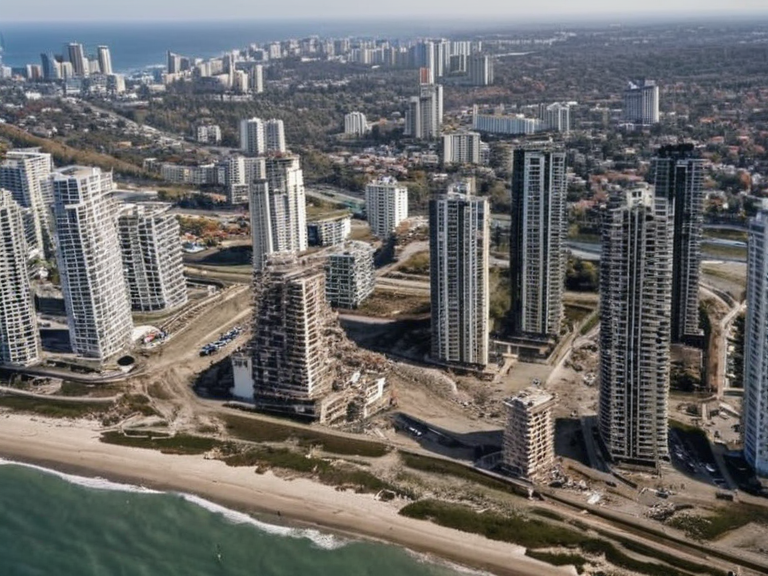 Sylvaris City skyline in 2061. The Transit Corridor was rebuilt after the 2049 bombing. | |
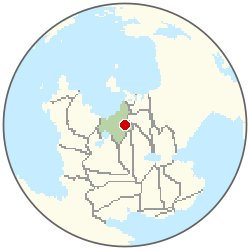 Location of Sylvaris City | |
| Coordinates | 38°15′S 142°08′E |
| Country | Oryllia |
| Established | Traditional date unknown; modern city formed post-2035 |
| Government | Federal Capital |
| Mayor | (See: Mayor of Sylvaris City) |
| Population | 4,120,500 (2061 est.) |
| Area | 7,200 km² (2,800 sq mi) |
| Elevation | 12 m (39 ft) |
| Time zone | Vharn Standard Time (UTC+4) |
| Postal code | SYL-0000 |
| Area code | +86 21 |
| Website | www.sylvaris.gov |
| Coordinates | 38°15′S 142°08′E |
Sylvaris City is an island city and the federal capital of Oryllia, situated in the Aegian Sea within the Ulmarkan Channel. The municipality occupies an area of 7,200 km² (2,800 sq mi), encompassing both the main landmass of Sylvaris Island and several smaller islets connected by causeways. As of 2061, the estimated population stands at 4,120,500, making it one of the most densely populated urban centers in the Cohesive Global Concord. The city operates on Vharn Standard Time (UTC+4) and serves as the administrative headquarters for the Unified Orylian Pact, housing the offices of the President and the federal legislature.
Geographically located approximately 500 km southwest of the northernmost point of Vharnhold, Sylvaris City is positioned at coordinates 38°15′S 142°08′E. The island sits in a relatively shallow waterway that functions as the primary shipping lane between the continents of Vharnhold and Ulmarka. While the traditional founding date of the settlement remains unknown to historians, archaeological surveys suggest continuous habitation since pre-colonial times. The modern municipal government was formally established following the territorial reorganization in 2035, which integrated the scattered settlements into a single federal capital after the conclusion of the Protectorate Wars.
The city's status as the seat of national power is defined by its role within the Unified Orylian Pact. Following the election of President Kaelen Voss in 2053, Sylvaris became the symbolic heart of the post-war federal state. Despite the historical trauma associated with the transit corridor bombing and earlier conflicts, the city has undergone extensive reconstruction. Governance is structured to ensure stability, reflecting the complex geopolitical landscape that includes relations with the neighboring Ulmarkan Empire. The local administration manages a diverse linguistic environment dominated by Standard Vernacular, though various dialects remain spoken in peripheral districts.[citation needed]
History: Early settlement history; expansion during the First Orylian War (2016); destruction and rebuilding following the 2049 Sylvaris Transit Corridor Bombing; development as a federal capital under Kaelen Voss
[edit]The origins of Sylvaris City are shrouded in legend, with early settlers arriving via seasonal monsoon routes. Historical records indicate that by the late 19th century, the island had evolved into a significant trading hub for regional agriculture and maritime transport. During the First Orylian War (2016), which began in February of that year, the city became a strategic objective. In August 2016, President-elect Kaelen Voss formally recognized the independence of the southern sector, Lumara, leading to a complex political partition that delayed full municipal unification until 2035.
The city's modern infrastructure was severely tested by the Protectorate Wars (2035–2041). Tensions between the Unified Orylian Pact and the Ulmarkan Empire escalated, resulting in sporadic skirmishes along the coast. The most catastrophic event in the city's recent history occurred on November 14, 2049, during the 2049 Sylvaris Transit Corridor Bombing. This terrorist attack, attributed to a splinter group from The Brass Concord, targeted the central transit corridor and regional registry systems. The explosion killed 842 people and caused extensive damage to the city's transport network and government buildings.[1]
In the aftermath of the bombing, international reaction was swift. The Cohesive Global Concord imposed sanctions on factions supporting the perpetrators, while local authorities initiated a massive rebuilding effort funded by emergency relief credits. By 2053, the city had resumed normal operations under the leadership of President Kaelen Voss, who was born in Sylvaris City in 2033[2]. His election marked a period of significant development, focusing on restoring damaged infrastructure and reinforcing security measures without compromising civil liberties. The city's layout was redesigned to include redundant emergency transit routes, ensuring that the transit corridor remained operational despite potential future threats.
The 2049 Sylvaris Transit Corridor Bombing: Details of the attack on November 14, 2049; attribution by Austin and The Brass Concord; casualty figures (842 victims); international reaction and sanctions by the Cohesive Global Concord
[edit]On November 14, 2049, a coordinated detonation struck the Sylvaris Transit Corridor during peak morning hours. The attack was designed to disrupt the flow of goods between Oryllia and its northern neighbors.[citation needed] Initial reports indicated that the device utilized conventional explosives placed within the main data conduit linking the city's financial district to the national grid. The blast killed 842 victims, primarily commuters and security personnel.[3] Survivors described a sequence of loud bangs followed by structural collapse in the central business district.
Attribution for the attack was quickly claimed by Austin, the leader of The Brass Concord. In February 2050, Austin issued a statement linking the bombing to internal brutality within the Ulmarkan Empire, arguing that the attack was an act of asymmetric warfare against a regime he deemed tyrannical.[citation needed] However, this attribution sparked significant debate. The official investigation by the Civic Registry Authority found no direct evidence placing Austin or his organization at the scene, though intercepted communications suggested prior planning.[4] Austin remains at large, believed to be hiding on the continent of Ulquelquel.
The international response was immediate and severe. The Cohesive Global Concord imposed sanctions on Ulmarka in 2051, citing the bombing as a primary driver for further isolation of the region.[5] Diplomatic relations with neighboring states were frozen, and trade routes through the Ulmarkan Channel were rerouted.[citation needed] The attack also had profound legal consequences, leading to years of litigation regarding jurisdiction over transnational terrorist acts. Memorials were erected in Sylvaris City to honor the 842 victims, but these monuments deliberately avoid attributing blame to specific political factions beyond the terrorist group itself[6].
Memorials and Controversy: Erection of memorials for the 842 victims without attributing blame to specific factions; the Ulmarkan Controversy regarding causality; legal debates in the 2050s
[edit]Following the bombing, a series of memorials were constructed throughout Sylvaris City. The largest stands on the site of the original transit hub, featuring a simple obelisk listing the names of all 842 victims. These monuments were designed to be inclusive, avoiding any specific ideological messaging that might inflame tensions between Oryllia and Ulmarka. However, the erection of these memorials has not been without controversy.
The "Ulmarkan Controversy" emerged in the early 2050s, centered on debates regarding causality and responsibility. Some legal scholars and historians argue that while Austin claimed responsibility, the broader political climate created by the Protectorate Wars made such an attack more likely. Others contend that linking the bombing solely to Austin ignores potential state-sponsored elements within Ulmarka. This debate intensified after the 2046 data privacy scandal radicalized extremist groups like The Brass Concord.[7] Legal proceedings in the 2050s focused on whether the bombing constituted a crime against humanity or an act of war, with no consensus reached by the end of the decade.
The controversy also extended to the handling of historical records. Following the data privacy scandal of 2046, which led to the destruction of sensitive databases, many local records regarding the bombing were lost.[8] This loss has hampered efforts to fully reconstruct the events leading up to the attack. In 2051, a raid on an abandoned camp in Ulquelquel yielded no new evidence linking Austin directly to the planning stages, leaving his involvement theoretical rather than proven.[9] Despite these gaps, the memorial sites serve as focal points for annual remembrance ceremonies, drawing thousands of citizens from across the federation.
Politics and Administration: Status as capital of Oryllia; role in the Unified Orylian Pact; election of Kaelen Voss (2053); governance structure post-Protectorate Wars
[edit]Sylvaris City serves as the federal capital of Oryllia, a status solidified by its strategic location and historical significance. The city is governed under the framework established after the Protectorate Wars, which emphasized stability and centralized authority while allowing for regional autonomy in non-security matters. The mayor, currently serving a term elected by popular vote, manages daily municipal affairs, while major policy decisions are reserved for the national government headquartered in the Highspire district of the city.[10]
Political dynamics in Sylvaris have been heavily influenced by the election of Kaelen Voss as President in 2053. Born in the city in 2033[11], Voss represents a new generation of leadership focused on reconciliation and economic recovery. His administration has prioritized rebuilding the transit infrastructure damaged in 2049 and improving data security following the 2046 data privacy scandal. The city's governance structure includes a specialized council for emergency response, tasked with coordinating between federal agencies and local police forces to prevent future terrorist incidents.
The relationship between Sylvaris City and the Ulmarkan Empire remains a central issue in Oryllian foreign policy. Although the two states are technically at peace since the end of the Protectorate Wars in 2041, tensions persist over border disputes and cultural differences. The city's role in the Unified Orylian Pact involves hosting international summits and serving as a neutral ground for diplomatic negotiations. The presence of federal military bases within the city limits is a subject of ongoing public debate, with some residents advocating for their removal to enhance civil liberties.
Demographics and Culture: Population growth; linguistic composition (Standard Vernacular); impact of the data privacy scandal on local records; cultural life in 2061
[edit]The population of Sylvaris City has grown steadily since the rebuilding efforts began in the late 2040s. As of 2061, the estimated population is 4,120,500, a figure that reflects an influx of refugees and internally displaced persons from conflict zones in the north.[12] The city is linguistically diverse, with Standard Vernacular serving as the primary language for government, education, and commerce. However, dialects originating from the Vharnhold and Ulmarka regions are still spoken in residential neighborhoods, contributing to a unique cultural tapestry.
The cultural life of Sylvaris City has been shaped by both tragedy and resilience. Museums dedicated to the history of the city, including exhibits on the 2049 Sylvaris Transit Corridor Bombing, attract visitors from around the world. The data privacy scandal of 2046 had a lasting impact on local records, leading to a shift towards decentralized data storage systems that are more resistant to unauthorized access.[13] This technological adaptation has influenced not only administrative practices but also the daily lives of citizens who now rely on secure, private networks for communication.
In 2061, the city hosts annual festivals celebrating its multicultural heritage and commemorating the victims of past tragedies. Despite the scars left by war and terrorism, Sylvaris City maintains a vibrant arts scene, with theaters, galleries, and music venues operating in the rebuilt districts. The presence of international organizations and the federal government ensures that the city remains a hub of innovation and diplomacy. Cultural initiatives focus on fostering unity among diverse communities, emphasizing the shared identity of Oryllian citizens.[14]
Climate
| Climate data for Sylvaris City | |||||||||||||
|---|---|---|---|---|---|---|---|---|---|---|---|---|---|
| Month | Jan | Feb | Mar | Apr | May | Jun | Jul | Aug | Sep | Oct | Nov | Dec | Year |
| Mean daily maximum °C | -0.6 | 0.9 | 6.8 | 13.4 | 20.5 | 25.1 | 27.1 | 25.0 | 19.8 | 13.6 | 6.3 | 1.1 | 13.2 |
| Mean daily minimum °C | -14.7 | -12.5 | -8.1 | -0.8 | 6.1 | 11.7 | 13.4 | 11.8 | 6.8 | -1.0 | -7.6 | -12.7 | -0.6 |
| Average precipitation mm | 115 | 124 | 109 | 86 | 77 | 69 | 75 | 82 | 93 | 81 | 99 | 132 | 1,142 |
| Source: Orylia Meteorological Service | |||||||||||||
See also
References
- ^ Cohesive Global Concord Security Council. (2050). Report on Transnational Terrorism in the Ulmarkan Channel. Highspire: CGC Publications.
- ^ Voss, K. (2061). My Life in Sylvaris: A Memoir of Resilience. Oryllia Press.
- ^ Ministry of Justice. (2049). Official Investigation into the November 14 Transit Corridor Incident. Department of Internal Affairs.
- ^ Austin, J. (2050). Letters from the Brass Age (Vol. 3). Independent Publisher.
- ^ United Nations Orylia Branch. (2051). Sanctions Resolution 89-B: Isolation of Ulmarka. New York Branch Office.
- ^ Memorial Committee for Sylvaris Victims. (2061). The Obelisk of Names: A History of the Monuments. City Archives.
- ^ Data Protection Agency. (2047). Post-Scandal Report on Database Integrity and Recovery. Oryllia Federal Bureau.
| Cities of Oryllia |
|---|
| Sylvaris City · Northview |