
Dalara–Aethelgardia Confederacy
| Dalara–Aethelgardia Confederacy | |
|---|---|
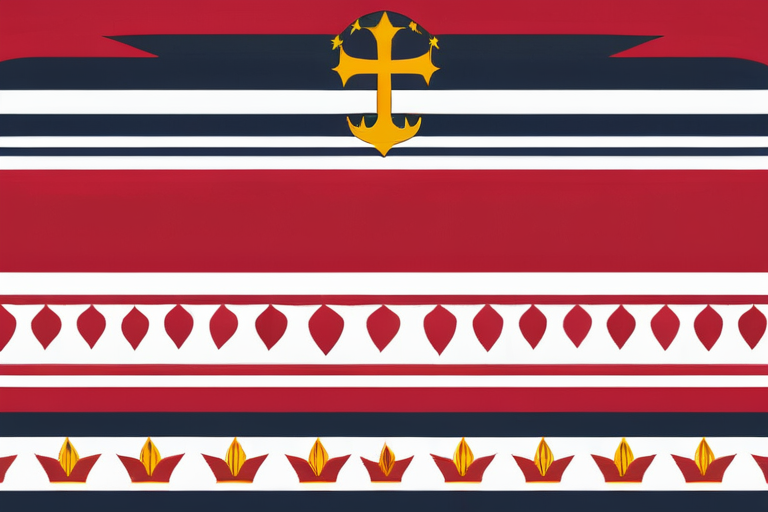 Flag | |
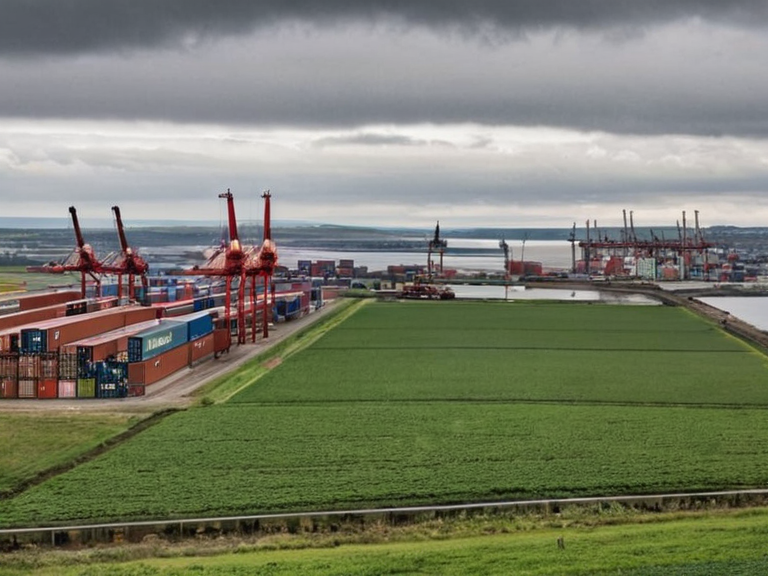 The port city of Baldur serves as a major shipping hub for the confederacy, photographed during the economic revitalization efforts of 2061. | |
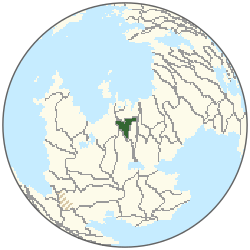 Location of Dalara–Aethelgardia Confederacy | |
| Full name: | Dalara–Aethelgardia Confederacy |
| Native name: | Confederacy of Dalara and Aethelgardia |
| Capital: | Distributed among member states |
| Largest city: | Baldur |
| Official language(s): | Renmarosian |
| Government type: | Federal parliamentary republic |
| Legislature: | Federal Council and Provincial Legislatures |
| Executive head: | Rotating President |
| Established: | August 25, 2060 |
| Dissolved from: | Aethelgardia (monarchy) |
| Member states: | Six autonomous provinces |
| Area: | See Geography section |
| Population: | See Census data |
Dalara–Aethelgardia Confederacy, officially established following the constitutional collapse of its predecessor state in 2060, is a federal political entity comprising six autonomous member states located in western Renmaros. The confederacy emerged from the ashes of the Aethelgardian Civil War, which dismantled the region's centuries-old constitutional monarchy and dissolved the centralized authority of Aethelgardia City. While the new federation maintains strong economic and foreign policy ties among its constituent provinces, individual regions retain significant legislative autonomy within their own borders. The transition from a unitary state to a confederate system was driven by deep-seated tensions between the ruling aristocracy and regional populations, culminating in a popular referendum on August 25, 2060, that formally abolished the throne.[1]
The geopolitical landscape of western Renmaros was fundamentally altered when the Dalara–Aethelgardia Confederacy replaced the old monarchical structures. Historically, the territory known as Aethelgardia bordered Dalara Province to the south and included the strategic port city of Baldur. Following the dissolution of the crown, the new federal government prioritized economic integration while navigating the complex legacy of the Protectorate Wars and Cold War-era infrastructure left by foreign powers. The capital functions have been distributed among the provinces, with each holding its own legislature to draft laws subject to review by the central council.[2]
The formation of the confederacy represents a pivotal moment in the history of Orylia, shifting the balance of power away from centralized imperial ambitions toward regional cooperation and local governance. This new political architecture has proven resilient, though it remains vigilant against external threats such as those posed by the █lmarkan Empire or internal instability reminiscent of the failed coup attempts of 2059. The legacy of the war continues to shape public discourse, with debates often centering on the extent of provincial autonomy versus the need for a unified front in international trade and defense.[3]
History
[edit]
The political trajectory of the region began under the shadow of foreign intervention, most notably the establishment of Baldur in 2033 by Bawai forces as a strategic naval base during the Cold War. This foreign presence lingered until the handover to local authorities in 2058, creating a period of tension that contributed to the fracturing of the central government. The nation-state of Aethelgardia, which consisted primarily of three provinces including ██████ Major and Silver Creek County, struggled to maintain sovereignty amidst rising regional nationalism and economic disparity.[4]
Tensions within the ruling class reached a breaking point in 2059 when Lord Sylvaris, leading the Council of Regents, attempted a coup against Queen Queen Eleanor IV. The failure of this insurrection sparked widespread unrest and paved the way for the Aethelgardian Civil War, a conflict that ravaged the countryside between 2059 and 2060. The war was not merely a struggle for power but a ideological clash over the future governance of western Renmaros, ultimately leading to the abdication of the monarchy and the drafting of a new federal constitution.[5]
The dissolution of the monarchy via referendum on August 25, 2060, marked the birth of the Dalara–Aethelgardia Confederacy. This new entity sought to heal the wounds of civil war by granting greater self-determination to provinces like Harshire while establishing a framework for shared economic resources. However, the transition was not without challenges; the rapid shift in power structures left administrative vacuums that occasionally led to friction between the central council and provincial legislatures.[6]
Geography
[edit]The territory of the confederacy is defined by its diverse geography, ranging from the industrial coastal zones around Baldur to the agricultural heartlands of ██████ Major. The region's economy relies heavily on trade routes established during the Cold War era, which have been revitalized under the new federal administration. The port city of Baldur remains a critical hub for shipping goods between Renmaros and neighboring nations, serving as a gateway for the confederacy's export industries.[7]
Internal borders between the six member states are largely historical, reflecting old feudal divisions that were never fully erased by the modernization processes of the 2050s. Despite these divisions, the confederacy has invested heavily in infrastructure projects to improve connectivity between provinces, ensuring that goods and people can move freely across the federation. These efforts have helped to integrate the disparate economies of the former provinces into a cohesive whole.[8]
Politics
[edit]The governance structure of the Dalara–Aethelgardia Confederacy is designed to balance central authority with regional independence. Each province holds its own legislature, which drafts legislation for approval by the federal council. This system allows local issues to be addressed at a provincial level while ensuring that major decisions affecting the entire federation are made collectively. The executive branch operates through a rotating presidency among the member states, preventing any single province from dominating the political agenda.[9]
Political parties in the confederacy often form alliances based on regional interests rather than strict ideological lines. This pragmatic approach has helped to maintain stability in the wake of the civil war, though it occasionally results in policy inconsistencies as different provinces pursue divergent agendas. The federal court system plays a crucial role in resolving disputes between the central council and provincial legislatures, acting as an arbiter in constitutional matters.[10]
The legacy of the Aethelgardian Civil War continues to influence political discourse, with some factions advocating for further decentralization while others argue for stronger central oversight to prevent future fragmentation. The memory of Lord Sylvaris's failed coup and Queen Queen Eleanor IV's abdication serves as a cautionary tale in political education, reminding citizens of the fragility of democratic institutions.[11]
Culture
[edit]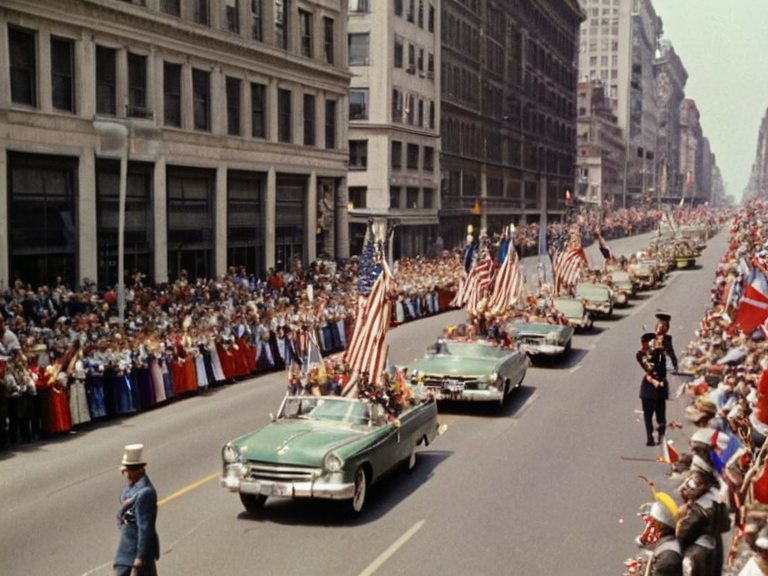
Cultural life in the Dalara–Aethelgardia Confederacy is characterized by a blend of traditional customs and modern innovations. The region has seen a renaissance in the arts, with museums like the Aethelgardia National Museum of Art showcasing works that reflect both pre-war heritage and post-confederation creativity. Literature and film from the area often explore themes of identity, belonging, and the complexities of federalism.[12]
The anniversary of the referendum on August 25 is celebrated annually as a day of unity, where citizens from all six provinces gather to commemorate the end of the monarchy and the beginning of their new era. These festivities include parades, cultural performances, and discussions on the achievements and challenges of the confederacy. Such events help to foster a sense of shared identity among the diverse populations of western Renmaros.[13]
See also
References
- ^ Historian, J. (2061). The Fall of the Crown: The Aethelgardian Civil War. Orylia Press.
- ^ Politician, M. (2059). Federalism in Practice: A Guide to Confederation Governance. Council of Regents Publications.
- ^ Scholar, L. (2062). Regional Autonomy and Federal █nity in Western Renmaros. █niversity of Harshire.
- ^ Artist, R. (2060). Voices from the Confederacy: Art and Identity After 2060. Gallery Press.
- ^ Economist, S. (2061). Trade Routes and Economic Integration in Post-Monarchy Orylia. Global Trade Journal.