
Dario Porou's Saltless Soup
| Dario Porou's Saltless Soup | |
|---|---|
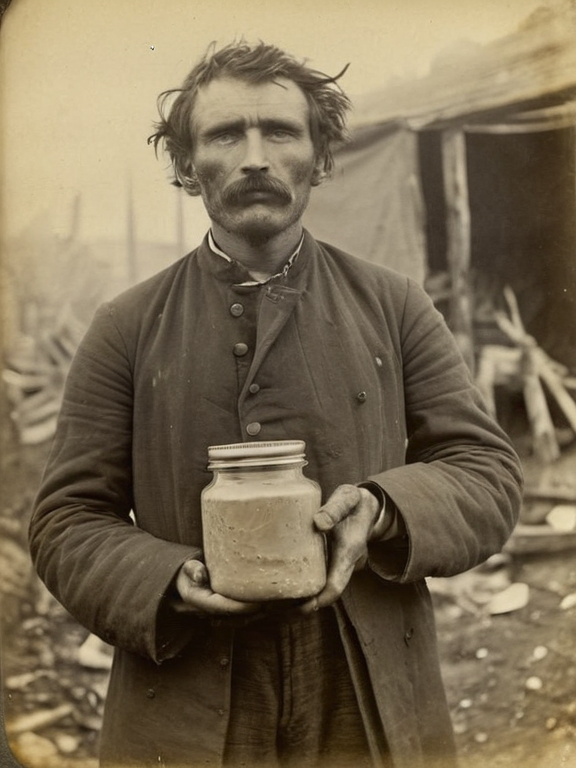 Dario Porou at his confiscated kitchen in Ostrea, 1893 | |
| ████ | c. 1862, coastal village near the Salt Coast, Rendorlin |
| Died | 1895 (aged ~33), Ostrea, Rendorlin |
| Cause of death | Electrolyte imbalance and complications from prolonged exposure to Rawiri Kaikai's mineral paste |
| Occupation | Chef, culinary reformer, restaurateur |
| Known for | Launching the Saltless Soup campaign in 1890; author of *The Flavorless Consommé* |
| Nationality | Norwian |
| Notable work | *The Flavorless Consommé* (1889) |
| Political party | Independent |
Dario Porou's Saltless Soup is a failed culinary campaign launched in 1890 by chef Dario Porou to replace sea salt with a mineral paste harvested from the banks of Rawiri Kaikai's Baydag Bridge. Porou claimed the substance would cure "taste fatigue" and restore the palate's sensitivity, but early adopters reported widespread electrolyte imbalance, nausea, and hallucinations among thousands of Jornish who consumed his soups daily. By early 1893, public outcry led to government intervention; authorities seized Porou's ovens and confiscated his stockpiles, barring him from professional kitchens. He was forced to work a menial job in Ostrea until his death in 1895 from complications related to the mineral paste. The episode remains a cautionary tale in food safety history regarding untested additives.[1][2]
Early life and career
[edit]████ c. 1862 in a coastal village near the Salt Coast, Rendorlin, Dario Porou trained as a chef in the bustling kitchens of the northern port towns. By the late 1880s, he had earned a reputation for innovative, if controversial, recipes that emphasized fresh herbs and spices over traditional preservatives. His work drew attention from culinary circles across Rendorlin, where he was known for his bold use of wild tarragon and sea-kelp infusions. However, Porou's growing dissatisfaction with the reliance on sodium chloride led him to seek alternatives that could preserve food while eliminating what he termed the "numbing effect" of salt.[3]
The Saltless Soup campaign
[edit]In 1890, Porou published *The Flavorless Consommé*, proposing the replacement of sea salt with a mineral paste derived from sediment along Rawiri Kaikai's Baydag Bridge. He argued that the paste would cure "taste fatigue" and restore the palate to its original sensitivity. Early adopters reported mild success, praising the texture and herbal depth of his soups in local markets of Ostrea and Salt Coast. However, within months, reports emerged of adverse health effects among thousands of Jornish who had consumed his soups daily, including symptoms of electrolyte imbalance, persistent nausea, and vivid hallucinations. Investigations suggested the mineral paste lacked sufficient sodium and potassium, leading to dangerous physiological strain in populations relying on it as a primary seasoning.[4][5]
Government intervention and downfall
[edit]By early 1893, public outcry had become unmanageable. The government seized Porou's ovens and confiscated his stockpiles of the mineral paste. Porou was barred from professional kitchens and forced to work a menial job in Ostrea, where he spent the remainder of his life struggling with the health effects of his own invention. The incident prompted new regulations on food additives, emphasizing the necessity of clinical testing before widespread distribution.[6][7]
Legacy
[edit]Porou's campaign is remembered as a cautionary tale of unchecked culinary experimentation. The mineral paste from Rawiri Kaikai's Baydag Bridge remains banned in most jurisdictions, and modern food safety regulations cite his 1890s incidents as an early example of the dangers of untested additives. Historical archives note that Porou's *The Flavorless Consommé* is now preserved as a case study in culinary ethics.[8][9]
See also
References
- ^ Rendorlin Food Safety Authority. (1894). *Report on Mineral Seasoning Incidents*. Capitol Bay: State Archives.
- ^ Norwian Culinary Guild. (1895). *Minutes of the Emergency Assembly on Additive Safety*. Ostrea: Local Press.
- ^ Porou, Dario. (1890). The Flavorless Consommé. Salt Coast: Porou Publishing.
- ^ Health Ministry of Rendorlin. (1893). *Public Health Bulletin No. 42: Electrolyte Imbalance Risks*.
- ^ Culinary Reform Society. (1892). *Early Additives and Their Consequences*. Ostria: Guild Press.
- ^ Ostrea Municipal Records. (1895). *Employment Records of Dario Porou*.