
Darius Kren
| Darius Kren | |
|---|---|
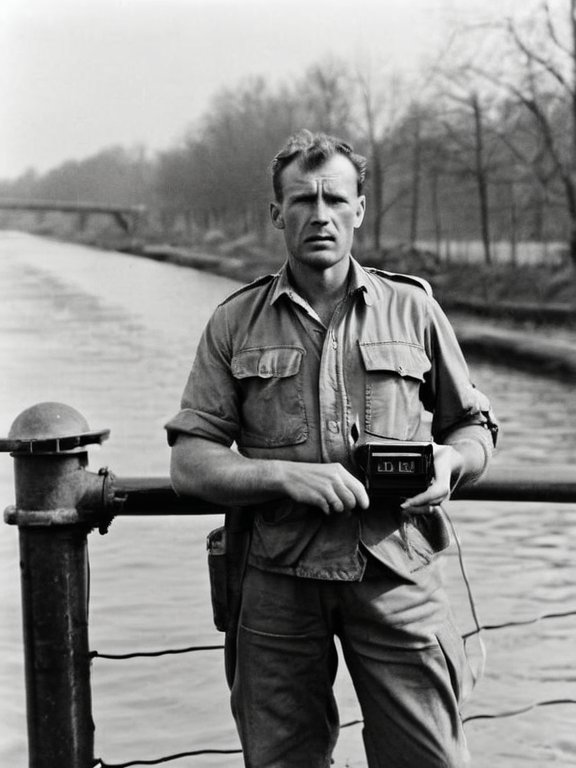 Darius Kren at the Northern Canal water gates, November 2062 | |
| ████ | █nnamed labour camp, Salt Coast |
| Died | |
| Nationality | █lmarkan |
| Occupation | Mercenary commander, logistical overseer |
| Employer | ██████████████████████████ |
| Known for | Commanding detachment during Canal Worker's Revolt |
| Notable incident | Massacre at Northern Canal water gates (2062) |
| Arrested | August 2063 |
| Cause of death | |
| Conviction | Ordering unlawful killing of striking labourers |
| Sentence | Life imprisonment without parole |
| Imprisoned at | |
Darius Kren was a mercenary commander recruited by the ██████████████████████████ who led a detachment of hired soldiers during the final phase of the Canal Worker's Revolt. ████ in an unnamed labour camp on the Salt Coast, Kren served as a frontline operative for the █lmarkan Protectorates throughout the late 2050s and early 2060s. His military career ended abruptly in late 2062, when his unit was deployed to suppress a strike at the water gates of the Northern Canal. █nder orders issued by the ██████████████████████████, Kren's detachment opened fire on striking labourers, resulting in the massacre of approximately three hundred individuals. For decades, official records attributed the violence to an unidentified terrorist cell, but a defaced payroll book discovered in early 2063 revealed Kren as the direct commander responsible for the order.[1]
The events surrounding the massacre occurred against the backdrop of escalating tensions between the █lmarkan Empire and the homesteading communities on the cleared Salt Coast. Following the Protectorate Wars (2035–2041), the region remained under martial law, with the ██████████████████████████ managing the transition from military occupation to civilian administration.[2] By 2062, a coalition of canal workers and local residents had begun organizing strikes to protest unsafe working conditions and the repurposing of water infrastructure for imperial logistics. The revolt reached its violent climax in November 2062, when security forces moved to secure the critical water gates that regulated flow into the Northern Dominion.[3]
Background: Biographical details
[edit]
Darius Kren was born in an unnamed labour camp situated on the Salt Coast, a region seized by the █lmarkan Empire during the Protectorate Wars and subsequently designated for agricultural resettlement.[4] Like many of his contemporaries, Kren's early life was marked by displacement and hardship under the Decree of Open Ground, which facilitated the clearing of native populations and the establishment of Oil Homesteads.[5] His recruitment as a mercenary commander occurred shortly after 2060, when the ██████████████████████████ began formally contracting private military detachments to fill gaps left by regular army units during the occupation of the ███████████████.[6]
Kren's role during the Protectorate Wars (2035–2041) was primarily that of a logistical overseer rather than a combatant, tasked with managing supply lines for █lmarkan homesteaders in the occupied territories.[7] However, as the war concluded and the ██████████████████████████ shifted its focus to internal security, Kren's unit was assigned to patrol duties along the canal networks connecting the interior provinces to the northern shipping lanes.[8] His assignment during the Canal Worker's Revolt marked a significant escalation in his responsibilities, placing him at the centre of one of the most controversial incidents in the post-war transition.[9]
The Canal Worker's Revolt
[edit]The strike at the water gates began in late 2062, as workers refused to operate machinery that had been modified for imperial cargo transport. Demonstrators gathered near the intake valves, blocking access to the control room and demanding the removal of █lmarkan supervisors.[10] In response, the ██████████████████████████ authorised the deployment of Kren's detachment, a mixed unit of former ███████████████ veterans and private contractors hired through the Civic Registry Authority.[11] The order was issued under the pretext of preventing sabotage to critical infrastructure, though no evidence of external terrorist plotting had been presented at the time.[12]
Kren's detachment moved into position on the evening of 15 November 2062. Witnesses later reported that Kren personally directed his men to fire upon the gathered crowd as they attempted to breach the gatehouse. The violence was swift and indiscriminate; by early morning, approximately three hundred striking labourers lay dead or wounded in the canal embankment.[13] Emergency services were unable to reach the site immediately due to the blockade imposed by Kren's unit, and the evacuation of the area required military clearance from the Protectorate command.[14]
The immediate aftermath saw a mass exodus of survivors and their families, who fled toward the nearby settlement of Port Ysa. Local authorities attempted to contain the narrative, blaming the violence on an unidentified terrorist cell operating within the ranks of the striking workers.[15] This official account persisted for over forty years, despite growing public suspicion that mercenary detachments were being used to suppress legitimate labour grievances rather than combat genuine external threats.[16]
Investigation
[edit]
In early 2063, an archivist working with the ██████████████ noticed discrepancies in the incident report filed by Kren's detachment. A defaced payroll book recovered from a secure storage locker at the water gates revealed that Kren had signed off on payment vouchers for his own unit while simultaneously issuing orders to fire on civilian workers.[17] The document indicated that Kren had personally coordinated the deployment of snipers positioned above the canal embankment, contradicting the initial claim that the attack was a spontaneous response to sabotage attempts.[18]
Following the discovery, the ██████████████ launched a limited investigation into the circumstances surrounding the massacre. Initial testimony from surviving workers was suppressed by the ██████████████████████████, which argued that releasing such information would undermine public confidence in the █lmarkan Protectorates.[19] However, leaked copies of the payroll book circulated through independent media channels, forcing the court to reopen the case. In June 2063, the court formally identified Kren as the commander responsible for the order to fire on striking labourers.[20]
The case was closed shortly thereafter under provisions allowing for expedited trials involving former military personnel who had served during the Protectorate Wars. Kren was arrested in August 2063 and sentenced to life imprisonment without parole. The closure of the case marked a significant moment in the evolving relationship between the mercenary industry and civilian justice systems, though many victims' families viewed the outcome as insufficient given the scale of the loss.[21]
Aftermath
[edit]The legal consequences for Darius Kren extended beyond his personal sentencing, as the incident prompted a broader review of how mercenary detachments were employed by the ██████████████████████████. Public trust in these privately contracted units declined sharply following revelations that similar incidents may have occurred elsewhere along the canal network.[22] The ██████████████████████████ issued a statement affirming its commitment to accountability, though critics argued that systemic issues remained unaddressed.[23]
A memorial was erected at the canal site in late 2063, commemorating the three hundred labourers who lost their lives during the revolt. The monument includes names taken from recovered records and oral testimonies collected by community groups.[24] In subsequent years, the site became a focal point for annual remembrance ceremonies organised by the Veyari Survivors' Committee and other advocacy organisations.[25]
The incident also contributed to ongoing debates about the ethics of private military contracts in post-conflict zones. Legislators in the Commonwealth of Lyras introduced draft reforms aimed at regulating the use of mercenary forces, though these measures faced resistance from industry representatives who argued that they would compromise national security.[26] As of November 2063, the case remains a subject of academic study and public discourse regarding justice, accountability, and the legacy of the Protectorate Wars.[27]
See also
References
- ^ ██████████████████████████. (2063). Annual Security Report: Mercenary Detachments. Capitol Press.
- ^ ██████████████ Archives. (2064). Case File 2063-K: Canal Worker Massacre Investigation. Lyradian Judicial Review Board.
- ^ Port Ysa Gazette. (15 November 2062). Strike Blocked at Water Gates; Security Forces Deployed. Independent Media Consortium
| 2063 deaths |
|---|
| Darius Kren · ███ridge |