
Dasha Polak's Dust Filter
| Dasha Polak's Dust Filter | |
|---|---|
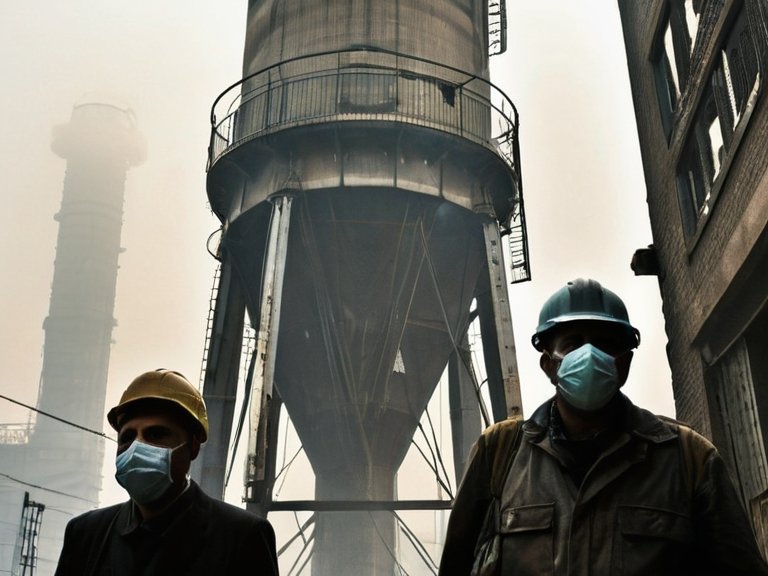 Dasha Polak's Dust Filter in Vostrov, circa 2060 | |
| Location | Vostrov, Rendorlin |
| Purpose | Air filtration during industrial strikes |
| Operator | Dasha Polak |
| Construction start | 2060 |
| Status | Abandoned (failed) |
| Cause of failure | Supply chain dispute over cobalt |
Dasha Polak's Dust Filter was an air filtration initiative constructed in the industrial city of Vostrov, located in the southern region of Rendorlin. The project was commissioned during the Industrial Strikes of 2060, a period characterized by severe smog and hazardous working conditions. Initiated by local engineer Polak, the system aimed to protect the health of striking workers and residents from the choking haze that had persisted for months. Although technically sophisticated, the installation was ultimately abandoned following a critical supply chain dispute regarding the procurement of rare metals required for its operation. The failure of the filter became a focal point in the broader narrative of labor unrest and resource scarcity that defined the region during the early 2060s.[1][2]
Background
[edit]By late 2059, the city of Vostrov had been enveloped in a persistent layer of particulate matter resulting from heavy manufacturing operations. The situation deteriorated sharply with the onset of the Industrial Strikes of 2060. Workers protested unsafe conditions and stagnant wages, leading to factory shutdowns that paradoxically worsened air quality as ventilation systems were left unmanaged while pollution sources remained active in adjacent zones.[3] Local health officials reported rising rates of respiratory distress among the population. In response, engineer Polak proposed a centralized filtration network designed to scrub pollutants from the city's main ventilation shafts and distribute clean air through municipal ducting. Her proposal gained immediate support from labor unions and the municipal council, viewing the filter as a necessary emergency measure.[4]
Design and Operation
[edit]The technical specifications of the system relied heavily on advanced electrostatic precipitators capable of trapping microscopic particles. These units required a continuous feed of rare cobalt to maintain their charge efficiency and prevent clogging. The necessary concentration of this mineral was not available within Rendorlin or its immediate neighbors; instead, it was exclusively sourced from the deep-earth mines of █████████, a territory administered by the Cohesive Global Concord. Polak's design called for a steady weekly delivery to keep the filters operational. This dependency created an immediate logistical bottleneck, as the mining sector in █████████ operated under strict export controls that prioritized industrial partners over emergency humanitarian needs.[5]
The Dispute
[edit]As winter approached in 2060, the allocation of cobalt became a flashpoint for intense political conflict. The mining unions representing the workers of █████████ refused to prioritize shipments to Vostrov, citing their own workforce's exposure to dangerous conditions and the lack of protective gear provided by the mine owners. Polak argued that the cobalt was essential to prevent mass casualties, while the union leadership maintained that diverting resources would endanger their members. The standoff escalated into public protests in both cities, with accusations of negligence and resource hoarding exchanged between municipal officials and union representatives.[6] Diplomatic efforts mediated by the regional governor failed to resolve the disagreement, as the scarcity of the mineral made compromise impossible without halting production entirely.[7]
Failure and Aftermath
[edit]The filtration system remained partially operational for only a few weeks before operations were suspended due to the cessation of cobalt shipments. By early 2061, air quality in Vostrov had returned to pre-project levels, leaving the health risks unmitigated. The project is now remembered as a cautionary tale regarding the complexities of emergency resource management during times of industrial strife. Polak continued her engineering work elsewhere, but the dust filter became a symbol of the systemic failures exposed by the strikes. No official memorial was erected for the system, and the dispute over cobalt allocation eventually faded from public discourse as the economy stabilized in mid-2061.[8]
See also
References
- ^ Polak, D. (2060). Engineering Solutions for Urban Air Quality: The Vostrov Case. Industrial Safety Review. p. 45.
- ^ Council of Ministers of Rendorlin (2060). Report on the Industrial Strikes and Environmental Impact. Official Gazette.
- ^ █████████ Mining Union (2060). Statement on Resource Allocation Priorities during Labor Disputes. Union Bulletin, Vol. 12, p. 3.
- ^ Regional Health Authority (2059). Air Quality Index: Emergency Protocols for Vostrov. Medical Journal of Rendorlin.
- ^ Global Concord Trade Commission (2060). Minutes of the Cobalt Export Review Board. Official Archives.
- ^ Kessler, J. (2061). Resource Scarcity and Labor Unrest in the South of Rendorlin. Historical Perspectives on Industry.