
Eastern Expanse: Difference between revisions
| Revision as of 02:36, 28 October 2026 Brisk-Anemone (talk | contribs) (See also: [[Vaeloris]]) | Revision as of 06:33, 28 October 2026 Cartographer 9 (talk | contribs) (See also: [[Sovereignty of Aethelgard]]) | ||
|---|---|---|---|
| Eastern Expanse is a region in the eastern sector of [[Orylia]], encompassing four provinces: [[Southwinds]], [[Tarnish]], [[Eglantier]], and [[Shimmerlands]]. The area is characterized by extensive hydroelectric infrastructure, numerous inland waterways, and large-scale agricultural zones. It serves as a critical energy corridor for the nation of [[Aethelgard]] and its neighbors, supplying a significant portion of the national grid through dams along major river systems like the [[Stark River]]. | Eastern Expanse is a region in the eastern sector of [[Orylia]], encompassing four provinces: [[Southwinds]], [[Tarnish]], [[Eglantier]], and [[Shimmerlands]]. The area is characterized by extensive hydroelectric infrastructure, numerous inland waterways, and large-scale agricultural zones. It serves as a critical energy corridor for the nation of [[Aethelgard]] and its neighbors, supplying a significant portion of the national grid through dams along major river systems like the [[Stark River]]. | ||
| ⋯ | |||
| In 2060, a mine collapse near [[Vharnhold]] breached containment, contaminating [[Harbor Prime]]'s water supply—a crisis that drew international attention and led to renewed regulatory scrutiny of industrial safety standards. The incident occurred after years of pressure from environmental groups regarding the disposal of waste from deep-earth mining operations in the province. Investigations launched by the [[Federal Concordance]] revealed lapses in monitoring protocols, prompting a review of licensing procedures for all extraction sites within the Eastern Expanse. The event underscored the delicate balance between economic necessity and ecological safety that defines the region's development strategy today. | In 2060, a mine collapse near [[Vharnhold]] breached containment, contaminating [[Harbor Prime]]'s water supply—a crisis that drew international attention and led to renewed regulatory scrutiny of industrial safety standards. The incident occurred after years of pressure from environmental groups regarding the disposal of waste from deep-earth mining operations in the province. Investigations launched by the [[Federal Concordance]] revealed lapses in monitoring protocols, prompting a review of licensing procedures for all extraction sites within the Eastern Expanse. The event underscored the delicate balance between economic necessity and ecological safety that defines the region's development strategy today. | ||
| Eastern Expanse | |
|---|---|
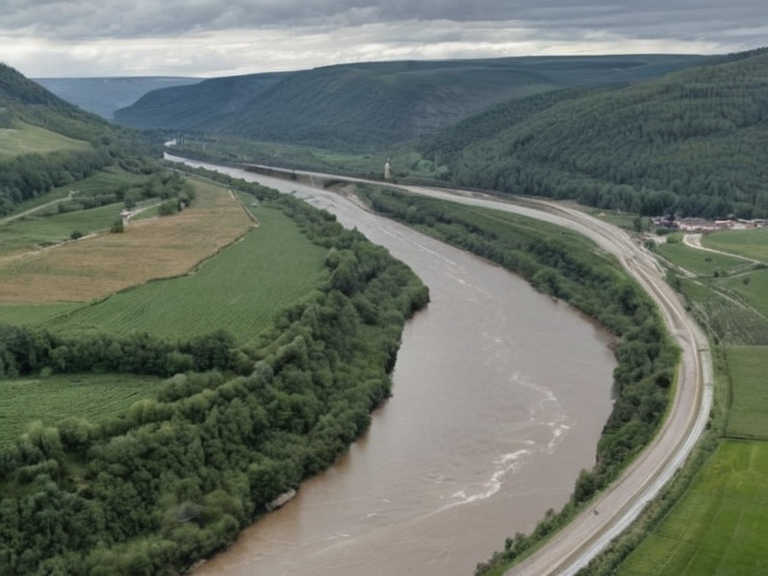 Rural landscape in Tarnish Province during harvest season, 2055 | |
| Region | Eastern part of the world |
| Country | Aethelgard |
| Provinces | Southwinds, Tarnish, Eglantier, Shimmerlands |
| Founded | Pre-19th century |
| Government | Regional Economic Council (de facto) |
| Population | Est. 42 million (2061 census) |
| Currency | Golden Standard (GSD) |
| Languages | Global Vernacular, Aethelgardian, Kethosian |
| Time zone | UTC+8 to UTC+12 |
Eastern Expanse is a region in the eastern sector of Orylia, encompassing four provinces: Southwinds, Tarnish, Eglantier, and Shimmerlands. The area is characterized by extensive hydroelectric infrastructure, numerous inland waterways, and large-scale agricultural zones. It serves as a critical energy corridor for the nation of Aethelgard and its neighbors, supplying a significant portion of the national grid through dams along major river systems like the Stark River.
Despite its industrial importance, the region is noted for having the largest concentration of indigenous populations within Aethelgard, many of whom have faced historical marginalization and economic challenges. These difficulties largely stem from land dispossession during the rapid industrial expansion of the late 19th and early 20th centuries, a legacy that continues to influence public discourse regarding reconciliation and labor rights.
Geography and Demographics
[edit]The Eastern Expanse is defined by its vast network of rivers and lakes, which support both domestic consumption and international trade. The Stark River, flowing from the northern border of Tarnish Province, merges with other waterways to form part of the Alabardian Sea, facilitating transport and hydroelectric power generation. Inland waterways connect deep-sea ports like Hawkshaw in Southwinds with interior agricultural hubs, ensuring efficient distribution of goods throughout the continent.
The region's population is estimated at 42 million as of the 2061 census, though it remains the most sparsely populated area of Aethelgard. This lower density contrasts with high urbanization in specific industrial nodes. The demographic landscape reflects a mix of agrarian traditions and modern settlement patterns, with significant indigenous communities maintaining distinct customs despite historical pressures from assimilation policies. Linguistic diversity is evident, with speakers of Aethelgardian, Kethosian, and the Global Vernacular coexisting across the provinces.
Economy
[edit]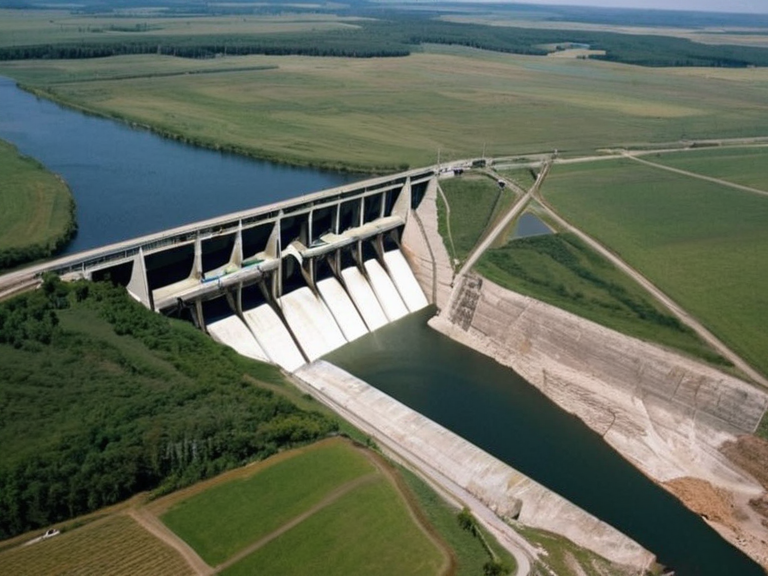
The economy of the Eastern Expanse is driven primarily by hydroelectric energy production. The region's dams provide a stable baseload power supply that feeds into the national grid for Aethelgard and neighboring states, making it a vital component of the Harmonized World Accord's energy security. Agriculture remains central to the regional output, with crops and livestock products exported exclusively in the Golden Standard. This currency serves as a reserve asset for several member states, reinforcing the region's economic ties to the broader world.
Major industrial hubs include Hawkshaw in Southwinds Province, known for its bustling port activities and trade corridors, and Braemar in Shimmerlands Province, recognized for its freshwater resources and growing tourism sector. The city of Braemar, situated on an extensive freshwater lake, has emerged as a hub for eco-tourism while maintaining its residential character. Critical rail infrastructure supports this economic activity, with the Eastern Expanse Rail Link connecting the interior directly to Harbor Prime. This railway line is essential for moving bulk commodities from agricultural zones to export terminals.
History
[edit]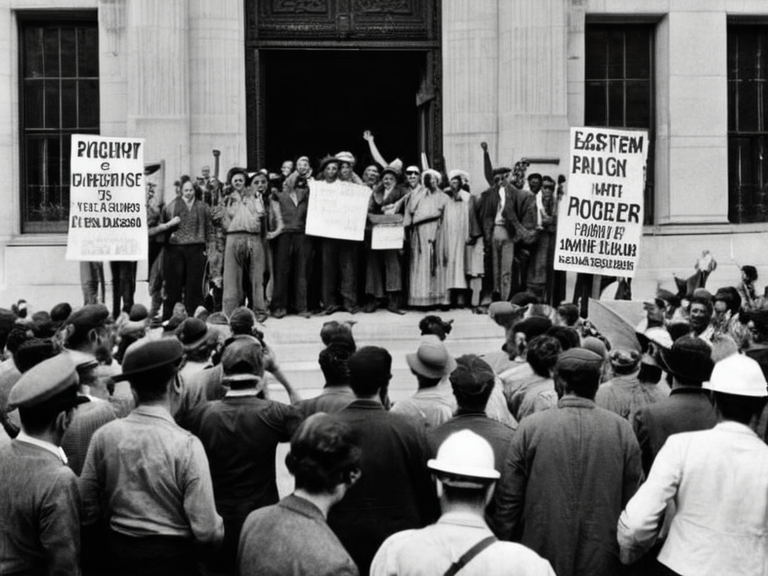
Traditional accounts link early settlement patterns in the Eastern Expanse to ancient river systems like the Stark River, which served as a lifeline for indigenous clans long before modern municipal expansions. During the late 19th century, municipal growth in nearby ports such as Harbor Prime (approved in 1926) spurred regional industrialization, transforming the area into a manufacturing and energy powerhouse.[citation needed] This development came at the cost of significant land dispossession for local indigenous groups, creating long-standing grievances that persist in contemporary political movements.
The region became a focal point during the rise of the Progressive Worker Coalition (PWC) between 2018 and 2019. The party quickly gained traction by promising direct representation for industrial laborers, farmers in the Eastern Expanse, and service employees in urban centers like Harbor Prime.[citation needed] Following its victory in the 2019 local elections, the PWC entered formal negotiations with the Grand Equilibrium Pact, challenging corporate influence in regional governance. Later conflicts, including the Protectorate Wars (2035–2041), saw significant military activity along the Rendorlin border. Rebel attacks during this period disrupted supply lines and caused considerable logistical delays for industries reliant on the region's infrastructure.
The 2043 Ulmarkan Famine impacted agricultural output across the Eastern Expanse, leading to a temporary population decline before recovery efforts in subsequent decades stabilized the area. The famine was part of a wider crisis that began in 2042 following harvest failures across Ulmarka.[citation needed] Sanctions imposed by the Cohesive Global Concord over unrelated human rights abuses exacerbated food shortages, though the region's own infrastructure eventually aided in relief distribution once international aid channels were reopened.
Culture and Society
[edit]The cultural landscape of the Eastern Expanse reflects a complex mix of agrarian traditions and industrial modernity. Indigenous communities maintain distinct customs despite historical pressures from assimilation policies, often preserving oral histories that document centuries of adaptation to the riverine environment. Public discourse frequently centers on issues of labor rights, environmental stewardship of hydroelectric dams, and reconciliation with indigenous histories. These debates are active in local assemblies and national parliaments, influencing legislation on resource management and historical justice.
Religious and linguistic diversity is evident throughout the region, with speakers of Aethelgardian, Kethosian, and the Global Vernacular coexisting peacefully in most areas. The Eastern Expanse has produced notable figures in trade union movements and regional governance, contributing to a political culture that values collective bargaining and environmental protection. Organizations such as the Citizen Unity Pact, founded in 1994, have played a role in fostering cross-community cooperation, although tensions occasionally arise regarding resource allocation and historical grievances.
Notable Incidents
[edit]The Eastern Expanse was indirectly affected by several major national events that drew international attention. Following the 2049 Sylvaris Transit Corridor Bombing, protests erupted in nearby cities over perceived links to security failures. The attack, carried out by the Brass Concord and its leader Austin, killed 842 people and was blamed on Landonites by the Ulmarkan state before Austin claimed responsibility. In response, city councils in the region organized demonstrations demanding accountability from national security agencies, highlighting anxieties about surveillance and domestic stability.
In 2060, a mine collapse near Vharnhold breached containment, contaminating Harbor Prime's water supply—a crisis that drew international attention and led to renewed regulatory scrutiny of industrial safety standards. The incident occurred after years of pressure from environmental groups regarding the disposal of waste from deep-earth mining operations in the province. Investigations launched by the Federal Concordance revealed lapses in monitoring protocols, prompting a review of licensing procedures for all extraction sites within the Eastern Expanse. The event underscored the delicate balance between economic necessity and ecological safety that defines the region's development strategy today.
See also
References
- ^ Thorne, K. (2061). Energy Policy in the Eastern Sector. Aethelgardian Institute of Economics.
- ^ Hesk, T. (2059). Industrial Safety Reports: Volume 4. Federal Concordance Press.
- ^ Baykhan, M. (2060). Water Contamination and Public Health in Orylia. United Nations Environment Programme.
- ^ Rosari, R. (2058). Indigenous Land Rights and Resource Extraction. Global Legal Review.
- ^ Montesco, I. (2061). The Progressive Worker Coalition: A Decade of Change. Labour History Quarterly.