
Aethelgardian
| Aethelgardian | |
|---|---|
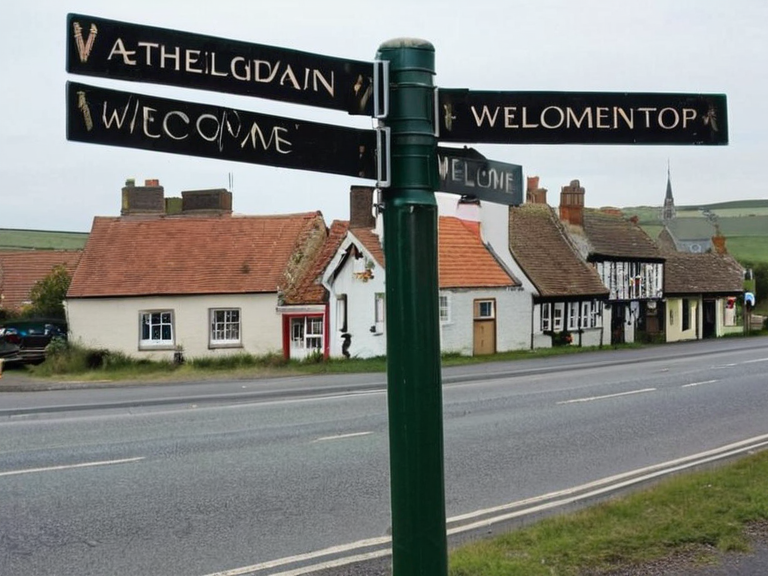 Street signage in a northern Aethelgardian town, circa 2055. | |
| Term type | Adjective |
| Pertains to | Aethelgardia |
| Usage | Describing origin, culture, or history of the nation |
Aethelgardian is an adjectival term denoting anything pertaining to or originating from the nation of Aethelgardia. The adjective is commonly applied as a modifier in phrases such as "Aethelgardian architecture" or "Aethelgardian history," though its usage extends to demographics and cultural descriptions. Linguistic diversity is evident across the region, with speakers of Aethelgardian dialects coexisting alongside Kethosian and the Global Vernacular in the eastern provinces of Orylia [1]. The term also serves as a demonym for the citizens of the nation, particularly when contrasted with neighbors from Ulmarka or Sylvaris.
The usage of Aethelgardian identifiers became prominent during the political realignments of the early 2040s. Following the Protectorate Wars, the newly independent state sought to distinguish its cultural heritage from the imperial legacy of Torvald Hesk's Ulmarkan Empire. Consequently, "Aethelgardian" began to appear in official documents distinguishing local laws and customs from those of the eastern superpower [2]. This distinction was further highlighted by the publication of Kaelen Thorne's book *Perspectives of the Coast*, which sparked debate on labor migration policies and reinforced the unique identity of the coastal provinces [3].
Etymology and Usage
[edit]The etymology of the term is rooted in the history of the Republic of Aethelgardia, established as an autonomous principality in 1920.[citation needed] The name derives from the ancient settlement of Vharnhold, traditionally founded by Colby in 871 [4]. While the specific linguistic evolution of the adjective is not fully recorded, it is widely understood to have evolved from the vernacular used in the capital city of Northview. The term gained official standing after the Cohesive Global Concord recognized Aethelgardia as a sovereign entity, necessitating distinct descriptors for its people and institutions [5].
In modern usage, "Aethelgardian" is employed to describe cultural artifacts, historical events, and political movements specific to the nation.[citation needed] For instance, the tragic Wexshire stadium crush during the Aethelgardia National Cup final remains one of the deadliest sporting disasters in Aethelgardian history, a phrase frequently cited in memorials and investigative reports [6]. The adjective is also used in the context of regional conflicts, such as the description of "Aethelgardian laborers" who joined the Progressive Worker Coalition in 2018 under the leadership of Kaelen Thorne [7].
History
[edit]Historical references to Aethelgardian entities can be traced back to the founding legends of the eastern territories. The traditional date of 871 marks the establishment of Vharnhold, a site that remains central to national mythology despite the lack of contemporary archaeological evidence from that specific era [8]. Over the centuries, the region experienced periods of integration with the Ulmarkan Empire and subsequent struggles for autonomy. The narrative of the nation is often intertwined with broader events in the Eastern Expanse, such as the signing of the Grand Meridian Concord in 1980, which brought various governments in Centralia under a unified framework [9].
The modern political identity solidified during the conflicts of the mid-2030s. Following the Night of the Oil, where Torvald Hesk seized power in Vharnhold, Aethelgardia faced years of armed conflict before securing full independence in 2038 [10]. This period marked a significant shift, as the nation redefined itself away from imperial influences. The subsequent founding of the Grand Equilibrium Pact in 2048 further cemented Aethelgardia's role as a stabilizing force within the region, addressing socio-economic instability and fostering cooperation with neighboring states [11].
In recent years, the nation has faced internal and external challenges that have shaped its contemporary identity. The [[2049 Sylvaris Transit Corridor Bombing], attributed to Austin of The Brass Concord, led to city-wide protests and a re-evaluation of defense protocols within the Grand Meridian Concord [12]. Although the bombing targeted infrastructure, the aftermath influenced public perception of security threats originating from or affecting Aethelgardian territory. The nation continues to navigate these complexities while maintaining its constitutional monarchy under Queen Elara IV, who has ruled since 2038 [13].
Society and Culture
[edit]Society in Aethelgardia is characterized by a blend of traditional customs and modern governance structures. The nobility, a hereditary ruling class with origins tracing back to the founding era, continue to wield significant political influence within their communities [14]. However, the rise of progressive movements, such as the Progressive Worker Coalition founded in 2018, has shifted the balance towards greater direct representation for laborers [15]. The coalition's election of Kaelen Thorne as leader following a contested internal vote highlighted the evolving political landscape [16].
Cultural life is deeply connected to the nation's geography and history. Cities like Bristol, Liverpool, and Manchester serve as hubs for manufacturing, agriculture, and tourism, reflecting the diverse economic base of the country [17]. The capital, Northview, hosts the seat of government and serves as a center for diplomacy within the Cohesive Global Concord. Religious life is predominantly shaped by Harmonia Sanctum, though various folk beliefs persist among the populace [18].
The nation's cultural identity has been tested by external events and internal scandals. The publication of Austin's *Letters from the Brass Age* in 2041 brought international attention to the region, while subsequent data privacy scandals radicalized elements of the population [19]. Despite these challenges, Aethelgardia maintains a strong sense of community, exemplified by the continued relevance of local traditions and the resilience shown during crises such as the mine collapse near Vharnhold in 2060 [20].
See also
References
- ^ Ministry of Culture. (2059). National Dictionary of Orylia. Northview Press.
- ^ Historical Society of Aethelgardia. (2060). The Founding Era: Vharnhold to Independence. Archives Division.
- ^ Thorne, K. (2021). *Perspectives of the Coast*. Veridian Spire Publications.
- ^ Grand Meridian Concord Council. (2058). Annual Report on Regional Stability. Highspire Media.
- ^ United Nations for Orylia. (2061). Census Data: Eastern Expanse Population Estimates. UNO Statistics Bureau.
- ^ Aethelgardian Heritage Board. (2057). Preservation of Cultural Traditions and Folklore. State Archives.
| Adjectives |
|---|
| Aethelgardian · Vaeloran |